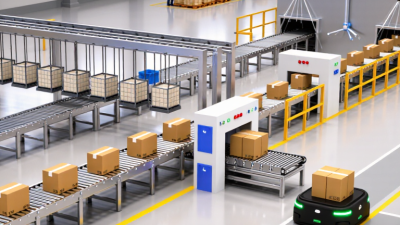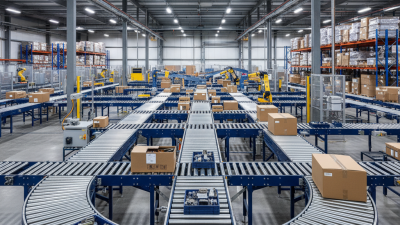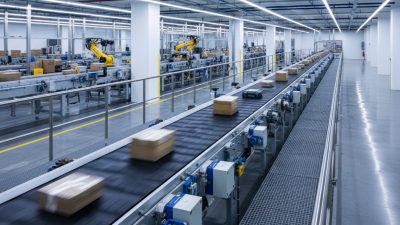



Industrial conveyor systems move more than products; they shape how a plant uses space, labor, and time. A belt conveyor may carry cartons steadily across a long production floor. A roller conveyor can accumulate boxes near a packing station. In a quarry, a rugged belt system handles heavy loads, dust, and uneven material. The right choice depends on the product, route, throughput, and operating environment.
Material-handling specialist Todd Swinderman has written extensively about conveyor design and operation. The line below is an editorial summary, not a verified verbatim quotation: “A conveyor works best when its design fits the material, the route, and the people maintaining it.” That distinction matters. A system can look efficient on a drawing and still create bottlenecks at transfer points. Small details count.
This guide introduces common conveyor types, including belt, roller, chain, screw, and overhead systems. It explains where each design is useful and what trade-offs deserve attention. A belt may suit continuous movement, while a chain conveyor can handle heavier loads. Screw conveyors move bulk material through enclosed spaces, but they are not ideal for every product. There is no universal winner. Even experienced teams sometimes underestimate cleaning access or future layout changes. That is worth reconsidering before installation.
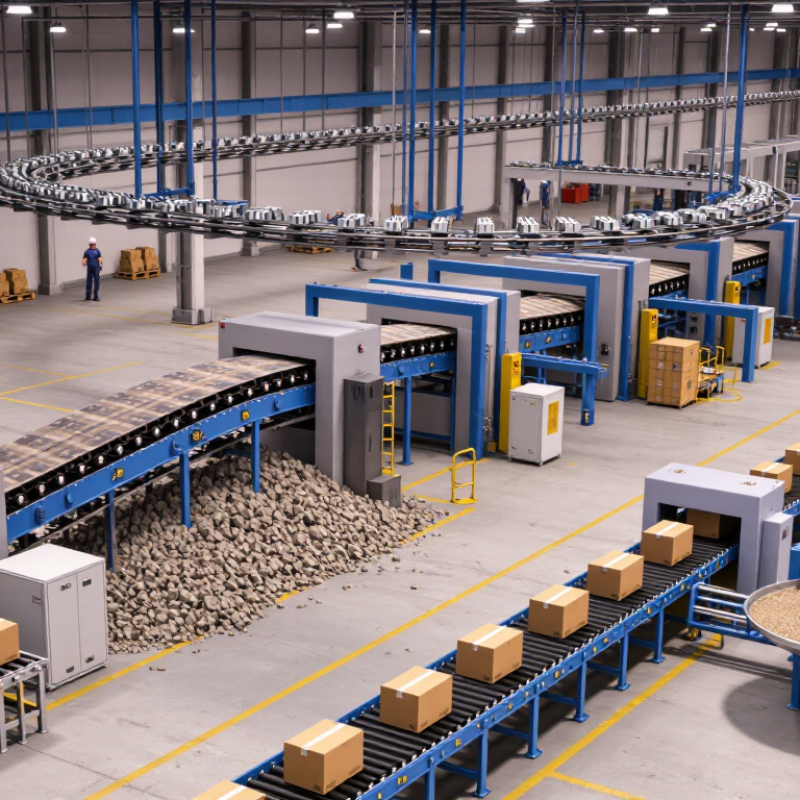
Belt conveyor systems move material continuously across fixed routes, making them useful in mines, ports, warehouses, and processing plants. A moving belt carries loads over rollers, reducing repeated handling between work areas. Grand View Research’s Conveyor System Market Size, Share & Trends Analysis Report estimated the global conveyor system market at US$10.6 billion in 2023. This figure covers several conveyor types, not belts alone, but it reflects broad investment in material-handling infrastructure. CEMA’s Belt Conveyors for Bulk Materials guide also emphasizes matching belt width, speed, and loading conditions to the material being handled.
Design details matter. A damp, abrasive aggregate behaves differently from cartons, and a belt sized only for average flow may struggle during surges. Transfer points need careful attention: poorly aligned chutes can spill material, create dust, and wear belt edges. In practice, operators should inspect scrapers, idlers, and belt tracking regularly. Small issues grow.
Tips: Confirm peak capacity, not just daily average. Check loading at transfer points, and keep a record of belt drift and spillage. Even good designs need adjustment; operating conditions rarely stay perfectly consistent.
| Belt Conveyor Type | Typical Materials | Common Operating Range | Typical Applications | Key Design Considerations |
|---|---|---|---|---|
| Flat Belt Conveyor | Cartons, parcels, packaged goods, and small components | Typical belt speeds: 0.2–2.5 m/s; widths commonly range from 300–1,200 mm | Packaging lines, assembly areas, warehouses, and inspection stations | Provides a stable carrying surface for unit loads. Belt material and surface finish should suit the product, cleaning requirements, and operating environment. |
| Troughed Belt Conveyor | Coal, aggregates, grain, ore, and other bulk solids | Typical belt speeds: 1–5 m/s; belt widths commonly range from 500–2,000 mm | Mining, quarrying, ports, power generation, and bulk-material handling | Angled idlers form a trough to help contain bulk material. Capacity depends on belt width, speed, trough angle, material density, and loading conditions. |
| Incline or Cleated Belt Conveyor | Packages, agricultural products, granular materials, and parts | Inclines are often around 15–30° for standard belts; cleats may enable steeper conveying depending on the load | Elevating products between floors, feeding hoppers, and moving materials to processing equipment | Incline capability depends on material shape, surface friction, belt texture, and cleat design. Chutes or side guides may be needed to control spillage. |
| Pipe Belt Conveyor | Fine, dusty, or spill-sensitive bulk materials | Typical belt speeds: 1–4 m/s; capacity is determined by pipe diameter, belt width, and material properties | Enclosed routes in plants, ports, and sites where dust or spillage must be reduced | The belt forms a closed tube around the load. The route must account for transition sections, curve radius, belt stiffness, and maintenance access. |
| Sidewall Belt Conveyor | Bulk solids that need steep or near-vertical elevation | Inclines can exceed 30° and may approach vertical, subject to belt and material design | Compact plants, ship loading systems, and installations with limited floor space | Corrugated sidewalls and cross-cleats retain material. Belt construction, loading consistency, and transfer-point design are important for reliable operation. |
| Modular Plastic Belt Conveyor | Food products, containers, bottles, and components requiring frequent cleaning | Typical belt speeds: 0.1–1.5 m/s; belt width varies with the product and line layout | Food processing, beverage production, packaging, and washdown areas | Interlocking modules can simplify repairs and accommodate turns. Material selection should consider temperature, chemicals, sanitation, and product contact requirements. |
Operating ranges are indicative industrial examples, not guaranteed performance limits. Final selection should be based on the material, required throughput, route geometry, environment, and applicable safety standards.
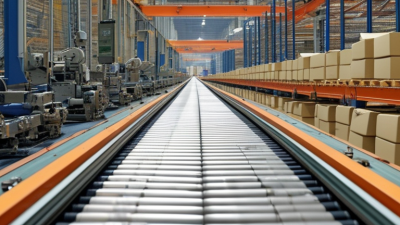
Roller conveyors move cartons, totes, trays, and pallets along fixed routes. Gravity models use a slight slope; powered models use motors to control movement and spacing. Choose rollers for the load’s base, weight, and dimensions—not merely its average size. A carton with a soft or bowed bottom may sag between rollers. That can create jams. For stable travel, the roller pitch should support the load at several points throughout its movement. Pallets need rollers and frames rated for their concentrated loads.
MHI’s 2024 Annual Industry Report found that 55% of surveyed respondents planned to increase investment in supply-chain innovation. It also reported that 88% expected to spend at least $1 million on supply-chain technology within five years. These figures show investment intent, not proof that automation suits every conveyor line. That distinction matters. Before selecting powered accumulation, check whether loads need to stop safely without pressing against one another. Consider transfer points, accessible emergency stops, guarding, and routine cleaning. Small details matter. In practice, teams sometimes focus on throughput and overlook awkward carton sizes or noisy rollers. A short trial with real loads can expose those gaps before installation.
Chain and slat conveyors suit loads that would challenge lighter belt systems. A chain conveyor moves pallets, bins, or fixtures along linked chains; a slat conveyor carries items on closely spaced, rigid plates. Both can handle heavy loads and stop-and-start movement. They are common around assembly stations, ovens, and transfer points. The choice depends on the load’s underside, operating temperature, and required tracking. A rough pallet base may snag or wear unevenly on a slat surface. Chain spacing matters.
MHI’s 2024 Annual Industry Report found that 55% of respondents expected to adopt robotics and automation within five years. That trend makes conveyor interfaces worth careful attention: fixed stops, sensors, and transfer plates must work with the moving load. Small details count. A practical assessment checks load weight, impact at loading, speed, duty cycle, and access for cleaning or repair. Chain systems can be noisy and need lubrication; slat systems may add weight and cost. Neither is automatically the tougher option. Real conditions can expose assumptions, so test representative loads before specifying a line.
Screw conveyors move bulk solids through a rotating helical flight inside a trough or enclosed tube. They handle materials such as grain, flour, cement, and wood chips, especially across short, controlled routes. The enclosure can help contain dust and spills, but it does not make every installation dust-tight. Capacity depends on screw diameter, pitch, speed, inclination, and material properties. CEMA’s Screw Conveyors for Bulk Materials provides established design guidance for selecting components and estimating performance. No screw fits every material. Moisture and abrasiveness are easy to underestimate.
FAO’s 2019 State of Food and Agriculture report estimated that about 14% of food was lost globally between post-harvest and retail. This figure covers many stages, not conveyor losses alone. Still, careful transfer design can help limit avoidable spills during handling. A practical assessment should consider bulk density, particle size, flow behavior, and cleaning needs. Test with the actual material when possible; a dry sample may behave very differently from damp production material.
Tips: Check the screw’s capacity at the planned operating speed, not just its maximum rating. Inspect bearings and seals regularly, and watch for buildup near discharge points. If material bridges or compacts, revise the inlet or screw design before simply increasing speed. That quick fix can create more wear.
Overhead conveyors carry parts above the floor, freeing space for people, carts, and workstations. A suspended trolley can follow a fixed rail through assembly, finishing, or storage areas, including turns and elevation changes. Workers can load components at one station and unload them farther along the line. That sounds simple. In practice, rail supports, clearances, and load balance need careful checking, especially near doors and service platforms. Hanging loads may swing, and maintenance access can be awkward. Designers should map where operators stand, not just where the track fits.
Pneumatic conveyors use moving air to carry powders, pellets, or small bulk materials through enclosed pipes. They suit routes that cross rooms or rise vertically, where open belts may be difficult to seal or route. Dilute-phase systems move material at higher air speeds; dense-phase systems move it in slower, concentrated plugs. The right choice depends on product fragility, distance, throughput, and dust-control needs. Pipe bends deserve attention. Too many can increase wear or damage fragile particles, so testing with representative material is useful. Air demand, filters, receivers, and cleaning access add cost and maintenance needs. A layout that looks efficient on paper may prove noisy or difficult to clear after a blockage.
Typical design features for two conveyor systems used on specialized routes.
Overhead conveyors typically move discrete items on track-suspended carriers. Pneumatic conveyors typically move dry bulk materials through enclosed pipelines using airflow. Values indicate whether a feature is characteristic of each system (1 = yes, 0 = no); individual designs may vary.