10 Best Conveyor Systems for Global Buyers in 2026

Selecting conveyor systems for a global operation is less about chasing the newest design and more about matching equipment to real work. A parcel hub moving thousands of cartons per hour has different needs from a food plant handling damp, washdown-prone products. Product size, throughput, route changes, labor availability, and maintenance access all matter. Small details matter, too. A poorly placed transfer point can create jams that ripple across a shift.

Market reports offer useful context, but not a buying decision. Grand View Research estimated the global conveyor system market at about USD 7.8 billion in 2023 and projected a 4.5% compound annual growth rate from 2024 to 2030. MHI and Deloitte’s 2024 Annual Industry Report also found that 55% of surveyed supply chain leaders planned to increase investment in supply chain innovation. That broader figure does not mean every facility needs automation. It does show why buyers are examining material flow more closely.

This guide compares 10 conveyor system options for global buyers in 2026, from belt and roller designs to overhead and automated solutions. It considers application fit, flexibility, controls, service requirements, and the practical questions buyers should ask suppliers. Forecasts have limits. Real installations are messier. A system that performs well on paper may struggle with dust, product variation, or a cramped layout. Use the comparisons as a shortlist, then verify specifications, references, and local support before committing.

10 Best Conveyor Systems for Global Buyers in 2026

How Conveyor Systems Support Modern Material Handling

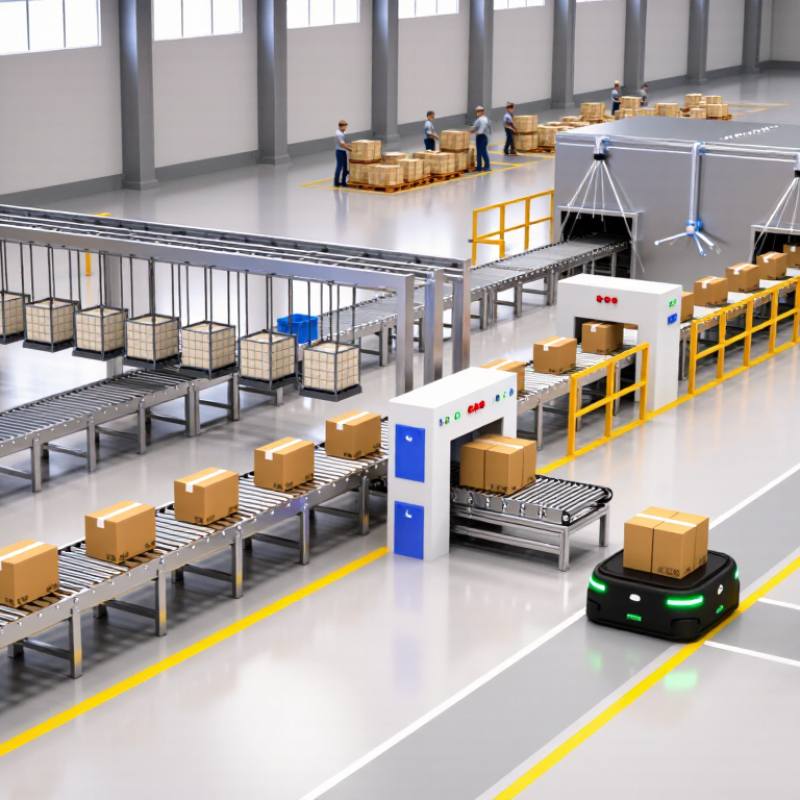
Modern material handling depends on moving goods safely, predictably, and with less unnecessary handling. Conveyor systems connect receiving, storage, packing, and shipping, carrying cartons or totes between work areas. A well-planned line can reduce repeated lifting and keep orders moving during busy shifts. That matters. Yet a conveyor cannot fix poor slotting or unclear work processes.

MHI and Deloitte’s 2024 Annual Industry Report found that 55% of surveyed organizations planned to increase supply-chain technology investment. Conveyors can be part of that effort, especially when paired with sensors, barcode scanning, and controls that adjust speed or release items gradually. For example, accumulation zones let cartons wait without piling up at a packing station.

In real facilities, small details matter: belt width, package weight, transfer gaps, and safe access for cleaning and maintenance. Not always obvious.

A system designed only for peak volume may waste space and energy during quieter hours. Buyers should compare throughput needs with product mix, layout changes, and maintenance skills before choosing equipment for 2026. A modest, well-integrated line can outperform a larger system that is difficult to adapt.

Which Conveyor Types Match Different Industrial Applications?

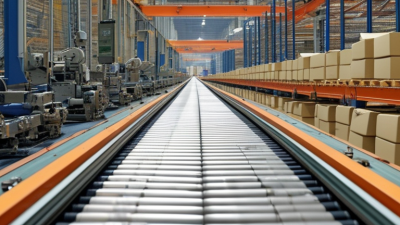
A belt conveyor is a practical choice for moving cartons, bags, or bulk material along a steady route. Its flat surface handles varied package sizes, while cleats can help carry goods up moderate inclines. For distribution centers, powered roller conveyors suit cartons that need to pause, merge, or change direction. Gravity rollers cost less to operate, but they need a controlled slope and consistent loads.

Small details matter.

Screw conveyors move powders or granules through enclosed troughs, helping limit dust and spillage. They work well for short, contained routes, though abrasive material can wear components faster than expected. Chain conveyors and pallet systems handle heavy loads in manufacturing plants, especially where pallets need repeatable positioning. Overhead conveyors free floor space for assembly or finishing work, but maintenance access may be less convenient.

For wet processing areas, modular plastic belts can be easier to clean around than complex roller beds. The right choice still depends on product dimensions, throughput, temperature, incline, and washdown conditions. Measure the actual load, not just the average one. A layout drawing can overlook awkward transfers or occasional oversized items. That is worth checking before installation.

What Factors Should Global Buyers Evaluate in 2026?

Global buyers should assess a conveyor as part of the full production line, not as a catalog item. MHI’s 2024 Annual Industry Report found that 55% of respondents planned to increase supply-chain technology investment over five years. That signals interest in automation, not a reason to automate every transfer point. Start with the load: record its weight, dimensions, shape, and daily variation. Measure it. Then compare required throughput with peak demand, not just an average shift. No model fits every site.

Energy, maintenance access, controls integration, and safety also deserve close review. An IEA motor-systems analysis estimated that electric motor systems use about 45% of global electricity. That is an older, broad benchmark, not a conveyor-only figure, but it makes drive efficiency worth checking. Ask suppliers for energy and maintenance estimates under your actual operating conditions. Also confirm that technicians can reach rollers, belts, and sensors without disrupting nearby work. A low purchase price can look attractive; downtime may tell a different story. I would challenge any proposal that promises easy savings without showing its assumptions. Compare lifecycle costs, but keep the model grounded in your own site data.

Ten Leading Conveyor Systems for Global Buyers in 2026

Global buyers comparing ten leading conveyor systems in 2026 should start with the material, route, and operating environment. Belt conveyors suit steady movement of cartons or bulk goods. Roller systems handle rigid packages, while chain and slat conveyors tolerate heavier loads. Modular plastic belts can simplify washing; screw conveyors move powders through enclosed troughs. Bucket elevators lift grain or similar materials, and pneumatic systems carry fine particles in pipes. Overhead conveyors free floor space. Vertical lifts connect different levels. Needs differ.

The right choice depends on more than rated speed. Check load weight, product dimensions, incline, dust, moisture, and cleaning routines. A roller line may look efficient on a plan, yet small, soft packages can stall between rollers. For a damp processing area, inspect belt materials, frame finishes, and access to tensioning points. Ask suppliers for expected throughput under your actual product mix, not just peak figures. Measurements matter.

Global purchasing adds practical questions. Confirm voltage, controls compatibility, spare-part availability, installation support, and shipping dimensions before comparing prices. Request drawings and maintenance intervals, then review them with the people who will operate the line. A quiet test run does not prove reliable performance across a full shift. I would also leave room in the layout for inspection and future changes; that space is easy to overlook, and sometimes the plan still needs revision.

10 Leading Conveyor System Types for Global Buyers in 2026

Compare common conveyor types by their typical suitability for different material-handling needs.

Ratings are qualitative application-fit indicators on a 1–5 scale, not measured performance specifications. Actual capacity, speed, incline, and routing depend on system design, materials, and operating conditions.

How to Compare Installation, Safety, and Lifecycle Support Worldwide

Global buyers should compare conveyor systems by more than belt speed and purchase price. Installation conditions can change the real cost. Check whether equipment fits existing floor space, loading docks, and power supplies. Ask for foundation drawings, cable requirements, and a clear installation schedule. A system that looks simple on paper may need extra access platforms or local wiring work. Small details matter.

Tips: Request a site survey before final quotations. Confirm who supervises installation, trains operators, and verifies safety devices. Ask how guards, emergency stops, and warning labels are adapted for the destination site. Compare documentation languages and spare-parts lead times, too. A low quote can hide delays.

Lifecycle support deserves equal attention. Review preventive maintenance intervals, remote troubleshooting options, and the availability of replacement rollers, motors, and sensors. Ask for sample inspection records, not just service promises. If support depends on one distant technician, response times may become difficult to predict. We sometimes focus too much on uptime figures; actual performance also depends on cleaning routines, operator habits, and the quality of handover. Leave room for those less tidy realities when comparing suppliers.

10 Best Conveyor Systems for Global Buyers in 2026 - How to Compare Installation, Safety, and Lifecycle Support Worldwide

This category-based comparison covers common conveyor technologies rather than specific suppliers. “Best” depends on the material, route, operating environment, local regulations, and maintenance resources. Safety measures must be determined through a site-specific risk assessment and applicable local requirements.

Conveyor system Typical applications and strengths Installation considerations Key safety considerations Lifecycle and global support considerations Main trade-offs
1. Troughed belt conveyor Moves bulk materials such as aggregates, grain, and mineral products over horizontal or inclined routes; suitable for long, continuous flows. Requires alignment of the belt, idlers, pulleys, and loading points. Long routes may need structural supports, transfer points, and weather protection. Guard accessible nip points and rotating parts; provide suitable emergency-stop access and safe isolation procedures. Dust control may be needed for dusty materials. Plan for belt, idler, pulley, and scraper inspection and replacement. Confirm availability of compatible belt specifications and trained service personnel near the operating site. Efficient for continuous bulk movement, but spillage, belt tracking, and wear need active management.
2. Flat-belt conveyor Commonly used for cartons, parcels, packaged goods, and unit loads where a continuous supporting surface is useful. Needs a level, correctly aligned frame and suitable belt tension. Layouts with curves or inclines may require purpose-designed components. Guard drive and return-side pinch points; assess access to loading and discharge areas. Use appropriate controls to prevent unexpected start-up during maintenance. Inspect belt condition, tracking, bearings, and drive components. A modular design and documented spare-parts list can simplify maintenance across multiple sites. Versatile and straightforward for many unit loads, but not ideal for every sharp, hot, oily, or irregular product.
3. Gravity roller conveyor Moves compatible cartons, totes, and other unit loads using gravity, typically on a slight decline or with manual pushing. Generally has no powered drive, but the slope, roller spacing, load dimensions, and support structure must suit the product and route. Control speed and accumulation to reduce collision or falling-load risks. Address pinch points and provide end stops where loads could leave the conveyor. Rollers and bearings are usually the main wear items. Check whether replacement rollers and compatible sections can be sourced locally. Simple and does not require a motor for movement, but needs suitable loads and a carefully controlled slope.
4. Motor-driven roller conveyor Provides powered movement and accumulation for cartons, totes, and pallet loads, depending on roller design and system configuration. Requires electrical supply, controls, and integration with sensors or upstream and downstream equipment. Zone layout and load compatibility should be confirmed before installation. Assess electrical hazards, moving rollers, nip points, and unexpected movement. Emergency stops, guarding, and safe maintenance isolation should match the risk assessment. Service planning may include motors, drive components, sensors, and control equipment. Keep wiring diagrams, parameter backups, and spare-part references available at each site. Offers controlled flow and accumulation, but depends on electrical and controls expertise for troubleshooting.
5. Chain conveyor Suitable for heavy loads, pallets, fixtures, or products that can be carried by chains or chain-mounted attachments. Requires accurate alignment, adequate structural support, and correct chain tension. Design must match the load, speed, route, and operating environment. Chain drives create serious entanglement and pinch hazards. Guard sprockets and accessible chain runs, and establish safe isolation and maintenance procedures. Inspect chain wear, lubrication needs, sprockets, and tension. Confirm that chain pitch and replacement parts are specified clearly for international procurement. Can handle demanding loads, but chains require planned inspection and may need lubrication and adjustment.
6. Slat conveyor Uses linked slats to carry products that need a more rigid or heat-resistant conveying surface than a typical belt can provide. Needs a robust frame and correctly matched slats, chain, and drive. Transfer points and product contact surfaces should be designed around the item being conveyed. Guard chain drives and return runs; assess gaps between slats and fixed structures for trapping hazards. Provide safe access for cleaning and maintenance. Inspect slats, connecting components, drive chains, and bearings. Document wear limits and keep compatible replacement sections available. Durable for selected applications, but can be heavier and more complex than a basic belt conveyor.
7. Overhead conveyor Suspends products or carriers above floor level, often used in manufacturing, finishing, and material-handling routes with limited floor space. Requires suitable building structure, clearances, and a carefully planned route. Structural capacity and access for installation and maintenance must be checked. Address risks from suspended or falling loads, moving carriers, and work at height. Guard accessible moving parts and establish exclusion zones where appropriate. Inspect track, hangers, carriers, drives, and load-bearing components. Ensure local teams have access to safe inspection methods and replacement components. Can free floor space, but installation depends on building structure and overhead access.
8. Screw conveyor Enclosed or partially enclosed movement of powders, granules, and other bulk materials over relatively short routes. Requires correct selection of screw geometry, casing, inlet, and discharge. Material characteristics such as flowability and abrasiveness affect design. Enclose rotating screws and guard drive components. Before clearing blockages or opening covers, isolate energy sources and follow safe access procedures. Check flights, bearings, seals, and drive components for wear. Abrasive or corrosive materials can affect maintenance intervals and replacement-part needs. Enclosure can help contain material, but some materials may degrade, compact, or wear components during conveying.
9. Bucket elevator Raises bulk materials vertically in buckets, commonly in grain handling, processing, and other bulk-material installations. Needs a vertical structure, suitable foundations, and coordinated inlet and discharge arrangements. Building height and access for inspection are important design factors. Assess moving belts or chains, buckets, access doors, and risks associated with dust and material accumulation. Provide suitable guarding and safe isolation for inspection. Inspect buckets, attachment points, belt or chain, bearings, and alignment. Dust-related risks and the material’s properties should be included in maintenance planning. Efficient for vertical bulk movement, but requires careful design, inspection access, and control of material-related hazards.
10. Pneumatic conveyor Moves suitable dry bulk materials through pipelines using air or another conveying gas; useful where enclosed routing is preferred. Requires coordinated design of pipelines, bends, air supply, separation equipment, and material feed. Pressure or vacuum conditions must match the application. Assess pressure, dust, noise, and access to moving equipment. Use appropriate isolation and pressure-relief arrangements as required by the system design and local rules. Plan inspection of pipes, bends, filters, separators, blowers, and seals. Wear, filter condition, and energy use can influence operating costs. Enclosed conveying can limit open handling, but system performance depends on material properties and correct air-system design.