


Top Manufacturing Automation Companies in China

China’s manufacturing automation market is no longer defined by robots alone. It includes motion-control systems, machine vision, industrial software, and the integration work connecting them. On a busy production line, a robot arm may draw attention, but sensors and control systems often determine whether it runs reliably.

The International Federation of Robotics reported 276,288 industrial robot installations in China in 2023, representing 51% of global installations. Its World Robotics 2024 report also identifies China as the world’s largest market for industrial robots. The scale is striking. Yet installation numbers do not reveal how well systems perform, how easily they integrate, or what support buyers receive after commissioning.

As IFR President Marina Bill has noted, “China is the world’s largest market for industrial robots.” That market includes domestic manufacturers and international suppliers, each with different strengths. This guide examines leading manufacturing automation companies in China across robotics, controls, machine vision, and factory systems. It considers product capabilities, industry coverage, and practical deployment needs. A company’s reputation matters, but so do spare-parts access, software compatibility, and the skills available at a customer’s site. These details are easy to overlook. They can shape the difference between a polished demonstration and a production line that keeps moving. Company rankings also have limits; the best fit depends on the factory, process, and investment plan.
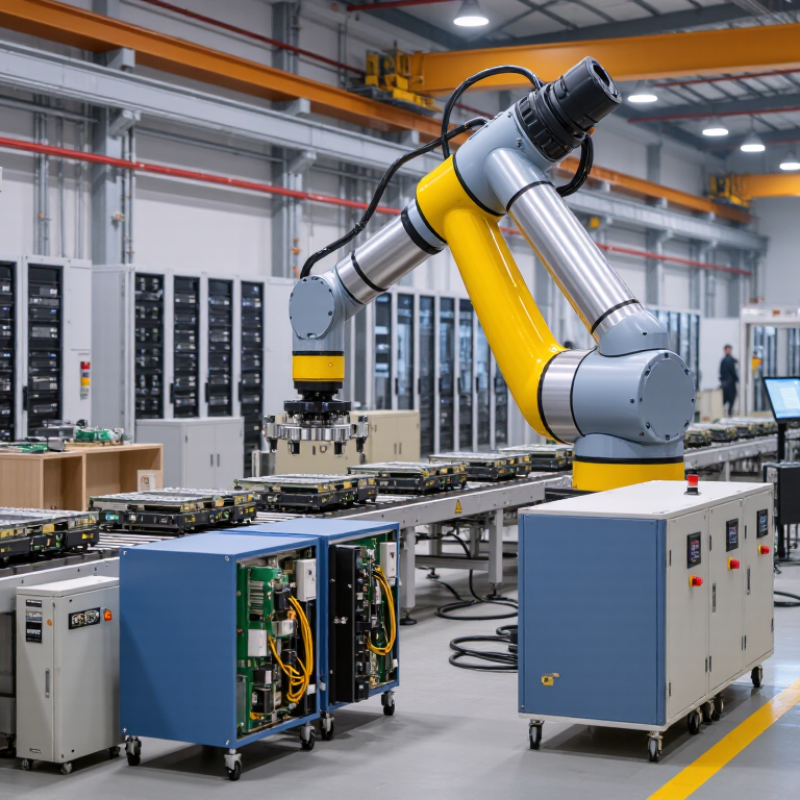
Top Manufacturing Automation Companies in China

Overview of Manufacturing Automation in China

China’s manufacturing automation combines industrial robots, machine vision, programmable controls, and connected production systems. The International Federation of Robotics’ World Robotics 2024 report records 276,288 industrial robot installations in China during 2023, about 51% of global installations. China’s operational robot stock reached roughly 1.76 million units. These figures show the scale of deployment, but not how evenly automation is shared across factories.

On a production floor, automation may mean a robot welding a vehicle frame, a vision system checking a machined part, or an automated guided vehicle carrying materials between workstations. IFR also reports China’s robot density at 470 units per 10,000 manufacturing employees in 2023. The measure is useful, but limited: it cannot tell whether equipment is well integrated or whether workers can maintain it. Large plants may connect machines to production data systems, while smaller workshops often automate one task at a time. Progress can look impressive from a distance. The practical details are less tidy. Retrofitting older equipment, training technicians, and keeping sensors calibrated remain demanding work. Automation is not a switch that every factory can simply flip.

Structure of China’s Industrial Automation Sector

Top Manufacturing Automation Companies in China
Structure of China’s Industrial Automation Sector

China’s industrial automation sector is a layered network, not one uniform market. At the equipment level, factories use sensors, drives, controllers, and industrial robots to monitor and move materials. These devices connect to control systems that coordinate production lines, regulate temperatures, and flag faults. The details matter: a packaging line may need fast motion control, while a chemical plant may prioritize stable process monitoring.

System integrators form another important layer. They configure equipment, connect machines to factory software, and adapt systems to specific production needs. Manufacturers also rely on component suppliers, engineering teams, maintenance providers, and technical colleges. Their work shapes whether an automation project runs reliably after installation, not just during a demonstration. Integration can be messy.

At the factory level, automation ranges from a single robotic cell to connected production systems that track output and equipment condition. Adoption depends on investment, workforce skills, product variety, and the age of existing machinery. A small factory may automate one repetitive task first, then expand if the results justify the cost. This picture is useful, but incomplete: regional capabilities and industry requirements vary, and digital connectivity alone does not guarantee better production.

Top Manufacturing Automation Companies in China - Structure of China’s Industrial Automation Sector

Sector Layer Typical Products and Systems Primary Function Common Manufacturing Applications Key Evaluation Factors
Control Systems Programmable logic controllers (PLCs), distributed control systems (DCS), remote I/O, human-machine interfaces (HMIs), and supervisory control and data acquisition (SCADA) systems Monitor equipment and processes, execute control logic, and coordinate production operations Discrete production lines, utilities, chemical processing, and continuous-process plants Reliability, response time, interoperability, safety requirements, and lifecycle support
Motion Control and Drives Servo motors and drives, variable-frequency drives, motion controllers, and related feedback devices Control motor speed, torque, position, and coordinated machine movement Packaging machinery, machine tools, conveying systems, printing equipment, and electronics assembly Positioning accuracy, dynamic performance, energy use, compatibility, and ease of commissioning
Robotics and Automated Equipment Industrial robots, collaborative robots, robotic cells, end-of-arm tooling, and automated material-handling equipment Automate repetitive, high-precision, or physically demanding production and handling tasks Automotive production, electronics assembly, welding, machine tending, palletizing, and material handling Payload, reach, cycle time, repeatability, safety integration, and application-specific tooling
CNC and Machine-Tool Automation Computer numerical control systems, machine drives, feedback systems, and automated tool or workpiece handling Control machine-tool movements and support repeatable machining operations Turning, milling, grinding, cutting, and other metalworking processes Machining accuracy, supported axes, processing speed, software compatibility, and serviceability
Sensors and Instrumentation Pressure, temperature, flow, level, proximity, position, and machine-vision sensors Measure process conditions and equipment status to provide inputs for control and inspection Process monitoring, quality inspection, equipment protection, and production-line feedback Measurement range, accuracy, environmental rating, calibration needs, and communication protocols
Industrial Software and Digitalization Manufacturing execution systems (MES), production-data platforms, industrial software, edge computing, and analytics tools Connect production data with planning and quality workflows, improve traceability, and support operational analysis Production scheduling, quality tracking, equipment monitoring, and plant-level data integration Integration with existing systems, data security, scalability, usability, and measurable operational value
Systems Integration and Engineering Services Automation design, system integration, installation, commissioning, maintenance, and retrofit services Combine equipment, controls, software, and safety systems into an operating production solution Factory upgrades, new production lines, process modernization, and multi-vendor equipment integration Engineering experience, commissioning quality, project delivery, safety compliance, and after-sales coverage

Note: This table describes the main functional layers of the industrial automation sector; it does not rank or identify individual companies or brands.

Leading Manufacturing Automation Companies in China

Leading manufacturing automation companies in China support factories with equipment and systems that connect production tasks, machine data, and quality checks. Their work may include robotic arms, programmable controllers, machine vision, and automated material handling. A camera above a moving conveyor, for example, can flag a misaligned part before it reaches the next station. Small gains matter.

Strong providers do more than deliver hardware. They assess cycle times, floor layouts, worker needs, and existing equipment before proposing changes. Reliable commissioning, clear documentation, and accessible technical support also shape long-term performance. Buyers should ask how systems handle product changes, downtime, and data security, then verify claims through relevant project references. A polished demonstration is not the whole story.

There is no single solution for every factory. A system that suits high-volume assembly may be too costly or rigid for a workshop producing varied orders. Integration can also take longer than expected, especially when older machines use inconsistent controls. Automation may improve repeatability, but it does not fix unclear processes by itself. Careful trials and honest reviews of results help companies choose practical systems that workers can operate and maintain.

Key Technologies and Industrial Applications

China’s manufacturing automation sector combines industrial robots, programmable controllers, machine vision, and connected production software. These technologies help factories manage repetitive work while keeping process conditions more consistent. A camera can inspect a circuit board for misplaced components; a robot can move heavy parts between stations. Small changes in setup can still cause missed defects.

Automotive plants use robotic arms for welding, painting, and material handling. Electronics manufacturers rely on precision assembly and optical inspection, where tiny placement errors matter. In food processing, automated conveyors and sensors help control filling and packaging. These systems work best when equipment, software, and safety procedures are designed together. That promise is not automatic.

Some factories also use digital twins to test production changes before applying them on the floor. Sensors can flag unusual motor vibration or rising machine temperatures, giving maintenance teams time to investigate. Yet older equipment may not share data cleanly, and poor sensor calibration can mislead operators. Integration takes skilled engineers and steady maintenance. Faster lines are useful, but they do not fix unclear workflows or weak quality checks. A practical deployment often starts with one production cell, then expands after staff review real operating results.

Market Trends and Company Comparison Factors

Manufacturing automation in China is shifting from isolated machines toward connected production cells. Machine vision now checks weld seams, labels, and surface defects at line speed. Collaborative robots are also appearing in smaller workshops, where floor space is tight. These changes can improve consistency, but a polished demonstration does not prove reliable performance across a full shift.

A neat demo can mislead.

Compare companies by application fit, not by product range alone. Ask how a system handles your actual part sizes, changeover frequency, and target cycle time. Request evidence from a similar production environment, including uptime records and maintenance intervals. Check whether operators can adjust recipes without specialist support. Small details matter: a sensor that struggles with glare may slow an otherwise fast inspection line.

Integration and after-sales support deserve equal attention. Confirm compatibility with existing controllers, production software, and safety procedures before installation. Ask who responds when a line stops at night, and how quickly spare components can arrive. Energy use, training needs, and upgrade costs also affect long-term value. Some comparisons remain imperfect because suppliers may measure performance differently. State your assumptions clearly, and test a representative process before committing to a wider rollout.