


Global buyers are paying closer attention to automation solutions because productivity now depends on more than cheaper labor. It depends on speed, accuracy, resilience, and measurable control. The International Federation of Robotics reported 541,302 industrial robots were installed worldwide in 2023. More than 4.28 million industrial robots were operating globally. These figures show a clear shift from isolated machines toward connected production systems.
“More than half a million robots installed in one year demonstrates the continued demand for automation,” said Marina Bill, President of the International Federation of Robotics, in its World Robotics 2024 report. Her statement reflects a market reality. Buyers want systems that can inspect products, move materials, and analyze performance data. They also want practical integration with existing equipment. A robotic arm beside a conveyor may look impressive, but its value depends on fewer errors, shorter changeover times, and safer workflows.
The McKinsey Global Institute has estimated that automation could raise global productivity growth significantly, although results vary by industry and implementation quality. That qualification matters. Automation solutions are not instant fixes. Poor data, weak training, or unclear ownership can reduce their impact. Sometimes, a manual checkpoint still prevents an expensive mistake. Global buyers therefore evaluate vendors through total cost of ownership, cybersecurity, service coverage, and measurable return on investment. The technology is powerful. The business case must remain honest.
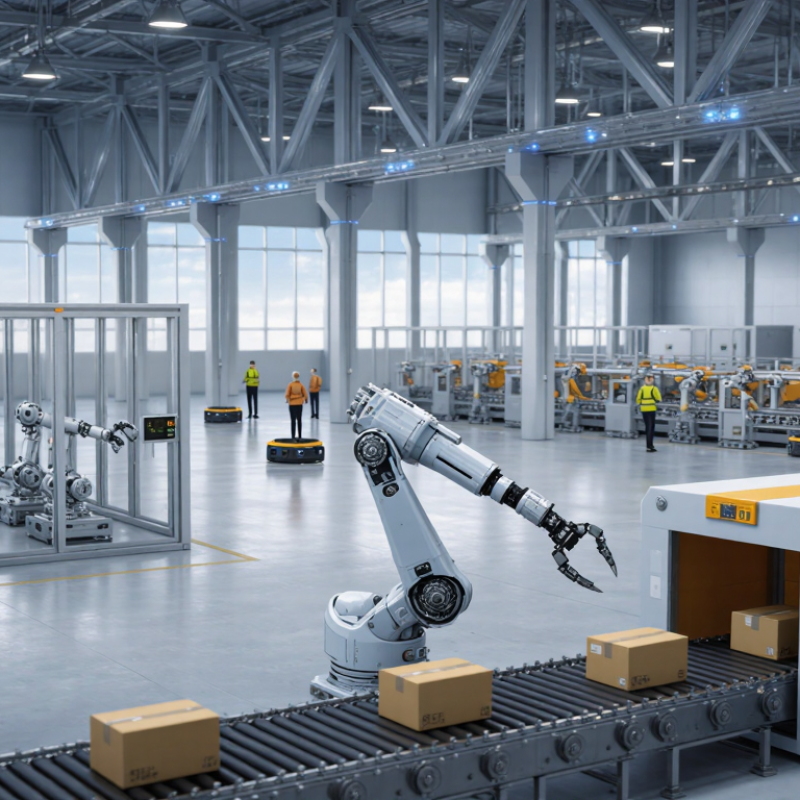
Automation solutions combine hardware, software, and operating rules to complete repeatable tasks with limited manual input. A typical system uses sensors to collect information, a controller to process it, and actuators to perform an action. For example, a sensor detects an empty carton, the controller checks its position, and a robotic arm moves it to the correct line.
The process usually begins with workflow mapping. Engineers identify delays, safety risks, and repetitive movements before choosing equipment. Software then connects machines with inventory, production, or quality data. Operators can view temperature readings, machine speed, and error alerts from one interface. Good systems also record changes, which helps teams investigate defects instead of guessing.
Automation is not magic. A dusty sensor can stop an otherwise advanced process. Poor data can produce fast, consistent mistakes. Human oversight still matters, especially when conditions change or equipment behaves unexpectedly. In practical deployments, small pilot projects often reveal problems that planning documents miss. A conveyor may require a different detection angle. Staff may need clearer instructions. Maintenance schedules may also need adjustment. These details influence reliability more than impressive technical specifications.
| Automation Solution | How It Works | Typical Components | Common Applications | Buyer Value | Key Performance Indicators | Important Selection Factors |
|---|---|---|---|---|---|---|
| Industrial Robotics | Programmable robotic arms or mobile robots perform repeatable physical tasks by following digital instructions and sensor feedback. | Robot arm End effector Controller Safety system | Assembly, welding, packaging, palletizing, machine tending, and material handling. | Improves repeatability, reduces exposure to hazardous work, and supports continuous production. | Cycle time, uptime, payload capacity, positioning repeatability, and energy consumption. | Payload, reach, operating environment, integration capability, safety requirements, and maintenance access. |
| Programmable Logic Control | A programmable controller reads inputs from sensors, processes logic, and sends commands to machines, valves, motors, or actuators. | PLC I/O modules HMI Control software | Conveyor systems, production lines, water treatment, process control, and machine automation. | Provides reliable real-time control and allows production sequences to be modified without replacing the complete control system. | Scan time, system availability, fault frequency, response time, and I/O capacity. | Protocol support, number of inputs and outputs, programming environment, cybersecurity, and expansion capacity. |
| Industrial Internet of Things | Connected sensors collect operational data and transmit it to local or cloud-based systems for monitoring, analysis, and optimization. | Sensors Gateways Networks Analytics platform | Equipment monitoring, energy management, asset tracking, quality analysis, and predictive maintenance. | Creates visibility across equipment and facilities while enabling data-driven decisions and earlier fault detection. | Data availability, alert accuracy, network latency, asset utilization, and maintenance response time. | Connectivity standards, data ownership, cybersecurity, interoperability, scalability, and total data cost. |
| Machine Vision | Cameras and image-processing software inspect products or guide machines by analyzing shape, color, dimensions, codes, or surface defects. | Camera Lighting Lens Vision software | Quality inspection, barcode reading, component positioning, measurement, sorting, and traceability. | Supports consistent inspection at production speed and reduces dependence on manual visual checks. | Detection rate, false-rejection rate, inspection speed, resolution, and measurement accuracy. | Lighting conditions, product variation, image resolution, processing speed, environmental protection, and software integration. |
| Automated Material Handling | Automated vehicles, conveyors, lifts, or storage systems move and position materials according to production or warehouse instructions. | Conveyors Mobile robots Navigation system Warehouse software | Warehousing, order fulfillment, line-side delivery, inventory movement, and distribution operations. | Reduces manual transport, improves inventory flow, and increases the consistency of internal logistics. | Throughput, travel time, delivery accuracy, fleet utilization, and system availability. | Floor layout, load size, navigation method, traffic management, safety, and compatibility with existing systems. |
| Process Automation | Control systems automatically regulate continuous or batch processes using measurements, control algorithms, and predefined operating limits. | Transmitters Control valves DCS or PLC Safety controls | Food processing, chemical production, utilities, pharmaceuticals, energy systems, and water treatment. | Improves process stability, product consistency, operator safety, and resource efficiency. | Process stability, yield, quality variation, energy use, alarm frequency, and unplanned downtime. | Control accuracy, regulatory requirements, hazardous-area rating, redundancy, data logging, and lifecycle support. |
| Robotic Process Automation | Software bots execute rule-based digital tasks by interacting with applications, files, databases, and web interfaces. | Software bot Workflow engine Application connectors Audit logs | Data entry, invoice processing, report generation, order updates, reconciliation, and administrative workflows. | Reduces repetitive office work, improves processing consistency, and enables operation outside normal working hours. | Processing time, error rate, task volume, bot utilization, and exception rate. | Process stability, application compatibility, access control, exception handling, auditability, and change management. |
| Predictive Maintenance | Sensor data and analytical models identify abnormal operating patterns and estimate when equipment may require service. | Condition sensors Data historian Analytics model Maintenance system | Monitoring motors, pumps, compressors, production equipment, rotating machinery, and facility systems. | Helps reduce unexpected failures, optimize maintenance schedules, and improve spare-parts planning. | Failure prediction lead time, unplanned downtime, maintenance cost, precision, and recall. | Data quality, sensor coverage, model validation, alert interpretability, integration, and technician response processes. |
| Energy Management Automation | Power meters and control systems monitor consumption and automatically adjust equipment, schedules, or set points to improve efficiency. | Smart meters Power controllers Energy dashboard Optimization software | Factory utilities, HVAC systems, compressed air, refrigeration, lighting, and peak-load management. | Reduces avoidable energy use, improves operational visibility, and supports energy-cost planning. | Energy intensity, peak demand, load factor, consumption by asset, and cost per unit produced. | Measurement accuracy, tariff structure, control flexibility, reporting needs, integration, and payback period. |
| Digital Twin Systems | A digital representation of a physical asset, process, or facility is updated with operational data to support simulation and optimization. | 3D or process model Live data Simulation tools Analytics | Production planning, equipment commissioning, process optimization, training, and facility management. | Allows buyers to test scenarios digitally before changing physical operations and can improve decision quality. | Model accuracy, simulation time, forecast error, utilization improvement, and changeover time. | Data quality, model scope, update frequency, interoperability, computing requirements, and user expertise. |