Why Do You Need an Electronic Voltage Stabilizer?
An Electronic Voltage Stabilizer helps keep equipment supply voltage within a suitable range when incoming power fluctuates. That matters in workshops, clinics, offices, and homes. A refrigerator may restart during a dip; a control panel may behave unpredictably when voltage rises. Small changes can be easy to miss. Their effects are not always small.
The scale of power-quality problems deserves attention. The Electric Power Research Institute’s 2001 report, The Cost of Power Disturbances to Industrial and Digital Economy Companies, estimated annual U.S. losses of $104 billion to $164 billion. That historical estimate covers disturbance-related costs broadly; it is not a measure of losses an individual stabilizer can prevent. As power-quality researcher Math H. J. Bollen put it, “Power quality is the combination of voltage quality and current quality.” His framing is useful because a stabilizer addresses voltage, not every electrical problem. It cannot replace proper grounding, surge protection, or equipment maintenance. Not a cure-all.
Choosing a unit starts with evidence from the site. Record voltage at different times, note which devices are sensitive, and check their combined load. Look at the stabilizer’s operating range, rated capacity, response time, and overload protection. A unit that is too small may struggle when a motor starts. One that is poorly matched may add cost without solving the actual issue. This is where buyers can misjudge the need: a flickering lamp alone does not reveal the cause. A qualified electrician can help interpret measurements and recommend a suitable solution. Real conditions matter.
What Is an Electronic Voltage Stabilizer?
What Is an Electronic Voltage Stabilizer?
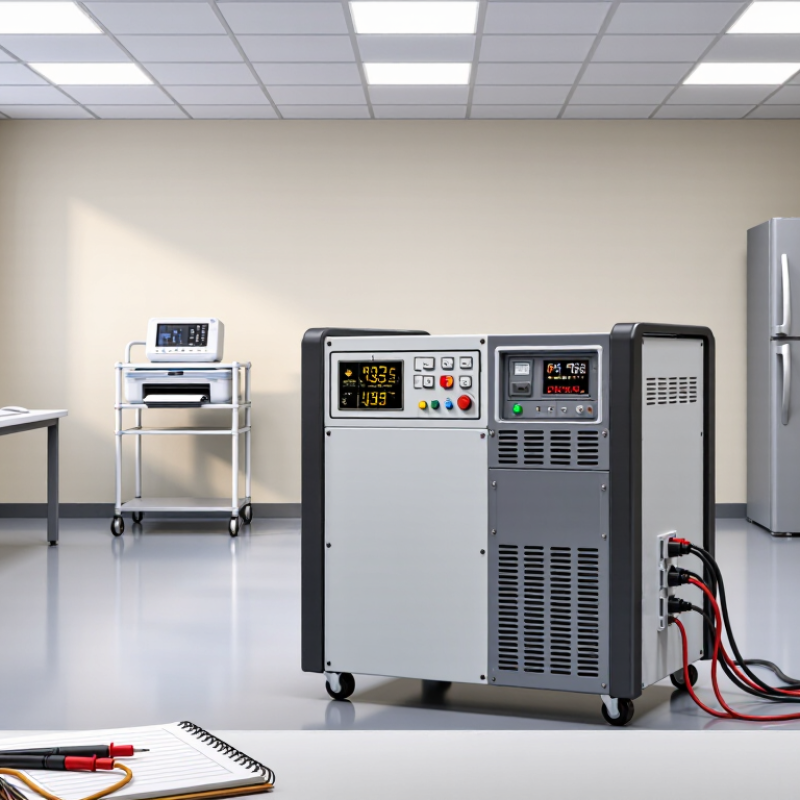
An electronic voltage stabilizer is a device that monitors incoming voltage and adjusts its output when supply levels drift. It typically uses electronic controls and switching components to correct voltage, helping connected equipment receive power closer to its rated input.
Think of a workshop bench: when the supply fluctuates, the stabilizer responds without requiring someone to adjust a dial. Response speed and correction range vary by design, so the device’s specifications matter.
It is not a UPS. A stabilizer generally does not provide backup power during an outage, and it cannot fix every power-quality problem.
IEEE’s Recommended Practice for Monitoring Electric Power Quality, IEEE 1159-2019, classifies a voltage sag as a drop to 0.1–0.9 per unit lasting from half a cycle to one minute. That range shows why brief dips can be easy to miss yet still disrupt sensitive equipment.
Check the load’s voltage range, power demand, and starting current before choosing a stabilizer. A mismatch can leave a motor struggling or a control system repeatedly restarting.
The boundary between “useful protection” and “unnecessary equipment” is not always obvious; measure the supply over time rather than guessing from one bad afternoon.
Why Does Supply Voltage Fluctuate?
Electricity rarely arrives at a perfectly steady voltage. Demand on the local grid changes throughout the day. When many homes use heating or cooling at once, the supply can dip. A nearby transformer or long distribution line may also contribute to variation. Weather, equipment faults, and maintenance work can create brief changes, too.
The pattern is not always obvious. A lamp may dim for a moment when a refrigerator starts, because its motor draws extra current at startup. In a building with long or undersized wiring, that dip may be more noticeable. Loose or damaged connections can cause unstable voltage and deserve attention from a qualified electrician. A stabilizer may help equipment cope with some voltage variation, but it cannot repair faulty wiring or provide power during an outage. It also has operating limits. Check the voltage range and the appliance’s requirements before choosing one. Small details matter.
How Does an Electronic Voltage Stabilizer Work?
An electronic voltage stabilizer monitors the incoming supply and adjusts its output when voltage moves outside a set range. Inside, a sensing circuit measures voltage many times per second. A controller compares each reading with its target. The process is automatic. It does not generate electricity; it corrects some changes in the supply.
When voltage drops, the controller can switch transformer taps or control power electronics to raise the output. When voltage rises, it can reduce it. The exact method depends on the stabilizer’s design. In either case, the adjustment aims to keep connected equipment within a more suitable voltage range. Switching happens quickly, but it cannot remove every fluctuation.
Imagine a workshop where the lights dim briefly when a large motor starts. A stabilizer may detect the dip and compensate, helping sensitive equipment receive steadier power. The limits matter. Its response time, capacity, and correction range should match the load; an undersized unit may struggle or overheat. It also cannot fix a prolonged outage or poor wiring. One detail is easy to overlook: actual performance varies with the model and the quality of the incoming supply. The device’s specifications deserve a careful read.
Which Appliances and Systems Need Voltage Stabilization?
An electronic voltage stabilizer can help when supply voltage regularly rises or falls beyond an appliance’s rated range. Refrigerators, freezers, and air conditioners use compressors that may struggle during sustained low voltage. Their motors can draw more current, run hot, or fail to start reliably. Motors need special care. Water pumps and workshop equipment can face similar problems, especially on long or lightly loaded power lines.
Tips: Check voltage with a suitable meter at different times of day. Compare readings with the appliance’s rating plate. A stabilizer must match the equipment’s voltage, phase, and starting load. It is not a substitute for surge protection.
Sensitive electronics may also benefit from stable voltage. Examples include network equipment, desktop computers, point-of-sale systems, and some laboratory instruments. In small offices, unstable power can cause unexpected restarts or interrupted work. Still, a brief flicker does not automatically mean a stabilizer is needed. Record the symptoms and readings first. If several appliances behave oddly, ask a qualified electrician to inspect the supply and wiring. Some systems need a dedicated stabilizer; others may be better served by correcting a loose connection or choosing a properly rated uninterruptible power supply.
What Factors Should Guide Stabilizer Selection?
Choosing an electronic voltage stabilizer starts with the equipment it will protect. List each load and check its rated voltage, power, and phase. Add their demand carefully, but do not rely on wattage alone. A refrigerator or pump may draw much more current when its motor starts. The stabilizer must handle that brief surge. Leave a suitable capacity margin, too.
Check the input voltage range at the actual installation point. A unit cannot correct conditions beyond its specified limits. Compare its output accuracy and response time with the sensitivity of your equipment. Computers and control systems may need tighter regulation than basic lighting. Consider whether the load needs a single-phase or three-phase unit. Small details matter.
The installation environment also guides selection. Heat, dust, moisture, and limited ventilation can affect operation and service life. Check the enclosure rating, cooling method, protection features, and maintenance requirements. Ask whether the stabilizer can tolerate overloads and frequent voltage swings. It is tempting to choose extra capacity and stop there, but that can miss a poor fit. A stabilizer also cannot replace sound wiring or provide backup power during an outage. Measure voltage variations over time if possible; one quick reading may not show the whole pattern.
Why Do You Need an Electronic Voltage Stabilizer?
What Factors Should Guide Stabilizer Selection?
The chart shows illustrative ±10% screening bands calculated from common 120 V and 230 V nominal supplies; these are not universal statutory limits. Choose a stabilizer whose input correction range covers your measured supply fluctuations, and check load capacity, phase, output accuracy, and response time against your equipment requirements and local standards.