What Are the Top Types of Special Shaped Silicone Tubes?
Special-Shaped Silicone Tube products solve a practical problem: standard round tubing cannot always follow a compact assembly, protect a moving part, or fit a narrow channel. Their profiles may be oval, D-shaped, rectangular, multi-lumen, or custom-extruded. Picture a soft D-profile tube seated against a panel, or a multi-channel section carrying separate fluids through limited space. Small geometry changes can affect sealing, flow, flexibility, and installation.
The broader material market offers useful context, but it is not a measure of tubing demand. Grand View Research’s Silicone Market Size, Share & Trends Analysis Report estimated the global silicone market at about US$18.4 billion in 2023 and projected continued growth through 2030. That figure covers many silicone products, not special-shaped tubes alone. It should not be read as proof of demand for any particular profile. Details matter.
This guide compares common special-shaped tube types by profile, application, and selection criteria, including dimensions, hardness, temperature range, and media compatibility. A careful choice starts with a drawing and real operating conditions—not a product label. One limitation: no source material was supplied to verify a named expert’s published quotation on this specific topic. Rather than inventing one, this introduction leaves that claim out; a reliable article should add a quote only after checking its original source.
How Special-Shaped Silicone Tubes Differ from Standard Round Tubing
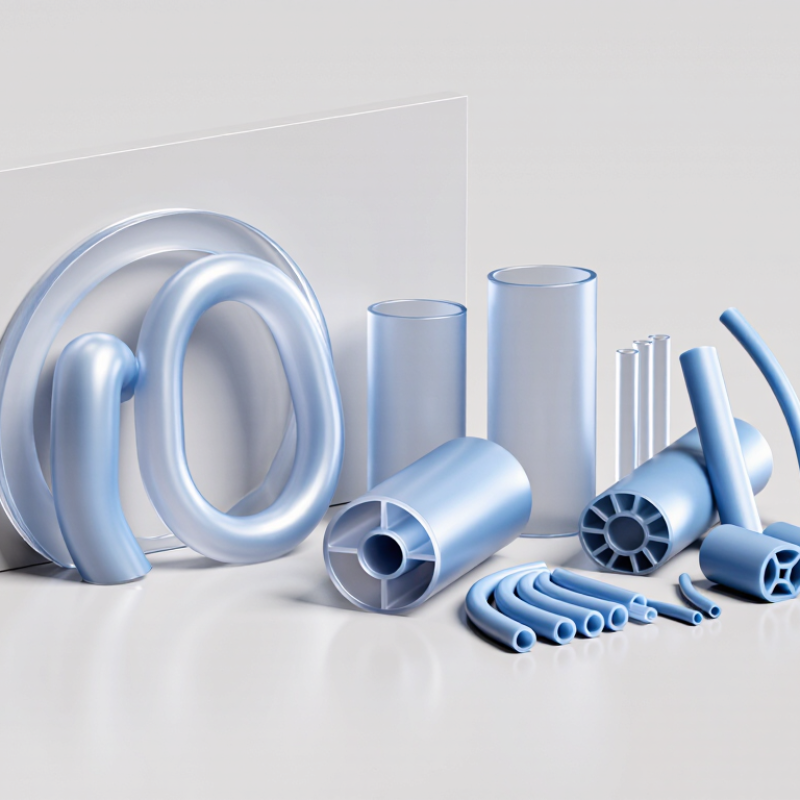
Special-shaped silicone tubes are molded or extruded with profiles beyond a simple circle. Common examples include oval, D-shaped, rectangular, ribbed, and multi-lumen tubing. Their shapes can help a tube sit in a narrow channel, cushion a flat surface, or carry separate flows through one piece. The right profile depends on the equipment and the job.
Standard round tubing has a consistent circular bore, making it straightforward to connect with common fittings and route through compact spaces. Its wall also tends to deform evenly under compression. Special profiles behave differently. An oval tube may fit a shallow gap, while a D-shaped tube can present a flat face against a panel. Multi-lumen designs divide internal pathways, but their thin walls may need careful support during bending.
Small details matter.
Shape alone does not guarantee better performance. A custom profile can be harder to clean, measure, or replace, and tight bends may distort its passage. Check the tube’s dimensions, wall thickness, temperature range, and compatibility with the fluid and fittings. It is easy to focus on the outline and overlook the bore.
In practice, that can be the wrong trade-off.
Common Profiles: D-Shaped, U-Shaped, and Channel Tubes
D-shaped, U-shaped, and channel silicone tubes solve different sealing and routing problems. A D-shaped profile has one flat face and one rounded side. It can sit against a panel while the curved section absorbs light compression. U-shaped tubing grips an edge, protecting it from abrasion and reducing rattling. Channel profiles add a defined groove, which can guide a cable or hold a panel edge. Small geometry changes matter: a narrow channel may pinch a panel, while a loose U-profile can slip during vibration.
Material performance matters too. Grand View Research estimated the global silicone market at about US$18.8 billion in 2023 and forecast 6.4% annual growth from 2024 to 2030. That figure covers silicone broadly, not shaped tubing alone, but it signals wide industrial use. For profile dimensions, ISO 3302-1 provides tolerance classes for molded and extruded rubber products; buyers should specify the class and measure samples under consistent conditions. Check wall thickness, opening width, compression recovery, and fit on the actual mating surface. A neat drawing is not enough. In practice, heat, mounting pressure, and imperfect edges can change the seal, so prototype testing remains essential.
Other Profiles: Square, Rectangular, and Multi-Lumen Tubes
Square and rectangular silicone tubes fit shallow channels where round tubing may roll or consume too much height. Their flat faces can help maintain contact against a panel, but sharp corners may concentrate stress during bending. Specify corner radii and wall thickness, then check the profile after repeated compression. Small design details matter.
Multi-lumen tubes carry separate fluids, gases, or wires through one flexible body. They can reduce assembly space, yet thin internal walls may deform when the tube bends tightly. The MarketsandMarkets Medical Tubing Market report estimated the market at USD 8.5 billion in 2023, with a projection of USD 11.4 billion by 2028. This broad market estimate does not measure demand for square, rectangular, or multi-lumen profiles specifically. Still, it shows the wider importance of application-specific tubing design. A clever profile can be harder to clean and inspect.
Tips: Confirm each lumen’s inner diameter, wall thickness, and bend radius on a physical sample. Test it under the actual pressure and temperature; drawings alone can miss uneven flow or pinched channels. Don’t skip that check.
How Shape and Material Properties Affect Tube Performance
What Are the Top Types of Special Shaped Silicone Tubes?
How Shape and Material Properties Affect Tube Performance
A tube’s profile can solve a fit problem, but it also changes how the tube bends, seals, and carries fluid. Oval and flat profiles fit narrow spaces, while D-shaped tubes can sit against a matching channel. Star-shaped or multi-lobed profiles offer several contact points, though their corners may be more prone to stress during repeated flexing. U-shaped profiles can protect edges or hold components in place. Small details matter.
Material choice is just as important. Softer silicone can compress around an uneven surface, but may collapse more readily under suction. A firmer compound often holds its shape better, yet can be harder to route around a tight corner. Wall thickness, temperature, and exposure to cleaning agents can also affect flexibility and service life; suitability depends on the specific compound and conditions. Check the actual dimensions, not only the drawing. A useful bench check is to bend a sample through the intended route, then inspect its bore and sealing contact. It is easy to overlook how a clamp or sharp turn changes the result. Test it in place.
How to Select a Profile for Its Application and Operating Conditions
What Are the Top Types of Special Shaped Silicone Tubes?
How to Select a Profile for Its Application and Operating Conditions
Special-shaped silicone tubes include D-shaped, U-shaped, rectangular, and multi-lumen profiles. Each shape solves a different fit or flow problem. A D-profile can seal against a flat panel, while a multi-lumen tube keeps separate passages within one flexible section. Fit matters. A profile that looks right on a drawing may twist or buckle after installation.
Start with the job the tube must perform. Check the available space, connection method, and whether the profile will carry fluid, cushion a moving part, or form a seal. Measure the groove or mating surface, including corners and gaps. For a compression seal, consider how much the tube will be squeezed; too much compression can distort the section and shorten service life. A common oversight is measuring only the nominal opening.
Then review temperature, pressure, movement, and contact with oils, cleaning agents, or other fluids. Silicone grades vary, so do not assume every formulation suits the same conditions. Ask for compound-specific compatibility and temperature data, and confirm dimensions and tolerances with the supplier. Test the profile in the actual assembly, under realistic heat and load. Test the real assembly. Lab checks help, but a first fit can still reveal an awkward edge or an unexpected leak.