






Choosing a reliable Entertainment Projector supplier in China requires more than comparing brightness numbers. It demands practical judgment, technical knowledge, and careful supplier verification. A projector may look impressive in a showroom, yet perform poorly in a bright family room or a crowded event venue. Lens quality, native resolution, contrast, cooling design, operating noise, warranty support, and replacement parts all influence the final experience.
David Labuskes, a respected audiovisual industry expert and former AVIXA chief executive, has said, “The AV industry is about creating experiences.” That principle fits the Entertainment Projector market closely. Chinese manufacturers such as XGIMI, JMGO, Dangbei, Formovie, and Hisense have developed strong consumer and home cinema portfolios. However, their strengths are not identical. One supplier may offer excellent smart features, while another provides better optical performance or commercial support.
This guide examines China’s leading Entertainment Projector suppliers through a practical purchasing lens. It considers product capability, manufacturing credibility, certification practices, software stability, after-sales service, and export experience. Test conditions also matter. A 2,000-lumen model may look adequate online, but room lighting can change everything. No supplier is perfect.
Some advertised specifications may require closer inspection. Brightness standards, color claims, and native resolution should be checked independently whenever possible. Buyers should request samples, confirm warranty terms, and discuss regional service arrangements before placing large orders. The best choice is not always the cheapest factory or the most famous brand. It is the supplier that consistently matches the projector to the audience, environment, and business purpose.
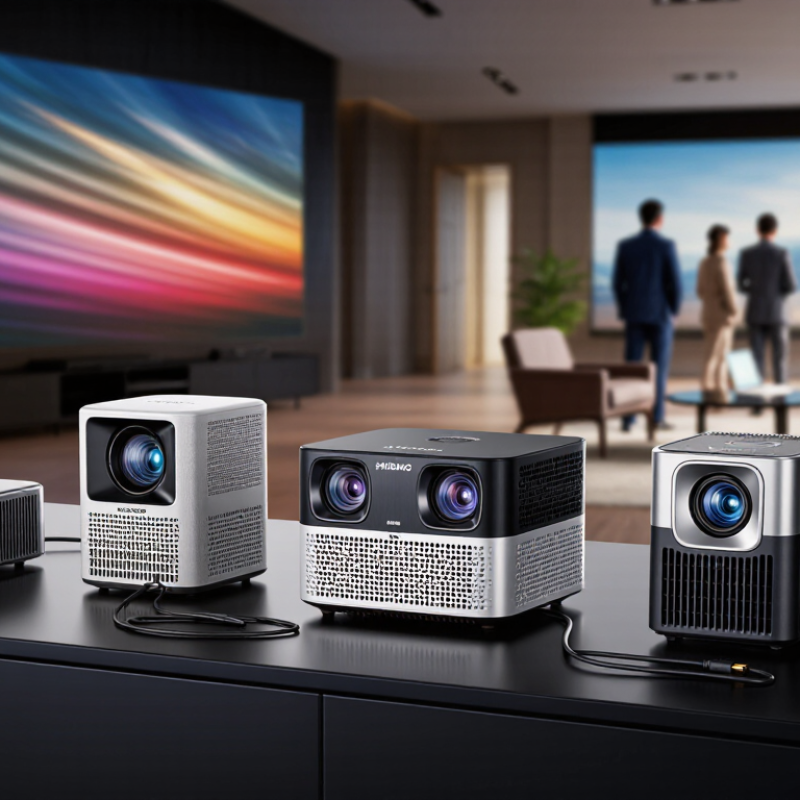
China Top Entertainment Projector Suppliers?
Entertainment projector suppliers in China cover more than factories assembling optical engines. The category includes OEM and ODM manufacturers, lens and light-source specialists, software integrators, distributors, and installation partners. Their products serve home cinemas, gaming rooms, museums, themed venues, education spaces, and temporary events. The boundary is not perfectly clean.
Market definitions should follow measurable use cases. Futuresource Consulting’s Global Projector Market Review tracks consumer, business, and education demand separately, while IDC’s Worldwide Quarterly Projector Tracker evaluates shipments, technologies, and regional performance. These reports show why supplier comparisons need more than brightness claims. Resolution, contrast, input latency, throw distance, operating noise, warranty response, and calibration support matter in real rooms.
A practical supplier review should examine factory audits, optical test records, sample consistency, and after-sales capacity. A 4K image may look impressive in a showroom, yet poor black levels can weaken a dark gaming scene. Independent testing also matters. Some published specifications remain difficult to compare because measurement methods differ. That is an industry weakness, not a minor detail. Suppliers serving China’s entertainment market should provide verified data, clear installation guidance, replacement-part planning, and documented compliance with applicable safety requirements. Real experience suggests that stable service often matters more than the lowest quotation.

Modern Chinese entertainment projectors increasingly rely on compact laser or LED optical engines. Laser sources deliver strong brightness and stable color over long operating periods. LED engines usually consume less power and create less heat. That trade-off matters in bedrooms, cafés, and small home theaters.
Digital image processing has also become central. Many models combine DLP or LCD imaging with automatic focus and real-time keystone correction. These functions can adjust a picture within seconds. However, heavy correction may reduce sharpness near the screen edges. A perfectly rectangular image is not always a perfectly detailed image. This point deserves more attention.
Connectivity is another important technology. HDMI inputs support game consoles, media players, and computers, while dual-band wireless systems enable smoother screen casting. Some projectors include low-latency modes for gaming, but actual delay depends on the source and software. Built-in speakers often use digital audio processing, with virtual surround effects and dialogue enhancement. Cooling systems use heat pipes, quiet fans, and temperature sensors to protect the light source. During evaluation, buyers should check fan noise from a normal viewing distance, not only laboratory figures. Brightness claims also need careful testing, because different suppliers may use different measurement methods. A dark room can make moderate brightness appear surprisingly powerful.
| Technology or Specification | Common Technical Configuration | How It Works | Entertainment Benefits | Typical Use Case |
|---|---|---|---|---|
| DLP Imaging | Single-chip digital micromirror device with a spinning or segmented color system | Millions of microscopic mirrors rapidly tilt to reflect or reject light and create the image | Compact optical design, good motion handling, high pixel fill factor, and generally strong reliability | Home cinema, gaming rooms, portable projectors, and commercial entertainment displays |
| LCD Imaging | Three-panel or single-panel liquid-crystal optical engine | Liquid-crystal panels modulate red, green, and blue light before the image is projected through the lens | Strong color brightness and vivid image output at competitive manufacturing cost | Living-room viewing, classrooms, small venues, and general multimedia presentation |
| LCoS Imaging | Reflective liquid-crystal-on-silicon panels, usually in a three-panel configuration | Liquid-crystal layers control reflected light from silicon backplanes to form a high-resolution image | Fine pixel structure, high native resolution, and smooth images with reduced visible pixel gaps | Premium home cinema and high-detail visual applications |
| LED Light Source | Red, green, and blue LED modules or a combined LED optical system | Semiconductor light emitters generate the primary colors without a conventional mercury lamp | Long operating life, instant start-up, lower maintenance, and efficient operation | Portable Entertainment Projectors and continuously used household systems |
| Laser Light Source | Single-color laser with phosphor conversion or separate red, green, and blue laser modules | Laser diodes provide optical energy directly or excite a phosphor wheel to produce projection light | Stable brightness, wide color gamut potential, fast start-up, and long service life | Large-screen home entertainment, event displays, cinemas, and high-use installations |
| Native Resolution | Common consumer formats include 1280 × 720, 1920 × 1080, and 3840 × 2160 pixels | Native resolution represents the actual pixel grid produced by the imaging device | Full HD supports detailed movie and gaming content; 4K provides greater image sharpness on large screens | Movies, streaming content, console gaming, and sports viewing |
| Pixel-Shifting Resolution Enhancement | Optical actuator shifts the image by a fraction of a pixel across multiple frames | Several sub-frames are combined to create a higher-perceived-resolution image | Provides a more detailed image than the base panel resolution at lower optical-engine cost than native 4K | Large home-theater screens and mid-range 4K entertainment projectors |
| Brightness Performance | Approximately 500 to 4,000 ANSI lumens for many consumer and small-venue models | Brightness is measured by projecting a white image and averaging readings across multiple screen areas | Higher brightness improves visibility in rooms with ambient light and on larger screens | Family rooms, gaming spaces, conference venues, and event environments |
| HDR Support | HDR10 is common; some systems also support HLG or dynamic tone-mapping functions | High-dynamic-range processing preserves more detail between dark and bright parts of compatible content | Improves perceived contrast, highlight detail, and color depth when the projector has sufficient light output | 4K movies, streaming video, and modern console gaming |
| Refresh Rate and Motion Processing | Input support commonly ranges from 50/60 Hz, with selected gaming models supporting higher rates at reduced resolution | Higher refresh rates display more frames per second; motion interpolation creates additional intermediate frames | Reduces judder and improves responsiveness during fast games, sports, and action scenes | Gaming, live sports, karaoke, and action-oriented entertainment |
| Short-Throw and Ultra-Short-Throw Optics | Throw ratios commonly below 1.0:1; ultra-short-throw designs can be below 0.4:1 | Specialized lens and mirror systems create a large image from a short distance | Reduces shadows, saves room space, and supports large-screen viewing in compact interiors | Living rooms, retail demonstrations, museums, and interactive entertainment spaces |
| Automatic Focus and Keystone Correction | Camera, time-of-flight, infrared, or optical sensors combined with digital image adjustment | Sensors estimate screen geometry and focus distance, then software adjusts focus and image shape | Faster installation and easier repositioning for portable and smart projectors | Portable home entertainment, bedrooms, temporary venues, and rental environments |
| Wireless Connectivity | Wi-Fi, Bluetooth, screen mirroring, and wireless audio support depending on configuration | Wireless protocols transfer video, control commands, or audio between the projector and connected devices | Reduces cable clutter and supports smartphones, tablets, laptops, speakers, and game controllers | Streaming, mobile entertainment, presentations, and casual gaming |
| Smart Operating System | Embedded operating environment with application support, network access, and media playback | A system-on-chip manages video decoding, user interface functions, networking, and installed applications | Enables direct access to local media, streaming services, casting functions, and system settings | All-in-one home entertainment and living-room projection |
| Thermal Management | Heat sinks, axial or centrifugal fans, sealed optical modules, and temperature monitoring | Heat is transferred away from the light source and imaging components to maintain operating stability | Protects optical components, reduces brightness degradation, and supports longer operating periods | Continuous home use, commercial installations, and high-temperature environments |
| Built-In Audio | Integrated mono or stereo speakers, commonly supplemented by digital audio output or Bluetooth audio | Audio amplification and speaker drivers are installed inside the projector chassis | Allows immediate viewing without a separate sound system, while external audio can improve immersion | Portable viewing, bedrooms, outdoor movie sessions, and casual entertainment |
China’s top entertainment projector suppliers usually fall into several practical categories. OEM and ODM factories focus on scalable production, custom housings, and private-label software. They may support 1080p or 4K-compatible models, but buyers should verify native resolution carefully. Marketing language can blur this distinction.
Optical specialists concentrate on brightness, lens quality, cooling systems, and color performance. Their projectors often serve cinemas, museums, theme parks, and large venues. A reliable supplier should provide measured brightness data, lens specifications, and test reports. Ask for performance results after several hours of operation, not only laboratory figures.
Portable entertainment suppliers prioritize compact bodies, built-in batteries, wireless casting, and simple setup. These products suit bedrooms, outdoor gatherings, and temporary presentations. Commercial event suppliers offer higher-lumen systems, interchangeable lenses, edge blending, and redundant control options. Installation expertise matters here. A powerful projector can still fail when ventilation, throw distance, or screen gain is misunderstood.
Some manufacturers combine categories, which sounds convenient but can weaken technical depth. I have found that sample testing reveals more than polished catalogs. Check fan noise beside a quiet audience, inspect dark-scene detail, and test wireless stability through walls. Supplier certifications, warranty response times, spare-part access, and factory audits also affect long-term reliability. Price remains important, but it should not replace engineering evidence. Mistakes happen. The difficult part is recognizing them before shipment.
Evaluating China’s entertainment projector suppliers requires more than comparing factory prices.
Grand View Research valued the global projector market at approximately USD 11.6 billion in 2023, with continued growth expected through 2030. This demand attracts capable manufacturers, but quality varies widely. Check native resolution, measured ANSI lumens, contrast, throw ratio, input lag, fan noise, and light-source lifespan. A supplier should provide laboratory results, not only marketing images. Request a working sample. Test it in a dark room, then repeat the test with ambient light.
Experience matters here. Ask for production photos, quality-control records, and recent export references. Verify whether the quoted brightness follows ISO 21118 or another recognized measurement method. Confirm warranty coverage, spare-part availability, firmware support, and response times. TÜV Rheinland and other testing organizations emphasize documented safety and performance verification; however, a certificate alone cannot prove gaming smoothness or real color accuracy. That part requires hands-on testing. My own evaluation preference is simple: compare three samples using the same screen, video source, and power settings. Small details expose weak suppliers.
Tips: Use a written scorecard. Give image performance 40%, reliability 25%, after-sales support 20%, and price 15%. Record every test result. Do not trust the brightest sample automatically. Some suppliers may optimize showroom settings, and buyers often overlook long-term fan noise. That mistake is expensive.
China Top Entertainment Projector Suppliers?
China’s entertainment projector suppliers are serving more than traditional cinema rooms. Their equipment now supports theme parks, museums, live concerts, esports venues, and immersive exhibitions. High-brightness laser projectors help large spaces maintain clear images under controlled ambient light. Short-throw designs also reduce shadows in narrow galleries and interactive installations.
Emerging demand is moving toward 4K resolution, wider color coverage, and quieter cooling systems. Many venues want network control, automatic calibration, and flexible projection mapping. Rental companies prefer compact models with strong light output and fast setup. However, specifications can be misleading. A projector may perform well in a dark showroom but lose contrast beside stage lighting. On-site testing remains essential. I have found that lens quality, heat management, and service response often matter more than headline brightness.
Tips: Ask suppliers for real installation data, not only laboratory figures. Check brightness measurements, operating noise, warranty terms, and local technical support. Test the projector with your actual screen, content, and lighting conditions. Leave room for failure. A backup signal path can protect a live event when alignment, software, or cooling problems appear. Suppliers should also provide safety documentation and follow applicable regional certification requirements.
Cinema exhibition remains the largest standardized application for high-brightness entertainment projectors in China. The screen base expanded from 69,787 in 2019 to 90,968 in 2024, while box-office performance fluctuated because of market disruptions and recovery cycles. This combination supports continued demand for cinema upgrades, laser light sources, immersive attractions, museums, theme parks, live events, and other large-format visual experiences.
Source: Annual statistics and public releases from China’s National Film Administration. Box office values are shown in RMB billions; screen figures represent total cinema screens.

