Top Chain Conveyor Systems for 2026 What Buyers Need to Know
As we look toward 2026, the demand for efficient and reliable chain conveyor systems is on the rise. These systems play a crucial role in various industries, including manufacturing and logistics. Buyers today face an array of options, and choosing the right system can be challenging.
Understanding the technological advancements and trends in chain conveyor systems is essential. For instance, automation features are gaining popularity for speeding up operations. However, not all systems offer the same level of efficiency or durability. Some buyers may overlook maintenance needs, which can lead to increased downtime and costs.
In the evolving landscape of industrial operations, knowledge is power. Organizations must weigh their specific needs against the capabilities of different chain conveyor systems. This landscape can be complex. Yet, having the right insights allows for informed decisions and long-term success. Buyers should also consider future trends and innovations, ensuring they invest wisely for years to come.
Key Features of Chain Conveyor Systems to Consider in 2026
When considering chain conveyor systems in 2026, several key features stand out. Understanding these elements can guide buyers toward making informed decisions. Efficiency is a primary concern. Look for systems that optimize energy use while maintaining high throughput. The design also matters. Compact units that fit into tight spaces can enhance operational flexibility.
Durability is essential too. Choosing high-quality materials will extend the lifespan of the conveyor system. A robust design can handle heavy loads and resist wear. It's important to evaluate the maintenance needs as well. Some systems require frequent check-ups, which can be costly.
Tips: Prioritize systems with straightforward maintenance features. This can save significant time and reduce operational downtime. Consider scalability for future needs. Investing in a system that can grow with your business is a wise choice. Always assess the overall return on investment. This perspective helps in weighing initial costs against long-term benefits.
Types of Chain Conveyor Systems and Their Applications
Chain conveyor systems are essential in various industrial applications. They are known for their durability and efficiency. Understanding the types available helps buyers make informed decisions.
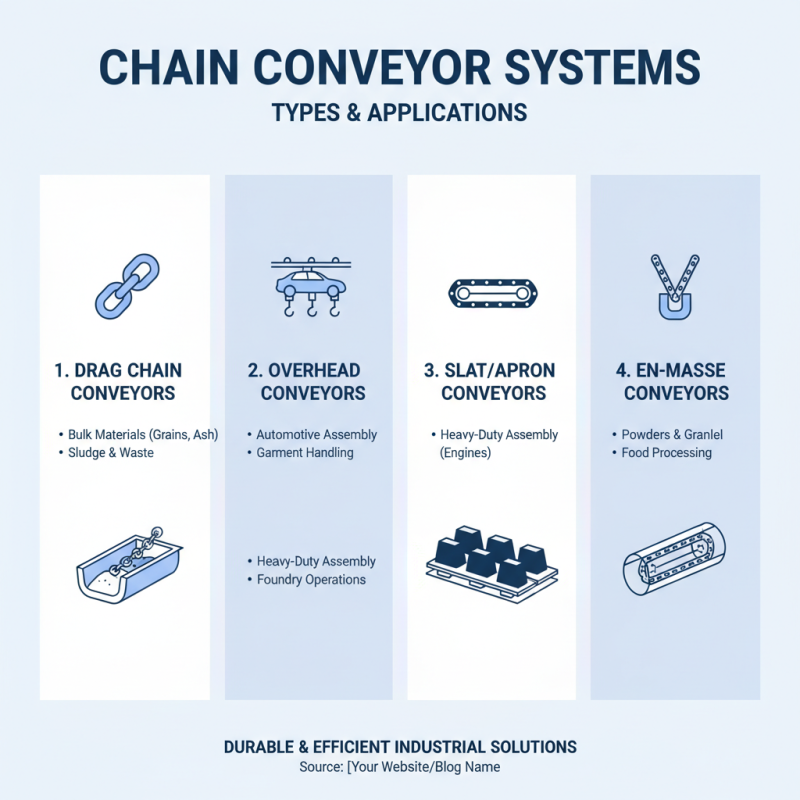
There are several types of chain conveyor systems. The most common type is the roller chain conveyor. It is ideal for transporting heavy loads. This system is often used in manufacturing and distribution centers. Another option is the slat chain conveyor, which is suitable for handling fragile items. It provides a flat, stable surface for product movement. For food and beverage industries, plastic chain conveyors offer hygiene benefits. They are easy to clean and resistant to corrosion.
Each type of chain conveyor system has specific advantages. Buyers should consider their specific needs, such as load size and production speed. Researching different systems is crucial. Identifying potential issues, like maintenance needs, can improve efficiency. Not all systems work for every situation. This makes understanding applications vital for a successful investment.
Cost Factors in Purchasing Chain Conveyor Systems
When considering chain conveyor systems, price is a critical element. Buyers need to understand various cost factors affecting their investment. Initial purchase costs typically include the system's design and the materials used. High-quality materials often lead to increased longevity. However, budgets can quickly become tight when accounting for these upgrades.
Installation costs also play a significant role. A complex installation may require skilled labor, raising expenses considerably. Not all vendors provide transparent pricing, so potential buyers should seek detailed quotes. Maintenance and operational expenses further complicate the overall cost picture. Regular upkeep is necessary to ensure efficiency. Neglecting maintenance can lead to costly repairs and downtime in the long run.
Buyers should not overlook the potential impact of energy efficiency. Systems that consume less power may have higher upfront costs but save on energy bills. Evaluating long-term return on investment is essential. Some buyers might rush the decision, leading to regrets later. It's crucial to consider all these factors thoroughly for a wise purchasing decision.
Top Chain Conveyor Systems for 2026: What Buyers Need to Know
| System Type |
Load Capacity (lbs) |
Belt Width (inches) |
Speed (ft/min) |
Estimated Cost ($) |
| Plastic Modular Chain |
2000 |
24 |
90 |
$15,000 |
| Steel Roller Chain |
5000 |
30 |
120 |
$20,000 |
| Double Chain Conveyor |
3000 |
36 |
80 |
$18,000 |
| Aluminum Profile Chain |
1500 |
20 |
100 |
$12,000 |
Maintenance Tips for Optimal Performance of Chain Conveyors
Maintaining chain conveyors is crucial for their efficiency and longevity. Regular maintenance ensures optimal performance, preventing costly downtimes. One key aspect of maintenance is lubrication. Proper lubrication reduces friction, minimizing wear and tear on components. Use the manufacturer-recommended lubricant type and amount for the best results.
Another important tip is to inspect the alignment. Misalignment can lead to premature failure and energy losses. Regularly check the conveyor's alignment and adjust if necessary. This small action can significantly extend the lifespan of the system.
Lastly, monitor the tension of the chain. Too loose or too tight can cause issues. A well-tensioned chain reduces strain on the motor and conveyor. Invest time in these maintenance tasks. They might seem tedious but are essential for reliable operation.
Future Trends in Chain Conveyor Technology for Buyers
As we look ahead to 2026, chain conveyor systems are evolving rapidly. Buyers should pay close attention to several trends shaping this technology.
Automation is taking center stage. More systems are incorporating smart technology. These advancements enhance
efficiency and reduce labor costs.
Energy efficiency is another critical area. New designs focus on decreasing power consumption. This is not only cost-effective but also environmentally friendly.
Additionally, modular designs are gaining popularity. They allow for easier customization and scalability. However, this may lead to potential
compatibility issues.
Lastly, maintenance technologies are improving. Predictive maintenance systems will help to avoid unexpected downtime.
Nonetheless, companies must be prepared for the initial learning curve. Investing in training and technology integration is essential.
These trends present opportunities and challenges. Buyers need to stay informed and adaptable.