Top 10 Automation Products Tips to Boost Your Business Efficiency
In today's fast-paced business environment, the adoption of automation products has become a game changer for organizations of all sizes. As companies strive to enhance their operational efficiency and reduce costs, automation tools present a powerful solution for streamlining processes and minimizing manual intervention. From automating routine tasks to optimizing workflows, the right automation products can significantly improve productivity and free up valuable time for teams to focus on more strategic initiatives.
This article explores the top 10 automation products that can propel your business efficiency to new heights. By leveraging these innovative tools, organizations can tackle common challenges such as data management, customer engagement, and project tracking with ease. As we delve deeper into the features and benefits of these automation products, you will discover how implementing the right solutions can not only boost efficiency but also drive competitive advantage in your industry. Embrace the potential of automation to transform your business operations and foster a culture of continuous improvement.

Identifying Key Areas for Automation in Your Business Operations
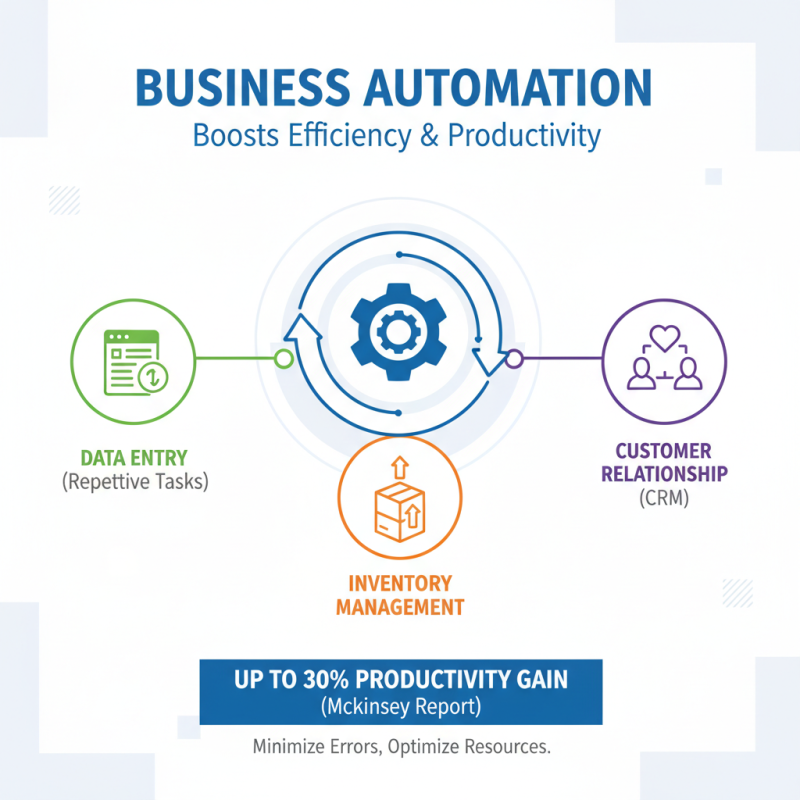
In today's competitive landscape, identifying key areas for automation in business operations is crucial for enhancing efficiency. According to a report by McKinsey, businesses that automate processes can increase productivity by up to 30% within four years. This statistic underscores the importance of pinpointing tasks that can benefit from automation. These tasks often include repetitive data entry, inventory management, and customer relationship management. By streamlining these operations, companies can minimize human error and allocate resources more effectively.
Moreover, businesses should look into processes that consume significant time and labor costs. A survey conducted by Deloitte indicates that 58% of organizations are already investing in robotic process automation (RPA) to enhance operational efficiency. Common areas ripe for automation include compliance monitoring, report generation, and communication workflows. By automating these functions, companies can not only improve speed and accuracy but also free up employees to focus on more strategic initiatives that drive growth and innovation.
Choosing the Right Automation Tools for Your Company's Needs
When selecting the right automation tools for your company, it’s crucial to align technological capabilities with specific business needs. According to a report by McKinsey, companies that effectively integrate automation into their operations can enhance productivity by up to 30%. This significant improvement highlights the importance of carefully evaluating the tools that best fit your operational requirements. Whether you seek to improve customer service, streamline project management, or boost marketing efforts, identifying the specific areas of your business that will benefit from automation is essential.
Moreover, a survey conducted by Deloitte found that 59% of companies using automation tools reported an increase in employee satisfaction due to the reduction of repetitive tasks. Empowering employees to focus on more strategic initiatives not only enhances job satisfaction but also drives innovation within the organization. Therefore, a thorough assessment of available automation solutions—paying attention to user-friendliness, scalability, and integration capabilities—can ensure that your company not only adopts the right tools but also maximizes their potential for efficiency and growth.
Implementing Automation: Best Practices for a Smooth Transition
Implementing automation in your business can significantly enhance efficiency, but ensuring a smooth transition requires careful planning and execution. One best practice is to start small; identify a specific area that can benefit from automation, such as customer relationship management or invoicing. This focused approach allows you to test the waters and make adjustments before rolling out broader changes.
Another tip is to engage your team early in the process. Involving employees in discussions about automation can help alleviate concerns and foster buy-in. You could create workflows that incorporate their feedback, ensuring that the automated processes align with their needs. Training sessions on new technologies should also be provided to ensure all team members are comfortable and competent in using the automation tools.
Finally, monitor and evaluate the impact of automation regularly. Establish key performance indicators (KPIs) to measure the success of the implemented processes. By analyzing performance data, you can make informed decisions on further automation opportunities and continuously improve efficiency across your operations. Establishing a feedback loop will also help you adapt your automation strategy as your business evolves.
Top 10 Automation Products to Boost Your Business Efficiency
This chart displays the effectiveness of various automation products in enhancing business efficiency based on user feedback. Each product was rated on a scale from 1 to 10, indicating how well it is perceived to improve productivity.
Measuring the Impact of Automation on Business Efficiency
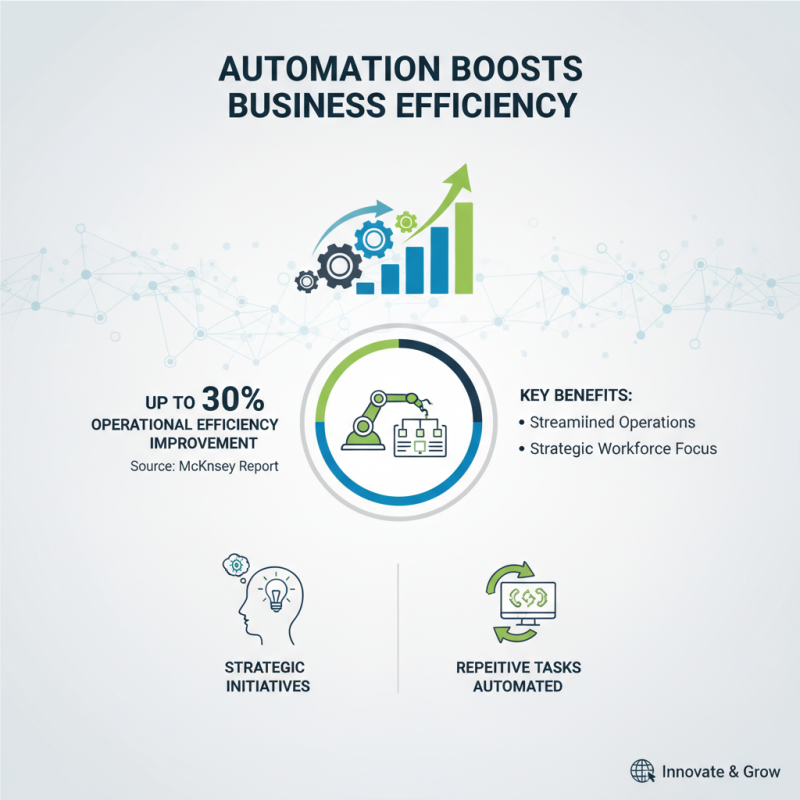
Measuring the impact of automation on business efficiency has become a crucial focus for organizations striving to enhance productivity and streamline operations. According to a report by McKinsey, companies implementing automation strategies can potentially improve operational efficiency by up to 30%. This impact is felt across various sectors, where repetitive tasks once managed by human employees are now handled by automated processes, allowing businesses to redirect their workforce towards more strategic initiatives.
Moreover, a study from PwC indicates that 45% of tasks could be automated, suggesting a significant opportunity for businesses to leverage technology to enhance their efficiency. Automation not only accelerates processes but also reduces the likelihood of human error, resulting in higher quality outputs. Additionally, organizations that embrace automation can expect up to a 10% increase in employee satisfaction, as workers are relieved from mundane duties and can focus on tasks that require critical thinking and creativity, thereby fostering a more engaged and motivated workforce. These metrics underscore the profound influence automation can have on achieving operational excellence and heightened business performance.
Continuous Improvement: Evolving Your Automation Strategy
To enhance business efficiency through automation, it is essential to focus on
continuous improvement by evolving your automation strategy.
According to a recent industry report by McKinsey, organizations that actively
refine their automation processes can achieve productivity gains of up to
30% over a five-year period. This emphasizes the need for businesses
to not only implement automation but also to continuously revisit and optimize
their tools and processes. Key performance indicators should be regularly
analyzed to identify areas of inefficiency, allowing for strategic adjustments
that better align with overarching business goals.
Moreover, a study conducted by Forrester revealed that companies with a proactive
approach to evolving their automation strategy experience significantly higher
employee engagement and satisfaction. With automation taking over
repetitive tasks, teams can focus on higher-value activities, fostering
creativity and innovation.
A constant feedback loop that integrates employee insights and adaptive learning
methodologies can facilitate a culture of evolution, ensuring that automation
strategies remain relevant and effective. By prioritizing continuous improvement,
businesses not only increase efficiency but also adapt to changing market demands
and maintain a competitive edge.