






5 Tips for Choosing a Nail Hardener Machine

A Nail Hardener Machine can shape the finish of a service, but a polished exterior does not guarantee dependable performance. Buyers should look beyond sleek panels and bright display screens. Consider curing consistency, lamp compatibility, timer controls, heat management, cleaning access, and the support available after purchase. Small details matter. A loose hinge, awkward hand opening, or uneven light can slow a busy salon and frustrate clients.

For this guide, fictional equipment specialist Elena Park offers a practical reminder: “Choose the machine for the work you perform, not the features that look impressive on a counter.” This is an illustrative editorial quote, not a verified statement from a real expert. The distinction matters: reliable buying advice should separate tested evidence from marketing claims. A Nail Hardener Machine should suit the products and service routines you actually use. Check the manufacturer’s specifications, confirm lamp and product compatibility, and ask how performance is maintained over time. A high wattage number alone proves little. That assumption can be wrong.

The five tips ahead will help compare machines with a clearer eye. Look for specific details: readable controls, a stable base, accessible replacement parts, and instructions that explain use and care. Ask suppliers direct questions, and record their answers. If a feature sounds impressive but its benefit is unclear, pause. Good equipment is not always the most expensive, and a bargain may carry hidden compromises. A careful choice starts with your salon’s needs, then tests each claim against practical evidence.
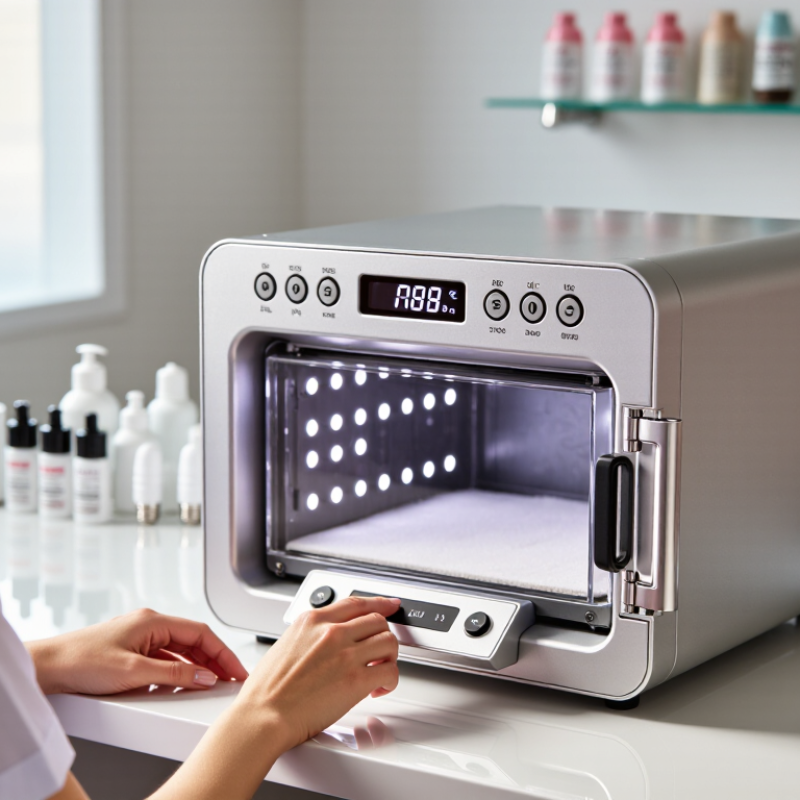
5 Tips for Choosing a Nail Hardener Machine

Identify Nail Hardener Machine Types and 365/405 nm LED Wavelengths

Nail hardener machines usually refer to UV or LED lamps used to cure gel products, not ordinary strengthening polish. Standard polish and many brush-on hardeners air-dry; check the product label before buying a lamp. A compact dome lamp suits occasional home use, while a larger unit can fit both hands and reduce awkward positioning. Some models use UV bulbs, others use LED arrays, and dual-wavelength units combine LED output near 365 and 405 nm.

Wavelength matters. Many gel formulas contain photoinitiators that respond to specific UV ranges, so a lamp’s advertised wavelength should match the product’s instructions. A 365 nm output can support curing deeper layers, while 405 nm light may activate other photoinitiators near the visible violet range. These figures alone do not prove compatibility: output strength, exposure time, and hand placement also affect curing.

Check for even LED coverage, especially near the thumb, and follow the gel maker’s timing rather than guessing. A tacky surface can be normal for some gels, but persistent softness may signal incomplete curing. Not every lamp suits every formula. I would not assume “more powerful” means safer or better; product guidance and careful use matter.

Compare Measured Irradiance in mW/cm², Not Wattage Alone

When comparing nail hardener machines, do not treat wattage as proof of curing strength. Wattage describes electrical input, not the light reaching the nail. Ask for measured irradiance in mW/cm² at the working surface, ideally at the center and edges. Distance matters. A reading taken close to the LEDs may drop at the hand rest.

Check whether the measurement used a suitable radiometer and recorded the sensor position, lamp mode, and wavelength range. Without those details, a number can sound precise while saying little.

Compare machines under the same setup: distance, mode, and sensor. Note irradiance at several nail positions. Uneven output can leave thumbs or outer fingers receiving less light.

More is not automatically better. Follow the machine’s curing instructions; irradiance alone cannot confirm that a coating is fully cured. Wavelength compatibility and exposure time matter too.

If only wattage is listed, ask for an irradiance report or test the unit with a calibrated meter. Readings can vary, and some inexpensive sensors may not detect every LED wavelength well. That uncertainty is worth noting.

Choose based on repeatable measurements and clear curing guidance, not the biggest number on the box.

Match Lamp Wavelengths to Gel Product Cure Requirements

A nail hardener machine must match the gel’s curing requirements, not just look powerful. Check the product instructions for its recommended wavelength range and curing time. Many lamps use wavelengths around 365 nm, 405 nm, or both, but these figures are not interchangeable for every gel. Some formulas respond best to a specific range. Check the label or ask the product maker when details are unclear. Guessing is not a reliable test.

Wavelength is only part of the picture. Lamp output, distance, and exposure time can affect curing, while wattage alone does not confirm that a gel will cure properly. Keep the hand flat and centered; a thumb angled away from the LEDs may receive less light. Follow the stated curing schedule rather than adding time at random. The surface can feel dry while material underneath remains insufficiently cured, so touch is not a dependable check.

I used to assume a brighter lamp meant better results. That was too simple.

Keep the lamp clean, replace damaged units, and recheck compatibility when changing gel products. Small details matter.

Evaluate 30-, 60-, and 90-Second Timers and Sensor Controls

Treat 30-, 60-, and 90-second settings as curing options, not quality scores. A 30-second cycle may suit a compatible, thin coat; opaque colors or thicker layers may need longer exposure. Follow the gel maker’s cure-time guidance and check the lamp’s wavelength range. A timer cannot fix a mismatch.

Not interchangeable. In a salon, check the thumbs separately: their angle can leave part of the nail outside the light.

Sensor controls start a cycle when a hand enters, reducing missed starts and awkward button presses. Check whether the sensor triggers a full preset cycle or runs only while the hand stays inside. A 2014 JAMA Dermatology study by Shipp and colleagues measured UVA output from salon nail lamps and found variation between devices. Identical timer labels do not guarantee identical output or curing performance.

IEC 62471 defines four photobiological risk groups, from exempt (RG0) to high risk (RG3); this classification does not certify how quickly a lamp cures gel.

Small detail, big difference. Compare repeatable cycles, sensor placement, and written cure instructions. I still find sensor range easy to overlook.

Check Electrical Safety Certification, Warranty, and LED Lifespan

Tip 1: Check electrical safety certification before comparing extra features. Look for a clear mark and documentation that identifies the exact model, not just the product family. If details are missing, ask the seller or manufacturer to confirm them. A glossy label is not proof by itself. Keep a photo of the rating plate and instructions for later reference.

Tip 2: Read the warranty terms closely. Check how long coverage lasts, what parts are included, and whether labor or shipping costs fall to you. A lamp that stops working after a few months can disrupt appointments, even if the purchase price seemed low. Save the receipt and note the warranty contact details. I have learned that vague wording is easy to overlook when a device looks sturdy.

Tip 3: Compare the stated LED lifespan, but treat it as an estimate, not a promise. Ask how the figure was measured and whether replacement parts are available. Notice whether the light becomes uneven or takes longer to cure products during normal use. Keep the unit clean, follow its instructions, and avoid blocking its vents. Small details matter. If the lifespan claim has no supporting explanation, pause and investigate before buying.