7 Tips for Buying a Sheet Metal Top Cover
Choosing a Sheet Metal Top Cover can seem simple until the part arrives and the mounting holes miss by a few millimeters. A useful buying decision starts with the equipment it must protect, the space available, and the conditions it will face. Dust, moisture, heat, and frequent handling can all affect material and finish choices. Small details matter.
Before comparing quotes, confirm the cover’s length, width, height, thickness, and required openings. Check whether edges need bending, whether fasteners must sit flush, and how the cover attaches to the frame. A clear drawing or sample can prevent costly guesswork. Measure twice. Still, measurements alone do not tell the whole story; a thin panel may flex, while a heavier one can add weight or complicate installation.
The tips in this guide focus on practical checks: selecting suitable sheet metal, reviewing coatings and corrosion resistance, verifying tolerances, and assessing fabrication quality. They also explain what to ask suppliers about drawings, finishing, packaging, and inspection. Ask for specifics, not just a low price. A reliable supplier should be able to clarify material grades, dimensions, and production limits, though details may vary by project. One point is easy to overlook: the “best” cover is not always the thickest or cheapest. Match the specification to the actual application, and record any assumptions before ordering. A little caution now can save rework later.
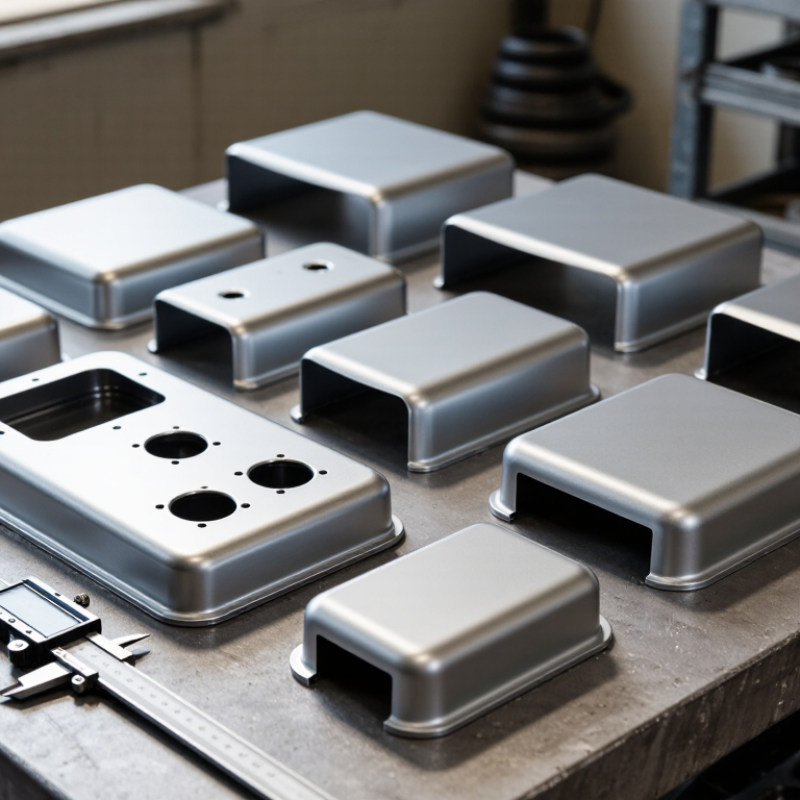
Understand the Purpose and Operating Conditions of the Top Cover
A sheet metal top cover may keep dust, splash, or falling debris away, but its real job depends on the equipment beneath it. A control cabinet in a dry workshop faces different risks from a machine beside coolant spray. Note operating temperature, vibration, cleaning methods, and how often technicians need access. Small details matter.
IEC 60529 defines the protection indicated by IP ratings. IP54 allows limited dust ingress that must not impair operation and protects against splashing water; IP66 is dust-tight and tested against powerful water jets. These ratings apply to the tested enclosure assembly, not automatically to a replacement cover alone. A precise fit, suitable gasket, and correctly spaced fasteners all matter. A neat-looking seal is not proof.
Also consider heat and movement. A cover over warm drives or motors may trap heat, while vibration can loosen fasteners over time. Check the equipment maker’s temperature limits and inspect nearby surfaces for oil, sharp swarf, or cleaning chemicals. If the conditions are uncertain, record them during a normal production shift. Guessing from a catalog photo is tempting, but rarely enough.
Choose a Suitable Metal Type and Sheet Thickness
For a sheet metal top cover, choose the metal for its environment and the thickness for its unsupported span. Mild steel is often a practical choice for indoor equipment; stainless steel suits damp or frequently washed areas, while aluminum reduces lifting weight. The ASM Handbook, Volume 1, lists typical densities of about 0.283 lb/in³ for steel and 0.098 lb/in³ for aluminum. That makes an equal-volume aluminum cover roughly one-third the weight. Weight matters. But stiffness matters too: the handbook reports elastic moduli near 29 million psi for steel and 10 million psi for aluminum. An aluminum panel may need more thickness or closer supports to resist the same bending.
Do not select thickness by gauge number alone. Gauge conventions vary by material and standard, so confirm the actual thickness in inches or millimeters on the supplier’s specification. Check the cover’s longest unsupported span, expected hand pressure, fastener spacing, and any cutouts. A thin panel can oil-can or rattle; a thicker one adds weight and may be harder to form. Test the fit. A useful check is a prototype with the intended bends and mounting points, not a flat offcut. A slightly awkward detail: coatings, bends, and manufacturing tolerances can change fit, so leave room for them in the design. Use the ASM Handbook data as a starting point, then verify the finished cover under realistic loads and conditions.
Choosing a Metal for a Sheet Metal Top Cover
Approximate material mass per square meter for a 1 mm thick sheet. Lower mass can help reduce cover weight; actual suitability also depends on strength, corrosion resistance, forming, and operating conditions.
Values are calculated from approximate material densities: 5052 aluminum, 2.68 g/cm³; low-carbon steel, 7.85 g/cm³; 304 stainless steel, 8.00 g/cm³; copper, 8.96 g/cm³. Sheet gauge-to-thickness conversions vary by material and standard.
Confirm Dimensions, Shape, and Mounting Requirements
Before ordering a sheet metal top cover, measure the actual opening, not just the nominal drawing. Record length, width, corner radii, and any diagonal differences. ISO 2768-1 lists medium general tolerances of ±0.3 mm for dimensions over 30 to 120 mm, and ±0.5 mm over 120 to 400 mm. These figures are useful reference points, not a promise of fit; specify tighter tolerances where sealing or alignment depends on them. Small mismatch, big headache. A quick check with calipers can catch a measurement error, but confirm the measurement method and datum with your fabricator.
Shape and mounting details matter just as much. Show the bend direction, flange depth, corner reliefs, and whether the cover sits inside or over the opening. Mark hole centers from fixed edges, and include slot length, fastener size, and tool clearance. For a hinged cover, check its swing path against nearby walls or cables. For a gasketed cover, define the contact surface and compression allowance. ASME Y14.5-2018 provides a framework for communicating geometric tolerances and datums; use it when hole position or flatness is critical. A drawing can look precise and still hide a snag. Recheck one physical sample before approving a large run.
Compare Fabrication Methods and Protective Finishes
Choosing a sheet metal top cover starts with how it will be made, not just how it looks. Laser cutting and press-brake forming suit lower-volume covers with vents, slots, or changing dimensions. They allow quick revisions. Stamped covers can be economical in larger runs, but tooling costs may not suit a small order. Welded seams add rigidity, yet heat can distort broad, thin panels. Check flatness after welding. That detail matters. Compare sample parts for clean edges, aligned holes, and a snug fit around fasteners before approving production.
The protective finish should match the cover’s material and working environment. Powder coating gives steel a durable, colored surface, but chipped areas may expose the metal beneath. Galvanized steel offers zinc protection, while anodizing can improve aluminum’s surface durability without adding a thick coating. Do not compare finish names alone. Ask about coverage at bends, cut edges, and recessed corners, where thin spots can be easy to miss. For outdoor use, request coating-thickness details and relevant corrosion-test data. Small scratches count. One trade-off is easy to overlook: a tougher finish may affect tight clearances, so check fit after coating, not only on the bare panel.
Evaluate Quality Standards, Supplier Support, and Total Cost
A sheet metal top cover should fit the assembly, protect internal parts, and keep its finish through handling. Check the drawing against the supplier’s stated material grade, thickness tolerance, bend accuracy, and surface-finish requirements. Ask for a first-article inspection report and clear acceptance criteria. ISO 9001 certification can indicate a quality-management system, but it does not prove that every cover meets your specification. The American Society for Quality notes that poor-quality costs can reach 15–20% of sales in some organizations. Rework and rejected parts can make a low unit price expensive.
Supplier support matters when a drawing needs clarification or a production change is urgent. Ask who reviews design details, how quickly they respond, and whether they can provide samples before a full run. For a cover with tight corners or visible seams, request photos or a sample showing those features. Small details matter. A polished sample may not reflect the finish across a whole batch, so specify how consistency will be checked.
Compare total cost, not just the quoted price. Include tooling, finishing, packaging, freight, minimum order quantities, and the cost of delayed or unusable parts. Ask whether changes to the design affect tooling fees or lead time. A simple cost table helps reveal trade-offs. It may feel fussy, but missing one shipping or rework charge can distort the comparison. A cheaper cover is not always the better buy.