






what is thermal paper, and which type makes sense in 2026? The answer starts with a simple detail: heat creates the image. Thermal paper has a heat-sensitive coating that darkens under a printer’s thermal head. No ink cartridge is needed. Think of a checkout receipt emerging warm, with crisp black numbers and no smudged ink.
That convenience comes with choices. Direct thermal paper suits receipts, queue tickets, and short-term labels. It is simple to use, but heat, sunlight, and friction can fade its image. Thermal transfer paper uses a ribbon, making it a stronger option for labels that need to last. Coatings, roll size, printer compatibility, and storage conditions matter, too. The cheapest roll may not be the best fit.
Environmental chemist Heather Stapleton has researched bisphenols in thermal receipt paper. A careful takeaway from her work is: “Consider the coating chemistry, not just the paper’s appearance.” This is an editorial paraphrase, not a verbatim quotation. That distinction matters when comparing products. Ask suppliers for current technical specifications and coating information; do not assume every white roll uses the same chemistry.
In 2026, the best type depends on the job, printer, and expected image life. There is no universal winner. A receipt used for minutes has different needs from a warehouse label kept for months. This guide explains how thermal paper works, compares its main types, and offers practical checks for choosing a suitable roll. One point deserves a second look: real-world durability can vary with storage and handling, even when products appear similar.
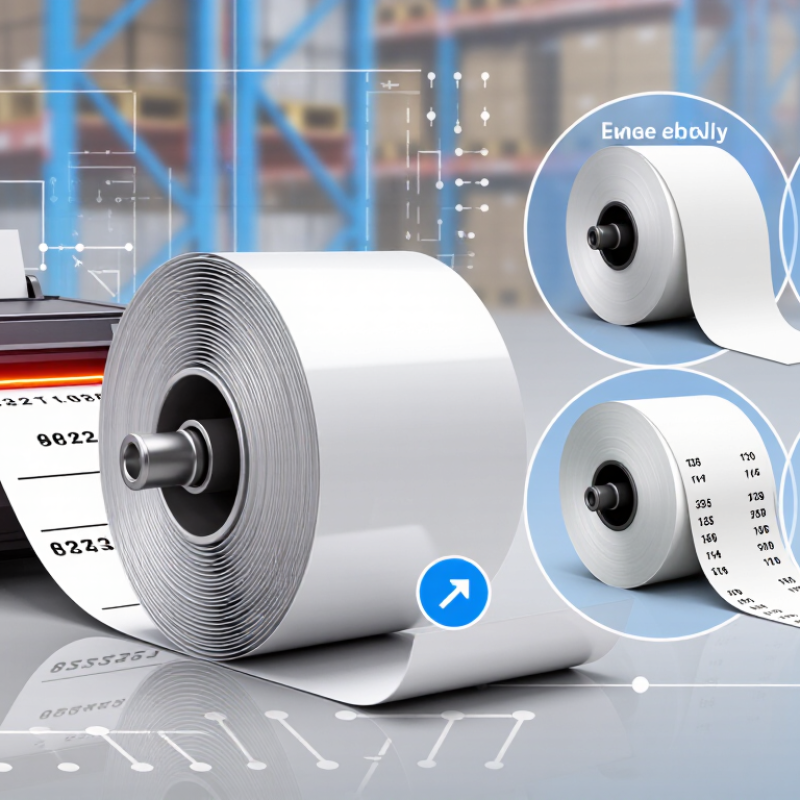
Thermal paper is a coated paper that forms an image when heated. It does not need a ribbon or liquid ink. Under the smooth surface sits a heat-sensitive layer, usually made from color-forming dyes, developers, and other additives. The paper itself provides the base. A thin topcoat may help protect the image from friction, oils, or moisture.
In direct thermal printing, tiny heated elements touch the paper and activate its coating. A leuco dye reacts with a developer, creating dark marks where the printhead warms the surface. Sensitizers help control when that reaction happens, while binders hold the ingredients together. The chemistry varies by product. Some formulations use different developers, so the ingredient list should not be assumed from appearance alone. It looks simple. It isn’t quite.
A receipt’s coating is often only a few micrometers thick, yet it affects print sharpness and durability. A faint gray mark can appear if the paper rubs against a hot surface, such as a dashboard in summer. Light, heat, oils, and pressure may also cause fading or unwanted darkening. In practical handling, keep rolls cool, dry, and away from direct sunlight. Even then, storage conditions are not always ideal, and printed results can vary between paper grades and printers.

Thermal paper creates text and images through a heat-sensitive coating, not a pool of ink. Inside a printer, tiny elements on the thermal head heat selected points across the paper. Those points trigger a color change, forming letters, barcodes, and pictures from a grid of dots. No ink cartridge is needed.
Print quality depends on more than the paper. The printer controls heat and movement, while the coating affects contrast and detail. Too little heat can leave pale text; too much may darken the background or stress the printhead. Images use patterns of dots to suggest different shades, so fine gradients can look grainy. It is easy to blame the paper alone. Sometimes the settings are the problem.
In 2026, the best type depends on how long the print must last. Standard direct-thermal paper suits receipts and short-term tickets, but heat, sunlight, and friction can fade its image. For labels exposed to handling or weather, choose a suitable top-coated grade, or consider thermal-transfer printing with a ribbon for greater durability. Check printer compatibility and test a sample under real conditions. A label that looks crisp indoors may not stay readable in a warm vehicle.
| Comparison | Direct Thermal | Thermal Transfer | Practical Guidance for 2026 |
|---|---|---|---|
| What it is | Heat-sensitive paper or label stock with a coating that darkens when heated. | A printable surface plus a coated ribbon that transfers ink-like material onto the surface. | Both methods use a heated printhead, but only thermal transfer requires a ribbon. |
| How text and images form | Selected printhead elements heat the coated surface. The coating’s color-forming chemicals react, creating dark marks that form text, barcodes, and graphics. | Selected printhead elements heat the ribbon. Its coating melts or transfers onto the label or other media in the required pattern. | In both methods, the printer creates an image by controlling heat in precise positions as the media moves past the printhead. |
| Consumables | Thermal media; no ink or ribbon is needed. | Compatible media and a thermal-transfer ribbon. | Direct thermal has fewer consumables. Transfer printing adds ribbon selection and replacement to the workflow. |
| Common media | Coated paper rolls and labels designed for direct thermal printing. | Paper, synthetic films, and other compatible label materials; the ribbon must suit the media and printer. | Check the printer’s supported media and ribbon specifications before choosing stock. |
| Image durability | Images can fade or darken with exposure to heat, sunlight, friction, oils, or certain chemicals. Performance varies by media and storage conditions. | Often suitable for more demanding durability needs, depending on the media, ribbon, and operating environment. | For long-term or harsh-environment identification, test the complete printed label under the actual conditions of use. |
| Typical uses | Receipts, queue tickets, shipping labels with short-to-medium service life, and other applications where fast, ribbon-free printing is useful. | Product and asset labels, outdoor or industrial labels, and applications where resistance or longer image life is important. | Choose based on required readability life, exposure, media type, print volume, and total operating cost. |
| Main advantages | Simple operation, fewer consumables, and no ribbon to install or manage. | Can support a wider range of media and durability requirements when paired with an appropriate ribbon. | Direct thermal favors simplicity; thermal transfer favors versatility and demanding label applications. |
| Main limitations | Not ideal when the image must remain stable through prolonged heat, light, abrasion, or chemical exposure. | Requires ribbon management, compatible supplies, and appropriate setup; operating costs include both ribbon and media. | Neither method is universally best. Confirm print quality, environmental resistance, and total cost with representative samples. |
| Best choice in 2026 | Best when convenience and quick printing matter more than extended image life, such as many receipts and short-lived labels. | Best when labels need a longer-lasting image or must withstand challenging conditions, provided the selected media and ribbon are compatible. | For most short-life paper printing, consider direct thermal. For durable identification, consider thermal transfer and validate the complete label system. |
Standard direct thermal paper darkens when its heat-sensitive coating passes over a printer’s heated printhead. It needs no ink ribbon, which keeps receipt printers compact and quick. The trade-off is that heat, sunlight, friction, and some oils can fade or darken the image. A receipt left on a warm car dashboard may become hard to read.
Uncoated thermal paper suits short-lived receipts and queue tickets. Top-coated paper adds a protective layer, helping printed details resist moisture, abrasion, and handling. It is often a better fit for shipping labels or records kept longer, though the coating does not make print permanent. Some grades also use different chemical formulations, so check the supplier’s material specifications when chemical content matters.
Synthetic thermal media use a more durable base than ordinary paper. They can handle damp settings better, such as chilled storage areas, but cost more and may need a compatible printer. Linerless thermal labels have adhesive backing without a separate release liner, reducing waste while requiring a printer designed to handle them. Small detail, big difference. Match the paper to the printer and the conditions it will face. In practice, I’d test a sample under real storage conditions; paper that looks suitable on a desk may perform differently in a freezer or busy checkout area.
How direct thermal and thermal-transfer paper create printed images
Direct thermal paper has a heat-sensitive coating and prints without a ribbon. Thermal-transfer paper uses heat to transfer ink from a separate ribbon. The best choice depends on the printer and the label’s needs: direct thermal is convenient for short-term labels, while thermal transfer is often selected when prints need greater resistance to heat, light, or abrasion.
Choosing thermal paper starts with the printer, not the price. Check the manual for roll width, maximum diameter, and core size. A roll that looks close may still jam or feed unevenly. Small details matter. Also confirm whether the device uses direct thermal printing or requires a ribbon. These systems are not interchangeable.
For direct thermal printers, the coating must face the print head. Unsure which side is coated? Make a small mark with a fingernail; the heat-sensitive side usually darkens. Then print a short test strip. Look for crisp text, even darkness, and clean edges. If the receipt fades quickly, consider a paper grade designed for longer image life. Heat, sunlight, and friction can shorten that life, even with suitable paper.
Match the paper to its daily setting. A busy checkout may need a roll that feeds smoothly and resists frequent handling, while a kitchen label may face warmth or moisture. Check the stated storage conditions and keep unused rolls sealed, away from hot windows and damp shelves. I would recheck the printer specifications before ordering a case; it is easy to overlook the core size. And test one roll first. A brief trial can reveal curling, pale printing, or paper dust before those small issues disrupt a full shift.
Which thermal paper type is best in 2026? It depends on what the print must survive. For brief checkout receipts, standard direct thermal paper is usually practical and economical. For shipping labels, kitchen tickets, or records exposed to heat, light, moisture, or oils, top-coated paper offers better protection. The coating helps preserve contrast. It cannot make a print permanent.
Grand View Research estimated the global thermal paper market at about US$4.16 billion in 2023 and projected 5.2% annual growth through 2030. That market estimate signals continued demand, not a universal winner. Match the paper to the printer, storage conditions, and required record life. Test a roll under real conditions: a label handled with damp gloves may fade or smear sooner than expected. Small detail, big difference.
For sensitive applications, ask suppliers for phenol-free options and documented resistance data. Compare image stability, coating performance, and roll compatibility, not just price per roll. A 2024 Smithers industry report on thermal papers can help buyers assess market and technology trends, but product specifications should guide the final choice. There is no perfect stock. Even premium paper can disappoint when stored beside a hot window.

