Why Process Automation is Essential for Modern Businesses?
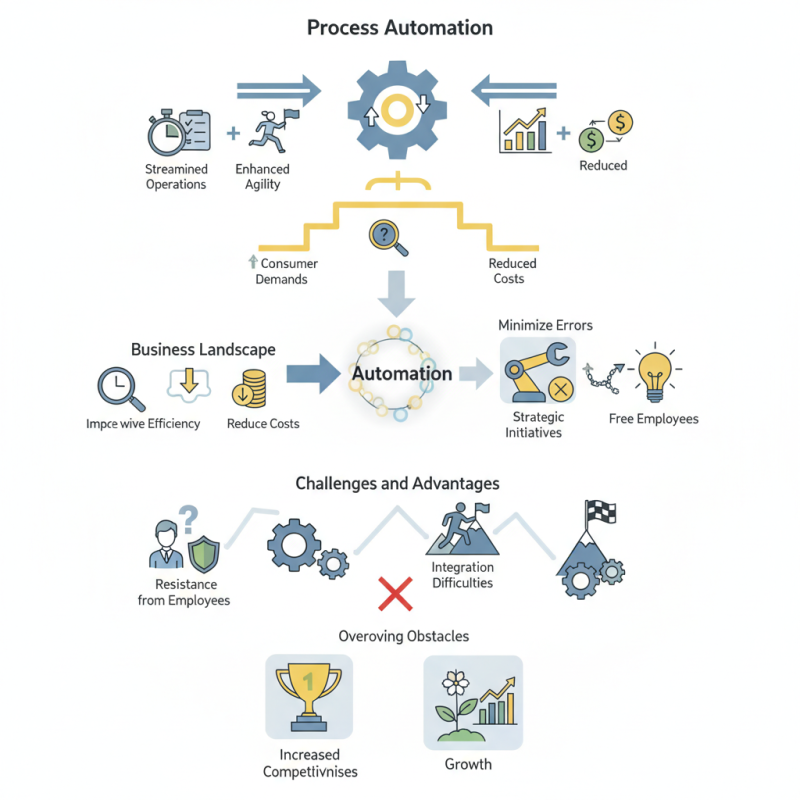
In today's rapidly evolving business landscape, process automation has become a vital component for success. According to John S. Brown, a renowned expert in the field, "Process automation not only streamlines operations but also enhances organizational agility." This statement underscores the necessity of embracing innovative technologies.
Businesses face increasing pressure to improve efficiency and reduce costs. Many organizations struggle to keep pace with consumer demands. As they seek solutions, process automation stands out as a practical answer. Automated workflows can minimize errors and free employees from repetitive tasks. This allows them to focus on strategic initiatives.
However, the transition to process automation is not without challenges. Companies may encounter resistance from employees wary of job displacement. Some may find it difficult to integrate new systems with existing processes. Still, the advantages are clear. By overcoming obstacles, businesses can harness the full potential of process automation, leading to increased competitiveness and growth.
The Definition and Scope of Process Automation in Business
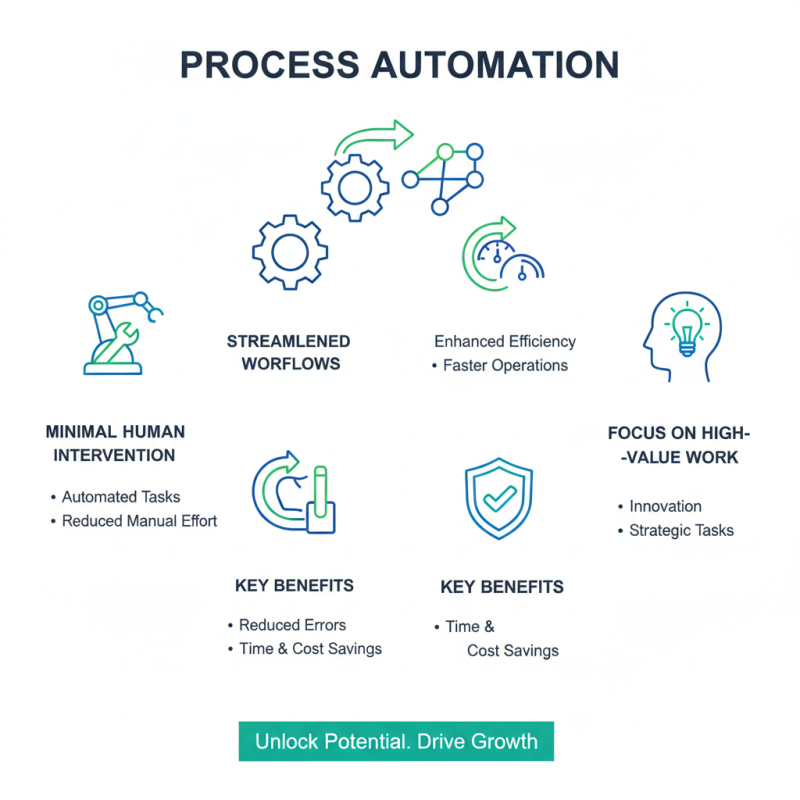
Process automation involves using technology to perform tasks with minimal human intervention. It streamlines workflows and enhances efficiency in various business operations. By automating repetitive tasks, companies can reduce errors and free employees to focus on higher-value work. This shift can lead to significant time and cost savings, allowing businesses to allocate resources more effectively.
Tip: Identify tasks that consume a lot of time yet add little value. These are prime candidates for automation. For example, manual data entry can be automated using software bots.
The scope of process automation spans multiple areas, including finance, HR, and customer service. For instance, automated payroll systems can handle calculations and distribute payments accurately. However, not all processes are suited for automation. Complex tasks requiring human judgment may still need personal input.
Tip: Evaluate processes regularly to assess their suitability for automation. Sometimes, traditional methods may still work better for certain tasks. Balancing automation with human oversight is crucial.
Key Benefits of Implementing Process Automation in Operations
Process automation has become a crucial component for businesses navigating the complexities of modern operations. Companies that adopt automation report increased efficiency, with studies indicating that automation can lead to a reduction in operational costs by up to 30%. This significant financial benefit underscores the importance of investing in automated solutions.
Data from industry reports highlights that automation can save employees up to 30% of their workweek. This liberation from repetitive tasks allows workers to focus on more strategic projects. Companies implementing automation solutions tend to experience improved accuracy in their processes, which can reduce errors by as much as 40%. However, not all organizations see these advantages immediately. Misalignment between automated tools and business goals can hinder effectiveness.
Implementing process automation also supports scalability. As businesses grow, automation can adapt and ensure that processes remain streamlined. Yet, it is essential to reflect on the potential limitations. Transitioning to automated systems may require a cultural shift that not all teams are prepared for. Embracing change is crucial, but resistance can slow down progress. Adjusting strategies and re-evaluating systems is vital for long-term success in an automated landscape.
Challenges and Considerations in Adopting Process Automation
Adopting process automation presents several challenges for modern businesses. Many companies struggle with a lack of clear strategy. They may rush into automation without fully understanding their processes. This can lead to inefficiencies instead of improvements. Employees might feel frustrated when tools don’t align with their workflows. Change management becomes crucial, as resistance can hinder progress.
Integration issues also arise during implementation. Automation tools might not work seamlessly with existing systems. This can create data silos that disrupt communication. Training staff on new systems can be daunting. If the workforce is not on board, the automation efforts may fail. Maintaining transparency about the changes can help ease concerns.
Security is another significant consideration. Automating processes can expose vulnerabilities. Businesses must prioritize safeguarding sensitive data. Regular audits and updates are essential in this context. They help to ensure that systems remain secure over time. Reflecting on these challenges will guide companies to a more thoughtful approach.
Future Trends in Process Automation for Modern Enterprises
The landscape of process automation is evolving rapidly. Enterprises are now looking toward artificial intelligence and machine learning. These technologies can analyze data in real-time. Businesses can optimize workflows and enhance productivity. However, the integration of these tools is not without challenges. Many companies struggle with the initial setup, facing resistance from employees. Training staff to adapt to these new systems can be a slow process.
Another trend includes the rise of robotic process automation (RPA). RPA can handle repetitive tasks, freeing up human resources for more complex work. As companies adopt RPA, they often overlook potential pitfalls. Automation does not equal job loss; it requires strategic management. Organizations must communicate the benefits clearly to their teams. Promoting a culture of continuous improvement can ease the transition.
Moreover, the emphasis on data security is becoming crucial. As more processes become automated, protecting sensitive information is vital. Many businesses are still unsure how to navigate this landscape. They must invest in security solutions that safeguard data. Balancing efficiency and safety is a challenge every modern enterprise faces. Some will succeed, while others may need to rethink their strategies.