






China is home to a broad network of scaffolding producers, from established exporters to specialist factories serving regional markets. For buyers, the challenge is not simply finding a long supplier list. It is identifying manufacturers whose products, documentation, and support fit a project’s real working conditions. This guide to China’s top scaffolding equipment manufacturers explains what to compare before requesting a quotation.
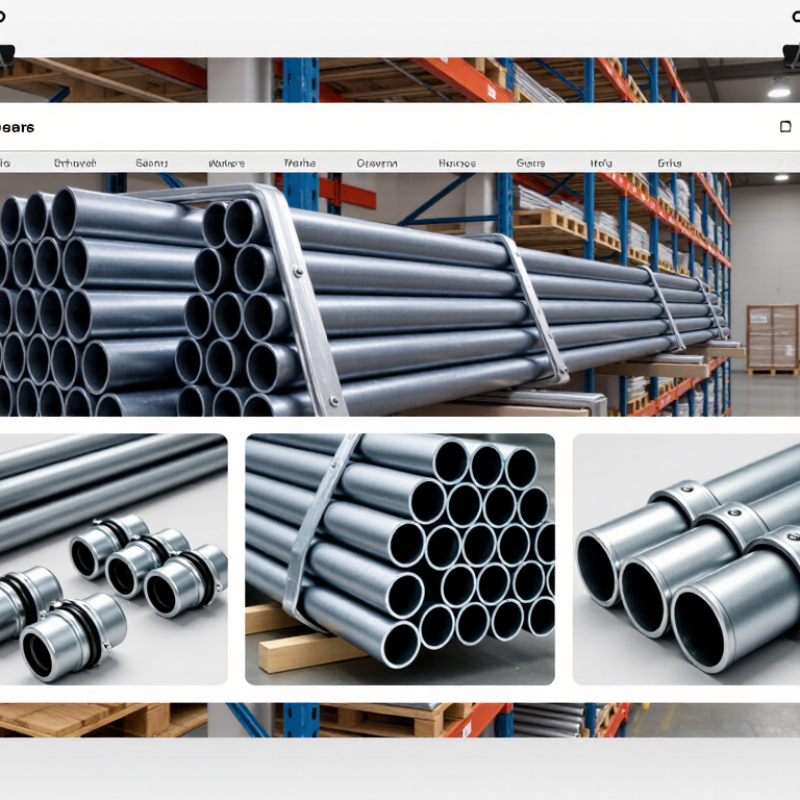
Scaffolding Equipment can include steel tubes, couplers, frames, ringlock systems, and access accessories. Each component needs careful evaluation. Check material specifications, weld quality, surface finish, stated load capacity, and inspection records. A smooth catalogue photo cannot show how consistently a connection fits or how packaging protects parts during a long shipment. Ask for current product data and clear answers about customization, lead times, replacement parts, and after-sales support. Details matter.
Manufacturer rankings can be useful, but they are never a substitute for direct checks. Product ranges and service quality may change, and a large export history does not automatically suit every buyer. Compare more than price. Review factory capabilities, sample quality, communication, and relevant certificates, then confirm requirements with a qualified project professional. No shortlist is perfect. The aim is a more informed starting point: one that helps contractors, distributors, and procurement teams ask better questions and choose equipment with greater confidence.
China’s scaffolding equipment industry is closely tied to construction demand, steel processing, and project safety needs. The National Bureau of Statistics of China reported that construction output reached 31.59 trillion yuan in 2023, up 6.1% year on year. This scale supports demand for steel tubes, couplers, frames, and modular systems. On a wider view, Grand View Research estimated the global scaffolding market at USD 55.6 billion in 2023, with projected annual growth of 5.8% from 2024 to 2030. These figures describe different markets, so they should not be treated as a direct measure of China’s equipment sales.
Manufacturing strength depends on more than volume. Consistent tube dimensions, weld quality, corrosion protection, and traceable inspection records matter on real job sites. A poorly fitting coupler can slow a crew and create avoidable risk. Yet output capacity alone does not prove product reliability. That distinction deserves attention.
Tips: Check load ratings, material specifications, and inspection documents before comparing suppliers. Ask how coating thickness is measured, and request recent test records. A neat catalogue is useful, but it is not evidence by itself.

China Top Scaffolding Equipment Manufacturers
Major Types of Scaffolding Equipment and Their Applications
Scaffolding equipment should match the work area, access height, and materials being handled. A practical choice reduces awkward reaches and keeps tools close to the work face. Details matter.
Frame scaffolding is common for exterior painting, masonry, and window repairs on straight façades. Its repeated frames make assembly relatively straightforward, though uneven ground can complicate setup. Tube-and-coupler scaffolding uses separate tubes and fittings, allowing crews to work around curved walls, pipes, or irregular structures. That flexibility takes careful planning. Ringlock systems use modular connections and are often chosen for industrial maintenance, large projects, and access around complex structures.
Suspended scaffolds provide access to tall façades where ground-based towers are impractical. They require suitable support points and careful operational checks. Mobile scaffold towers are useful indoors for lighting, ceiling repairs, and short maintenance tasks; their wheels help reposition the platform between work areas. Fit matters more.
Selection should consider platform dimensions, expected loads, site conditions, and how often the structure must move. A system that works well on a clean, level floor may be unsuitable on a cramped renovation site. No single type solves every access problem. Teams should follow equipment guidance and arrange competent inspection before use, while recognizing that real sites rarely match tidy planning drawings exactly.
This chart compares common scaffold types with typical work applications. A value of 1 indicates a commonly used application; 0 means it is not a primary typical use, not that it is impossible. Actual suitability depends on the design, site conditions, and applicable safety requirements.
Application classifications are a practical overview, not a performance rating or engineering recommendation.
Chinese scaffolding equipment manufacturers differ less by catalogue size than by how they control dimensions, welds, and repeat orders. A sample ledger, inspection records, and clear material specifications reveal more than a polished brochure. On a busy site, a small fit mismatch can slow connections when crews assemble frames repeatedly. Some factories focus on standardized frames and couplers for predictable volume. Others offer more flexibility with project-specific dimensions, finishes, or packaging. That flexibility may add lead time. Ask how changes are approved and checked before shipment.
Production scale is only one signal. Compare incoming steel checks, weld inspection methods, coating consistency, and batch traceability. Request current test documents, then confirm exactly what each report covers. Export support also varies. Clear assembly instructions, spare-part lists, and protective packing can make a practical difference during a long journey. Small details matter. A missing fitting can delay a lift. Communication is another separator; precise answers help with technical coordination. Still, no supplier excels in every area. Weigh sample quality, inspection access, delivery records, and after-sales responsiveness against actual site conditions. Paperwork cannot predict every awkward installation. A neat sample is encouraging, not proof of every production run. That deserves a second look.
China’s scaffolding manufacturers often concentrate on different equipment types rather than producing every system equally well. Some specialize in ringlock scaffolding, with modular rosettes and ledgers suited to changing site layouts. Others focus on frame scaffolds, valued for quick assembly on low-rise projects and building façades. The best fit depends on the work, not simply the product range.
There are also manufacturers producing aluminum access towers, often designed for indoor maintenance where lighter components matter. Formwork-support specialists supply heavy-duty props, shoring frames, and related parts for concrete work. Couplers and steel tubes remain another important category. Small details count. A clean weld, consistent tube dimensions, and clearly marked components can make inspection and assembly more straightforward. Yet a polished catalogue cannot prove these qualities; buyers should review drawings, material specifications, production controls, and sample inspection records.
Specialties can overlap, and factory descriptions do not always reveal how much work is outsourced. That makes comparisons imperfect. Ask how components fit together, what load information is available, and whether replacement parts match the original system. A supplier experienced with a particular scaffold type may offer useful design guidance, but site conditions still need qualified assessment. Check the details carefully.
China Top Scaffolding Equipment Manufacturers
Reliable scaffolding starts with documented quality, not polished product photos. Buyers should check material certificates, weld inspections, load-test records, and batch traceability. EN 12811-1 provides performance and design guidance for temporary works equipment; ISO 9001 certification can help assess a manufacturer’s quality-management system. Neither replaces product-level inspection. Details matter.
The World Steel Association reported 1.89 billion tonnes of crude steel production in 2023 in World Steel in Figures 2024. That scale makes clear why buyers should verify steel grade and test records rather than assume consistent inputs.
Export requirements vary by destination. UN Comtrade classifies scaffolding and related equipment under HS 730840, allowing buyers to review trade flows by market. Before ordering, confirm applicable standards, packaging, corrosion protection, spare-part availability, and document language. Ask for a sample inspection plan and clarify who pays for independent testing.
Compare landed cost, not just the factory price. A lower quote may omit freight, replacement parts, or inspection fees. Supplier selection is rarely tidy; a strong audit can still miss inconsistent production between batches.
Tips: Request recent test reports, inspect a production sample, and verify that certificates match the exact model and materials. Keep one point open: paperwork alone cannot prove consistent weld quality.

