What is a Laboratory Yarn Spinning Production Line?
The Laboratory Yarn Spinning Production Line represents a crucial aspect of textile engineering. This advanced setup is dedicated to the production of yarns for various applications. In a laboratory setting, it serves a unique purpose. It allows researchers and manufacturers to experiment with different fibers and spinning techniques.
Understanding the Laboratory Yarn Spinning Production Line involves appreciating its components and processes. Typically, it includes machinery for fiber preparation, spinning, and winding. Each step plays a vital role in determining the yarn's quality. However, challenges do arise. For instance, achieving consistent tension during the spinning process can be difficult. Such issues require careful monitoring and adjustments.
Moreover, this production line enables innovation in yarn development. It supports the exploration of new material blends and spinning technologies. While the outcomes can be promising, they also come with uncertainty. Researchers must continually reflect on their findings and techniques, ensuring they meet industry standards. This balance of experimentation and reliability defines the Laboratory Yarn Spinning Production Line's significance in textile production.
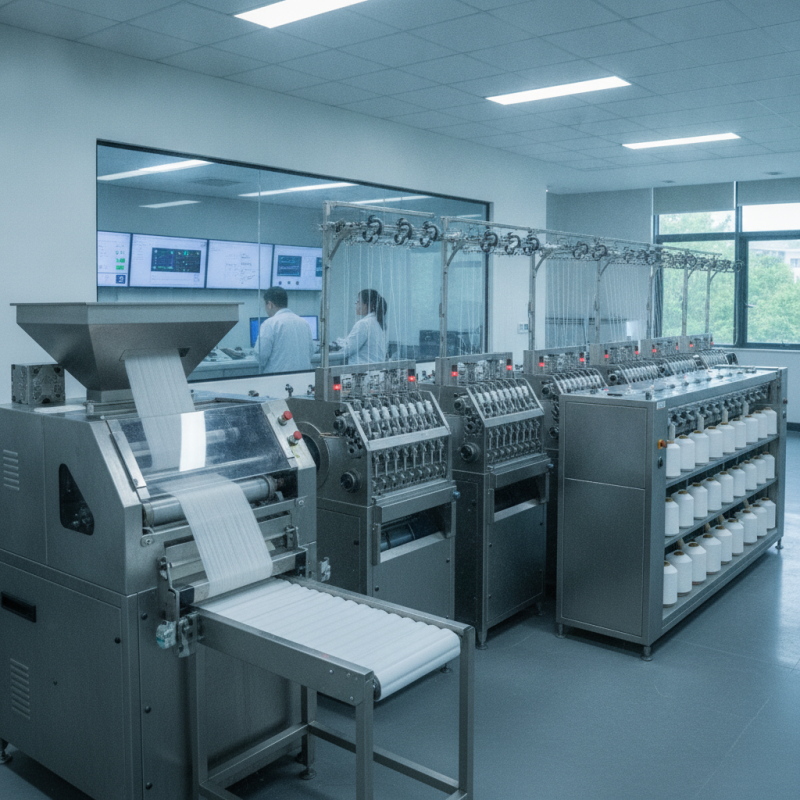
Definition of Laboratory Yarn Spinning Production Line
A Laboratory Yarn Spinning Production Line is a specialized setup for creating yarn in controlled conditions. This line plays a vital role in textile research and development. It allows scientists and engineers to experiment with different fibers and blends, leading to new fabric innovations.
In a laboratory setting, this production line often features smaller machinery compared to industrial setups. This makes it easier to test various parameters, including tension, spin direction, and draft. The equipment must be reliable to yield consistent results. Yet, achieving that consistency can be challenging. Variations in humidity or temperature can affect the final product, leading to unexpected results.
Moreover, the capacity of these lines is limited, which may restrict large-scale experimentation. Researchers must balance between thorough testing and resource constraints. Sometimes, initial trials produce subpar yarns. This requires additional analysis and adjustments. The iterative process becomes necessary for improvement, emphasizing the importance of reflection in refining techniques.
Key Components of a Laboratory Yarn Spinning Production Line
A Laboratory Yarn Spinning Production Line is vital in developing and testing new yarns. It enables researchers and textile engineers to explore various fiber compositions, spinning techniques, and product characteristics. Understanding the key components is essential for effective operation.
Key components include fiber feeders, drafting systems, spinning machines, and winding units. Fiber feeders ensure an even flow of raw materials. Drafting systems stretch the fibers to achieve the desired thickness. Spinning machines twist the fibers into yarn, while winding units package the finished product. Each part plays a crucial role in the overall process.
Tips: Regular maintenance of the spinning machines is crucial. It prevents unexpected breakdowns and improves product quality. Keeping the fiber feeders clean can enhance consistency in yarn production. Experimenting with different fiber blends can lead to innovative results, but some trials may not yield the expected outcomes, highlighting the importance of controlled settings.
Laboratory Yarn Spinning Production Line - Key Components Overview
Process Flow in Yarn Spinning Production in a Laboratory Setting
In a laboratory setting, the process of yarn spinning encompasses several critical stages. It begins with fiber preparation, which may involve carding or opening. This step ensures that fibers are aligned properly, promoting uniformity. Once fibers are ready, they are fed into the spinning frame, where they are twisted together. This twisting is essential for creating strength in the yarn. Each stage needs precise calibration to avoid defects.
During the spinning phase, control over tension and twist is vital. A slight miscalculation can lead to inconsistent yarn quality. Lab setups often utilize advanced equipment, allowing for more experimental spinning techniques. Operators often face challenges in adjusting settings for different fiber types. Continuous monitoring is essential, but even with care, imperfections may still arise.
After spinning, the yarn undergoes winding and packaging. These steps require careful handling to prevent tangling or damage. Researchers appreciate this phase, as it offers insights into the yarn’s performance. However, achieving perfection is an ongoing pursuit. Each experiment may yield unexpected results, highlighting the need for constant refinement in techniques and processes.
Applications and Importance of Laboratory Yarn Spinning
Laboratory yarn spinning plays a crucial role in textile research and development. It allows experts to experiment with different fibers and spinning techniques. By using a laboratory yarn spinning production line, researchers can create small batches of yarn for testing. This flexibility is essential for innovation in fabric design.
The applications of laboratory yarn spinning are vast. It enables the development of new yarns tailored for specific purposes, such as sportswear or technical textiles. Adjustments can be made to fiber blends, twist levels, and thickness. However, the results are not always perfect. Sometimes, the desired characteristics may not emerge as planned.
Moreover, the importance of these lines extends beyond simple production. They facilitate quality control and reproducibility in yarn manufacturing. This is vital for maintaining industry standards. However, challenges remain in scaling up successful laboratory results to larger production runs. This gap often necessitates further research and refinement.
Comparative Analysis: Laboratory vs. Industrial Yarn Spinning
When examining the differences between laboratory and industrial yarn spinning, important factors come into play. Laboratory yarn spinning machines are designed for small-scale testing. They typically have a capacity of 1 to 5 kilograms of fiber per hour. In contrast, industrial spinning lines can produce thousands of kilograms daily. This gap underscores the flexibility of lab equipment, allowing for experimentation with various fibers and yarn structures.
Efficiency in production is another significant difference. Laboratory setups enable precise adjustments, which is crucial for research and development. A study by the Textile Research Institute shows that 30% of new yarn innovations come from laboratory trials. However, these benefits may come at a cost. The operational skills needed for lab environments are often more specialized, which can limit accessibility.
Moreover, the cost implications vary. Setting up a lab spinning line generally requires lower initial investment compared to industrial setups. Yet, if production scale increases, this model can quickly become resource-heavy and inefficient. Many manufacturers reflect on how a balance must be struck between exploration in labs and the high output of industrial processes. As they navigate this, understanding both settings’ strengths and weaknesses becomes essential in the evolving textile landscape.