Industrial Vision Inspection Trends at Canton Fair 2026?
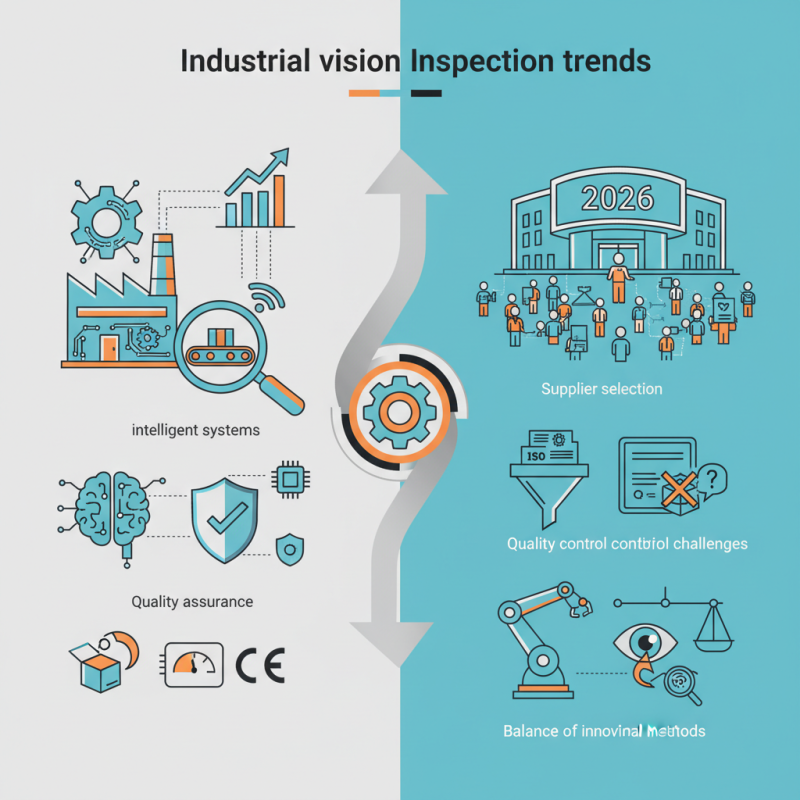
Industrial Vision Inspection is poised to redefine quality assurance at the upcoming Canton Fair 2026. This event marks a critical intersection of advanced technology and manufacturing. Data from industry reports indicate a robust growth of 25% annually in the Industrial Vision Inspection market. Renowned expert Dr. Michael Lang, a leading figure in the field, asserts, "The future of inspection lies in intelligent systems that enhance accuracy and speed."
With over 1.55 million square meters of exhibition space, the 139th Canton Fair aims to streamline supplier selection through AI features. This technology allows buyers to filter suppliers based on certifications like ISO and CE. However, despite these advancements, challenges remain. Quality control issues persist, meaning that not all inspections can guarantee faultless products. Businesses must be vigilant.
The integration of AI in Industrial Vision Inspection promises efficiency but is not without flaws. With the influx of automation, companies may overlook human insight. As we approach this pivotal event, it is essential to balance innovation with traditional methods to ensure comprehensive quality checks. The journey ahead is both promising and complex.
Emerging Technologies in Industrial Vision Inspection
Emerging technologies in industrial vision inspection are shaping the future of manufacturing. As highlighted in recent industry reports, the global market for vision inspection systems is projected to exceed $10 billion by 2028. This growth is driven by the need for enhanced quality control and efficiency across various sectors.
Artificial intelligence (AI) is a key player in this shift. Companies are beginning to integrate AI algorithms with traditional vision systems. This allows for real-time analysis of production lines. With up to 95% accuracy, AI can identify defects that human inspectors might miss. However, reliance on AI raises concerns. Machines can misinterpret data or struggle with ambiguous cases. This potential for error emphasizes the need for ongoing human oversight.
Moreover, the integration of 3D imaging technology is gaining traction. It adds depth perception to inspections, providing a more comprehensive view of products. Reports indicate that 3D systems can reduce false rejection rates by 30%. Yet, they are not without challenges. High costs and the complexity of implementation can hinder adoption among smaller manufacturers. These obstacles highlight the importance of evaluating cost-effectiveness when investing in new technologies.
Key Players Showcasing Innovations at Canton Fair 2026
The Canton Fair 2026 promises to be a significant event for industrial vision inspection technologies. Key players are expected to showcase innovations that cater to emerging market needs. According to a recent industry report, the global vision inspection market is projected to grow at a CAGR of 9.6% from 2021 to 2028. This growth underscores the rising demand for automation and quality control solutions.
Exhibitors will present advanced systems integrating artificial intelligence and machine learning. These technologies improve accuracy and speed in inspection processes. A notable trend is the shift towards more user-friendly interfaces. Companies are focusing on ergonomic design for operators who may lack technical expertise. This reflects a growing recognition of the importance of human factors in technology adoption.
Tip: Assess your inspection needs before the fair. Identify pain points in your current processes.
While innovation is vital, it’s essential to reflect on integration challenges. Not all industries can adopt new technologies seamlessly. Existing infrastructure may limit modernization efforts. Skill gaps in the workforce can also hinder the implementation of advanced systems.
Tip: Consider training programs for staff. Investing in skill development will ease transitions to new technologies.
Attendees at the fair will gain insights into overcoming these challenges. Networking with industry peers can provide invaluable perspectives on navigating the landscape of industrial vision inspection.
Applications of Vision Inspection in Various Industries
The Canton Fair in 2026 highlights exciting trends in industrial vision inspection. Industries are embracing this technology to enhance quality control. In manufacturing, vision systems analyze products on assembly lines. They ensure consistent quality before items reach consumers. A simple camera can detect flaws that human eyes might miss.
In food processing, vision inspection becomes crucial for safety. It sorts and checks products for contaminants. However, challenges remain, like false positives that result in unnecessary waste. Similar issues arise in the automotive sector, where precision is vital. Misalignment detected by these systems can prevent costly recalls.
The pharmaceutical industry also relies on vision systems. They verify labels and check packaging integrity. Mistakes in this field can have serious consequences. Yet, integrating advanced technology may require substantial investment and training. Companies must weigh potential ROI against operational costs. Some might struggle to find the balance needed for effective implementation.
Challenges and Solutions in Industrial Vision Systems
Industrial vision systems have become essential in various manufacturing processes. However, they face numerous challenges at events like the Canton Fair 2026. One major issue is lighting variability. Inconsistent lighting can affect the accuracy of inspections. Solutions include designing adaptive algorithms that adjust to different conditions.
Another challenge is the integration of these systems with existing machinery. Many companies struggle with compatibility issues. This often leads to delays in production. Implementing modular designs can simplify this integration, making upgrades easier.
Data management also presents significant hurdles. Processing vast amounts of data can overwhelm traditional systems. Companies need to invest in robust data analysis tools. These tools should provide real-time insights while ensuring security. Addressing these challenges is crucial for maximizing efficiency in industrial environments.
Future Outlook and Trends in Vision Inspection Technology
The 2026 Canton Fair is set to showcase significant advancements in vision inspection technology. Industry reports indicate that the market for vision inspection systems is projected to reach $4.1 billion by 2025. This growth highlights the increasing reliance on automated systems for quality control. Manufacturers are adopting vision inspection to enhance precision and reduce human error.
Currently, many factories face challenges, such as inconsistent inspection results. This inconsistency can lead to increased production costs and customer dissatisfaction. As technology evolves, solutions like deep learning algorithms can improve accuracy. Enhanced image processing capabilities are also crucial in minimizing errors. However, integrating these technologies into existing workflows presents obstacles.
Companies must reflect on their processes. Adapting to rapid changes is not an easy task. Training personnel and maintaining equipment require resources. Furthermore, there is a need to balance investment in new technology with budget constraints. It is essential to evaluate the return on investment carefully. The future of vision inspection lies in addressing these challenges effectively while leveraging emerging technologies.
Industrial Vision Inspection Trends at Canton Fair 2026