






Choosing the right Pipeline Strainer can protect pumps, valves, and meters from debris that would otherwise cause wear or unplanned shutdowns. The best choice depends on more than pipe size. Consider the fluid, operating pressure, flow rate, expected solids, and how often the strainer can be cleaned. A fine screen may capture smaller particles, but it can also clog faster. That trade-off matters.
Look closely at the installation. Is there room to remove the cover? Can operators safely reach the basket? A strainer mounted above a crowded pump skid may look suitable on a drawing, then prove awkward during maintenance. Small details count. So does the pressure drop across a clean and partially loaded screen.
I can’t verify a named expert or quotation from the material provided, so I won’t invent one. A useful editorial rule is: “Choose for the dirt you expect, and the maintenance your site can actually perform.” Treat it as a guiding principle, not a sourced expert quote. This guide will compare common strainer types, screen openings, materials, and maintenance needs. It will also point out where selection depends on site data rather than a simple rule. There is no perfect unit for every line. The right choice is the one that protects equipment without creating an avoidable cleaning burden.
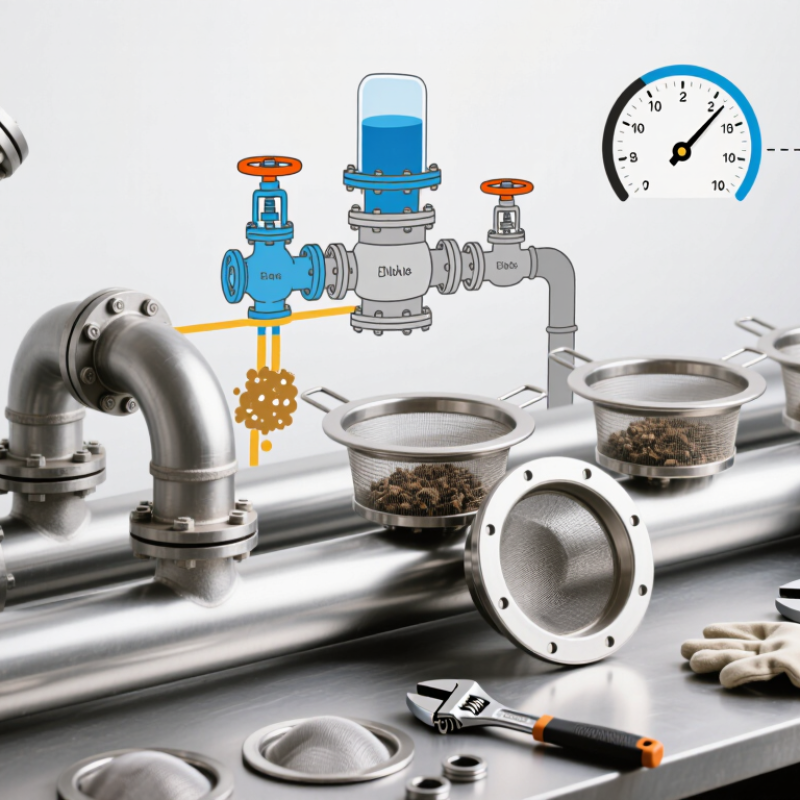
Pipeline strainers sit in the line and catch solid debris before it reaches pumps, valves, meters, or nozzles. A perforated basket or screen lets process fluid pass while holding particles back. This simple barrier can reduce wear and unexpected shutdowns. It does not remove dissolved contaminants, and it cannot fix poor system design.
Choosing one starts with the fluid, flow rate, operating pressure, and size of particles that matter. A coarse screen may protect a pump from scale flakes, while a finer mesh can capture smaller debris but may clog sooner. Check the strainer’s pressure drop when clean and as it collects solids. Also consider cleaning access: a basket that is difficult to remove often stays dirty too long. In real systems, the right opening is sometimes a compromise. I would verify it against actual process conditions rather than rely on a rule of thumb alone.
Tips: Confirm material compatibility, allowable pressure, and screen area. Track pressure drop after installation; a rising reading can signal blockage. Keep a spare screen nearby. Small details matter.

Approximate particle diameters provide a useful scale when considering screen openings. To capture a target particle, select an opening smaller than that particle, then check the expected flow rate, pressure drop, and solids load.
Values are approximate reference sizes; actual particle dimensions vary. Strainer performance depends on screen design and operating conditions.
A pipeline strainer should match the flow it will actually see, not just the number on a process drawing. Record the normal and peak flow rates, then note whether the fluid is water, oil, or a thicker mixture. Viscosity changes how easily liquid passes through the screen. A flow figure copied from an old drawing can be misleading. Numbers can mislead.
Operating conditions matter just as much. Check the fluid’s temperature and the pressure on both sides of the proposed strainer. The difference between those pressure readings shows how much pressure the screen is using up. Leave room for the screen to collect debris before that drop becomes disruptive. Startup can bring a brief surge, while a pump may deliver uneven flow. Those details are easy to overlook.
Consider what the fluid carries, too. Sand, rust flakes, and fibrous debris behave differently, and a very fine screen can clog quickly when solids are abundant. Compare the screen opening with the particles the downstream equipment can tolerate, then check that the strainer’s open area suits the expected flow. If operating data are incomplete, measure the system under real conditions where practical; a neat estimate is not always a reliable one. A process engineer can verify sizing against the equipment limits and likely flow variations.
A Y-strainer fits compact lines where occasional cleaning is acceptable. Its angled chamber can collect grit, scale, or weld debris without taking much floor space. However, a small screen may clog quickly when solids are frequent. Check the maker’s flow data and leave room to remove the screen cap.
Basket strainers suit larger flows or heavier debris loads. Their broad screen area often helps limit pressure loss and gives operators more time between cleanings. A duplex basket unit has two chambers, allowing one side to remain in service while the other is cleaned. Useful, but not effortless: valves, seals, and switching procedures need attention.
For startup flushing, a temporary cone strainer can catch construction debris, but it is rarely a sensible permanent choice. Automatic self-cleaning models may reduce manual work, yet they add controls and moving parts. The right screen opening depends on the particles you must capture, not just the smallest number on a specification sheet. Consider fluid viscosity, operating pressure, cleaning access, and the cost of a clogged downstream valve. A differential-pressure gauge helps show when cleaning is needed. Still, readings can be misleading if the taps are poorly placed. Test the choice under real operating conditions when possible.
A pipeline strainer works well only when its screen matches the debris and the flow. Start by identifying what the pipe must catch: weld scale, rust flakes, or occasional process debris. Perforated screens suit larger particles and can tolerate heavier solids. Wire mesh captures finer particles, but its openings can clog faster. Not automatically better. A smaller opening may raise pressure drop and cleaning frequency. Choose the opening size from the equipment’s particle limits, not from mesh count alone; mesh counts can describe different openings across wire sizes.
Check the screen’s effective area, expected flow, and allowable pressure loss together. A large screen may keep flow resistance manageable, while a compact basket can load quickly in a dirty service. This is an easy detail to underestimate. Record clean-screen differential pressure, then compare it with operating readings. A rising value can signal fouling, though process changes may also explain it. The screen should be accessible for removal and inspection, not merely fit the drawing.
Construction materials need to suit the fluid, temperature, pressure, and cleaning chemicals. Stainless steel often resists corrosion better than carbon steel, but compatibility depends on the actual fluid. The NACE International IMPACT study estimated corrosion costs at $2.5 trillion globally, or 3.4% of world GDP, in 2013. That figure is not a strainer-specific estimate, but it shows why material selection matters. Verify the body, basket, gasket, and weld materials as a set. A practical choice may still involve trade-offs; confirm them against process data before specifying the unit.
When choosing a pipeline strainer, check the space needed to open it—not just the pipe dimensions. A basket-style unit may need room for its cover, basket, and a technician’s hands. Measure the full withdrawal path, including nearby valves, insulation, cable trays, and walls. Clearance matters. A drawing can look generous, yet leave no room for a wrench once insulation is installed.
Plan for the actual cleaning method. If the basket must be lifted vertically, confirm overhead clearance and provide a safe place to set it down. For horizontal removal, check that the basket can slide out without striking equipment. Add pressure gauges before and after the strainer where practical; the pressure difference helps indicate when debris is restricting flow. The U.S. Department of Energy’s Improving Pumping System Performance: A Sourcebook for Industry notes that energy can make up as much as 90% of a pumping system’s life-cycle cost. A neglected, clogged strainer can add avoidable resistance, though the impact depends on the system and operating conditions.
Also consider access during routine maintenance, not only installation day. Can a worker isolate and drain the section safely? Is there enough room to remove a heavy, debris-filled basket? Check the manufacturer’s service clearances against the site layout before ordering. It is easy to overlook a nearby handrail. That small oversight can turn a quick inspection into a frustrating job.
| Strainer type | Typical installation space | Maintenance access | Cleaning method | Common applications | Space and maintenance notes |
|---|---|---|---|---|---|
| Y-type | Compact inline body; requires clearance at the blowdown or screen-removal end. Orientation depends on the design and service. | Provide room to remove the cap and screen, and to operate the drain or blowdown connection. | Isolate and depressurize the line, remove the screen, clean or replace it, then reinstall and check for leaks. | Steam, gas, liquid, and general-purpose pipelines where a compact strainer is useful. | Often a good choice where floor space is limited. Confirm the screen chamber will not foul nearby pipes or equipment. |
| Basket-type | Usually needs more vertical clearance above the cover for basket withdrawal; some designs use a side-access cover. | Allow space to open the cover and lift the basket out. Consider the weight of a wet or debris-filled basket. | Isolate and drain the strainer, open the cover, remove and clean the basket, then inspect the gasket before reassembly. | Liquid lines, especially where relatively high dirt-holding capacity and convenient basket removal are desired. | Check overhead obstructions and lifting access. The body and cover can occupy more space than a comparable Y-type unit. |
| T-type | Typically has a larger body with a screen chamber extending from the main flow path; required access depends on chamber direction. | Keep the chamber cover and screen-removal path accessible. Check the manufacturer’s drawing for the required withdrawal clearance. | After isolation and depressurization, open the access cover and remove the screen for cleaning or replacement. | Larger liquid pipelines and installations where the piping arrangement suits a T-shaped body. | Review both the body footprint and access direction; the strainer may need more lateral or vertical space than expected. |
| Duplex basket | Larger footprint than a single-basket unit because it includes two chambers and a changeover valve or mechanism. | Allow access to the changeover mechanism and both basket covers. Confirm there is room to remove either basket. | Switch flow to the clean chamber, then isolate and clean the offline basket according to the operating procedure. | Liquid services where the process must continue during strainer cleaning, subject to suitable system design. | Useful when downtime is costly, but requires more installation space and operating controls than a single-chamber strainer. |
| Temporary cone or start-up strainer | Installed between flanges; requires sufficient space to separate the flanges and remove the strainer during planned maintenance. | Access is needed at the flange joint. Plan for safe line isolation and handling during removal. | Remove the temporary element after the specified start-up or commissioning period, inspect it, and follow the system procedure. | Temporary protection during commissioning or initial operation, when construction debris may be present. | Not generally intended as a permanent maintenance solution. Confirm the planned inspection and removal timing with the project procedure. |
Installation clearances vary by size, pressure class, end connection, screen design, and manufacturer. Check the equipment drawing and operating instructions before finalizing the piping layout. Isolate and depressurize the line before opening a strainer.

