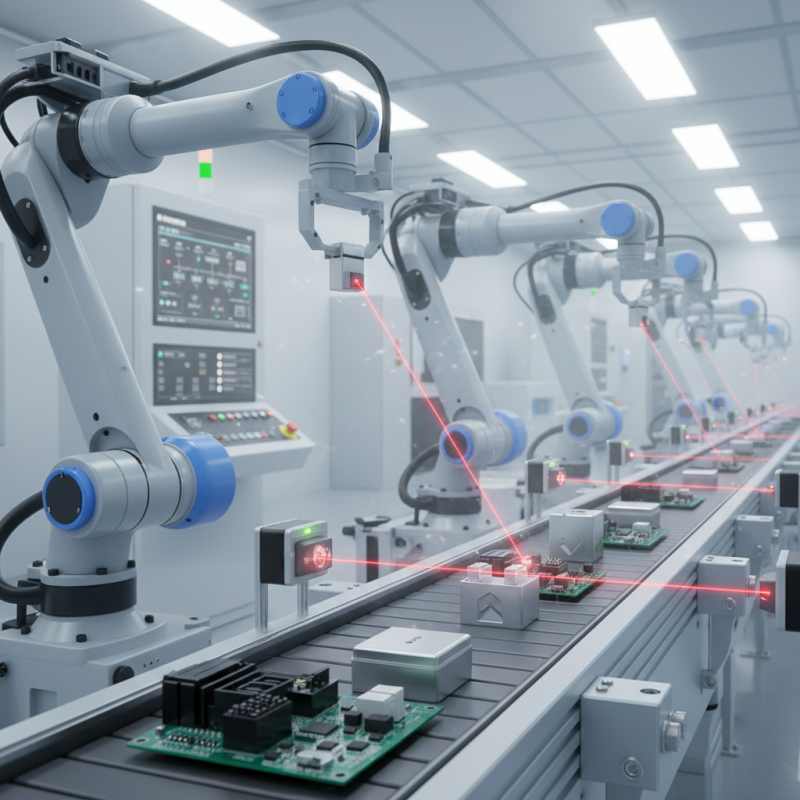
Why Are Photoelectric Sensors Essential for Automation?
Photoelectric Sensors play a vital role in automation. These devices convert light signals into electrical signals. They are essential for various applications, including manufacturing and safety systems. With their ability to detect presence and distance, they enhance efficiency.
Many industries rely on Photoelectric Sensors to streamline processes. For example, assembly lines use them for product detection. They help prevent errors and increase productivity. However, different environments may affect their performance. Dust, smoke, or bright light can interfere with their accuracy.
Despite their advantages, not all installations are perfect. Some users overlook calibration needs. This may lead to inconsistent readings. Regular maintenance is crucial for optimal function. Understanding both strengths and weaknesses helps in utilizing Photoelectric Sensors effectively.
Understanding Photoelectric Sensors in Automation Applications
Photoelectric sensors play a pivotal role in automation applications. Their ability to detect objects without physical contact makes them invaluable. These sensors work by emitting a beam of light and measuring the interruption or reflection caused by an object. This technology ensures precision in operations. In manufacturing, they help in counting items and detecting packaging.
However, their effectiveness can depend on environmental conditions. Dust, dirt, or fog can disrupt the light beam. Sometimes, false readings can occur. This challenges operators and requires ongoing attention. Adjusting sensors for specific environments often demands trial and error. In some cases, sensors may need regular maintenance to ensure optimal performance.
Furthermore, understanding the potential limitations of photoelectric sensors is crucial. They might not work as effectively with transparent objects. Certain materials can absorb light, leading to inconsistent results. Users must reflect on these challenges when implementing the technology. Customized solutions may provide better reliability and accuracy in various situations.
Understanding the Importance of Photoelectric Sensors in Automation
The Working Principle of Photoelectric Sensors Explained
Photoelectric sensors operate on a simple yet effective principle. They emit a beam of light, which is usually infrared. When this light encounters an object, it reflects back to the sensor. The sensor detects this reflected light. This process initiates a response, such as activating a machine.
In various automation settings, these sensors play a crucial role. They can track the presence of items on a conveyor belt. This feedback helps prevent errors in production. However, they require proper alignment and calibration. Misalignment can lead to missed signals, which disrupts the entire process. Regular maintenance is essential for ensuring reliability.
Despite their efficiency, photoelectric sensors have limitations. They can struggle with shiny surfaces that reflect light unpredictably. Dust and dirt may also interfere with their function. To mitigate these issues, choosing the right type of sensor for specific environments is vital. Automation relies heavily on these tools, yet understanding their quirks is equally important.
Types of Photoelectric Sensors and Their Specific Uses
Photoelectric sensors play a vital role in automation. They detect objects, measure distances, and ensure safety in various applications. Different types of photoelectric sensors are tailored for specific needs. Each sensor has unique features that make it suitable for distinct tasks.
There are four main types of photoelectric sensors: through-beam, retro-reflective, diffuse, and laser sensors. Through-beam sensors consist of a transmitter and a receiver. They provide long-range detection, making them ideal for large areas.
Retro-reflective sensors are excellent for shorter ranges. They use a reflector to bounce back light, saving space in installations.
Diffuse sensors are great for close-range detection. They work by reflecting light off an object back to the sensor. Laser sensors offer high precision over long distances, but they can be more complex. Choosing the right sensor can be difficult, as each type has strengths and limitations.
It's important to evaluate the specific application and environment carefully before deciding.
Benefits of Photoelectric Sensors for Industrial Automation
Photoelectric sensors play a vital role in industrial automation. They detect objects, presence, and distance without physical contact. This contactless operation reduces wear and tear, prolonging equipment life. In busy environments, these sensors maintain accuracy and reliability. They can quickly adapt to various materials, shapes, and colors. Industries rely on them for quality control and safety.
The benefits of using photoelectric sensors are numerous. They enhance efficiency by ensuring seamless production flows. For example, in packaging lines, these sensors can identify when to start or stop machinery. They also contribute to safety by preventing accidents. Devices can stop quickly when they detect an unexpected presence. However, factors like lighting and dust can affect performance. Regular maintenance and calibration are essential for optimal function.
Incorporating photoelectric sensors can streamline operations. Their ability to automate tasks leads to higher productivity. However, understanding their limitations is crucial. Sometimes, they might misread signals, especially in complex environments. A careful approach ensures that systems remain reliable and effective. Through continuous improvement, industries can harness the full potential of these sensors.
Challenges and Solutions in Implementing Photoelectric Sensors
Photoelectric sensors play a crucial role in automation systems. However, their implementation can present challenges. One common issue is ensuring correct alignment. Misalignment can lead to faulty readings. Regular checks can help maintain accuracy but may be neglected over time.
Another challenge is environmental factors. Dust, humidity, and temperature can affect sensor performance. It's essential to choose sensors that are rugged and suitable for their environment. Remember, not all sensors perform well in harsh conditions. Over time, analyze the sensor’s reliability in its specific application.
Tips: Always consider the sensor's location. Place it away from potential obstructions. Regular maintenance can prevent many issues.
Implementing photoelectric sensors also requires proper training for staff. Inadequate knowledge can lead to mistakes in setup and usage. Investing time in training proves beneficial in the long run. Evaluate the effectiveness of the training regularly.