What Is a Corrugated Box Maker and How Does It Work?
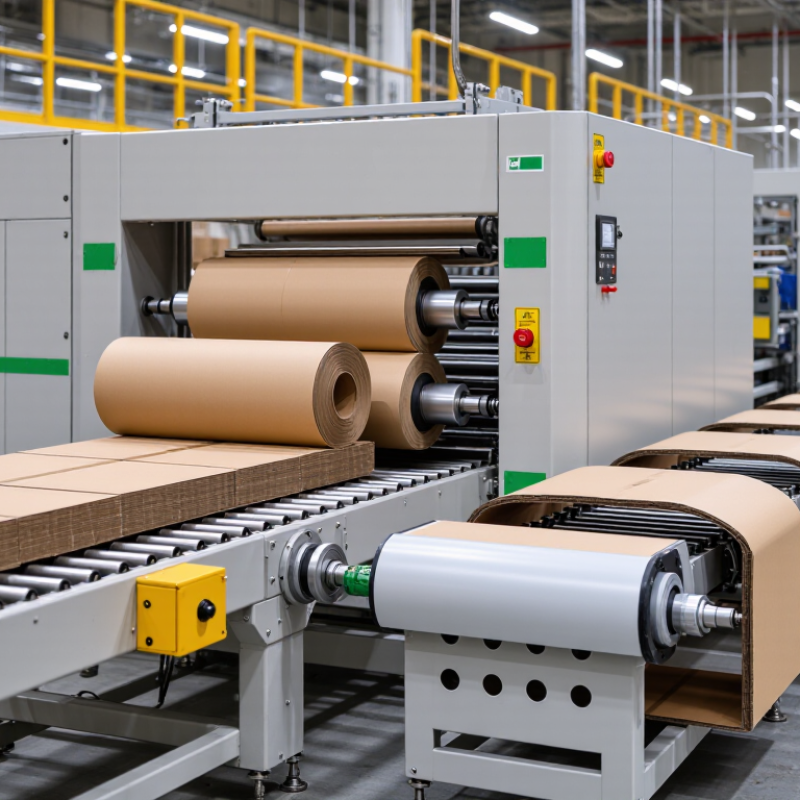
A Corrugated Box Maker is a machine system that converts flat corrugated sheets into practical shipping boxes. It combines feeding, printing, creasing, slotting, folding, and gluing in a controlled production line. Some models perform only one task, while integrated systems complete several steps together. The process begins when an operator loads sheets onto a feeder. Rollers then move each sheet at a steady speed. Creasing wheels press precise fold lines without cutting through the board. Slotting tools create openings for flaps and corners. The sheet starts to resemble a box.
Accuracy matters here. A small alignment error can produce uneven flaps, weak corners, or difficult assembly. After folding, adhesive or stitching may secure the final shape. A counter then separates finished boxes into organized bundles. Experienced operators inspect samples, measure dimensions, and check print registration during production. They also watch for crushed edges, loose glue, and warped sheets. Simple checks prevent expensive waste.
Not every Corrugated Box Maker works the same way. Machine speed, board thickness, box style, and automation level affect its performance. A reliable explanation should avoid promising identical results across every factory. Real production includes adjustments, maintenance, and occasional defects. That is the less polished truth. Understanding these limits helps buyers, operators, and packaging teams choose equipment more responsibly. The following discussion examines the machine’s main components, working sequence, operating requirements, and practical benefits in modern box manufacturing.
Corrugated Box Anatomy: Liners, Fluting, and 3–7 Board Layers
A corrugated box maker converts paperboard sheets into shipping boxes through feeding, printing, slotting, folding, and gluing. Its performance depends on the board’s anatomy. Liners form the outer and inner surfaces. Fluting is the waved paper between them. The flutes create vertical strength while leaving small air spaces for cushioning.
A three-layer board uses one liner, one fluted medium, and another liner. Five-layer board adds a second fluting and liner. Seven-layer board adds a third flute, creating a heavier structure for demanding loads.
Flute height and spacing affect compression, stacking, and shock resistance. A taller flute can improve cushioning, but it may reduce print smoothness. That trade-off is easy to underestimate.
Smithers’ The Future of Corrugated Packaging to 2029 reports continued global growth in corrugated packaging demand, supported by shipping and retail distribution. FEFCO industry statistics also show European corrugated production reaching tens of billions of square metres annually. These figures explain why small material choices matter at industrial scale. Yet, a report cannot replace a real compression test. Humidity, recycled fibre quality, and poor scoring can weaken an otherwise suitable box.
Tips: Match board strength to product weight, stacking height, and transport distance. Check flute direction before testing. Inspect crushed edges. They often reveal handling damage first. Do not choose seven layers automatically; excess material can increase cost and weight without improving performance.
Flute Profiles Explained: A 4.8 mm, C 3.6 mm, B 2.4 mm, E 1.2 mm
What Is a Corrugated Box Maker and How Does It Work?
A corrugated box maker converts paper reels into protective cartons. The machine heats, moistens, flutes, glues, prints, cuts, and folds board. Its most important decision may be hidden inside the sheet: flute profile selection. Flute height affects cushioning, stacking strength, print quality, and box dimensions.
A flute A 4.8 mm flute is commonly called A flute. It provides strong cushioning for heavier products and rough transport.
C flute C flute measures about 3.6 mm and offers a practical balance between protection and compression strength.
B flute B flute, near 2.4 mm, creates a flatter surface and supports efficient retail packing.
E flute E flute is approximately 1.2 mm. It suits small cartons, fine graphics, and lighter products. It is not decorative.
These nominal dimensions follow widely used classifications in the FEFCO International Fibreboard Case Code. Test methods such as TAPPI T 811 and ISO 3037 help measure edgewise compression and board strength. However, flute height alone cannot predict performance. Paper weight, moisture, adhesive bonding, and flute crush also change results. Smithers’ corrugated packaging market research repeatedly identifies material efficiency and transport protection as key industry priorities. A thinner E-flute box may reduce volume, yet it can lose stiffness when exposed to humidity. That difference matters.
On a converting line, operators should check caliper after production, not only trust machine settings. Small errors accumulate at high speed. A damaged flute can look acceptable but collapse under stacking pressure. Trial packing with the actual product remains wiser than relying on a catalogue value. These figures are useful, but not perfectly stable.
How a Box Maker Works: Feeding, Printing, Slotting, Folding, and Gluing
A corrugated box maker converts flat corrugated sheets into finished cartons. It starts with feeding. Sheets enter the machine through powered rollers, which keep their edges aligned. Operators check sheet size, flute direction, moisture, and board thickness before production. These details affect strength and machine stability.
The printing section adds text, symbols, or simple graphics with controlled pressure. Ink must transfer cleanly without crushing the flutes. After printing, slotting knives cut fold lines, slots, and panel edges. Their settings depend on box dimensions and board thickness. Small errors matter. A slot that is too deep can weaken the carton, while a shallow cut may prevent clean folding.
Folding rails then guide the scored sheet into its box shape. The machine must match the fold sequence carefully, or panels can twist. The final section applies adhesive to the manufacturer’s joint and presses the panels together. The glue line must hold. In practical production, operators inspect the first cartons and sample boxes during each run. They check joint strength, print position, panel alignment, and finished dimensions. Dust, worn knives, or slight humidity changes can create defects, even when settings appear correct. I have found that experienced operators often slow the line briefly to correct a small drift. That choice may reduce output, but it prevents larger waste. No machine is perfect, and reliable results still depend on measurement, maintenance, and thoughtful human judgment.
What Is a Corrugated Box Maker and How Does It Work?
A corrugated box maker converts printed corrugated sheets into finished boxes through feeding, printing, slotting, folding, and gluing. The chart shows representative operating speeds commonly used for medium-to-high-speed converting lines; actual performance varies with board grade, box size, print coverage, and setup time.
How it works: Sheets are fed into the line, printed with required graphics, slotted and creased for accurate folding, then folded and glued to form the finished corrugated box. The final folding and gluing stage often determines the practical line speed.
Quality and Sustainability: ISO 3037 Testing and Fiber Recyclability
What Is a Corrugated Box Maker and How Does It Work?
A corrugated box maker converts paper rolls into protective shipping cartons. The process begins with fluting, where heat and moisture shape the inner paper. Adhesive joins the flute to liner sheets. Cutting, creasing, folding, and printing follow. Small production changes can affect box strength. A slightly uneven crease may damage stacking performance.
ISO 3037 measures edge crush resistance by compressing a board edgewise. This test reflects how cartons resist pressure in warehouse stacks. It does not predict every real-world failure. Humidity, poor pallet alignment, and rough handling still matter. Testing should include production samples, not only ideal laboratory sheets. In my experience, moisture deserves more attention than many basic inspections allow.
Fiber recyclability adds another quality concern. The European Paper Recycling Council reported an 82% paper recycling rate in Europe in 2022. Recovered fibers can support new paper products, but fibers become shorter after repeated cycles. Excessive coatings, wet-strength additives, food residue, and plastic attachments can reduce recovery quality. The circular system is useful, yet not perfect.
Tips: Ask for ISO 3037 results, board moisture data, and recycled-fiber content. Check crushed corners after transport trials. Keep cartons dry during storage. Remove unnecessary labels and mixed materials. A practical review should examine both laboratory strength and actual recycling conditions.