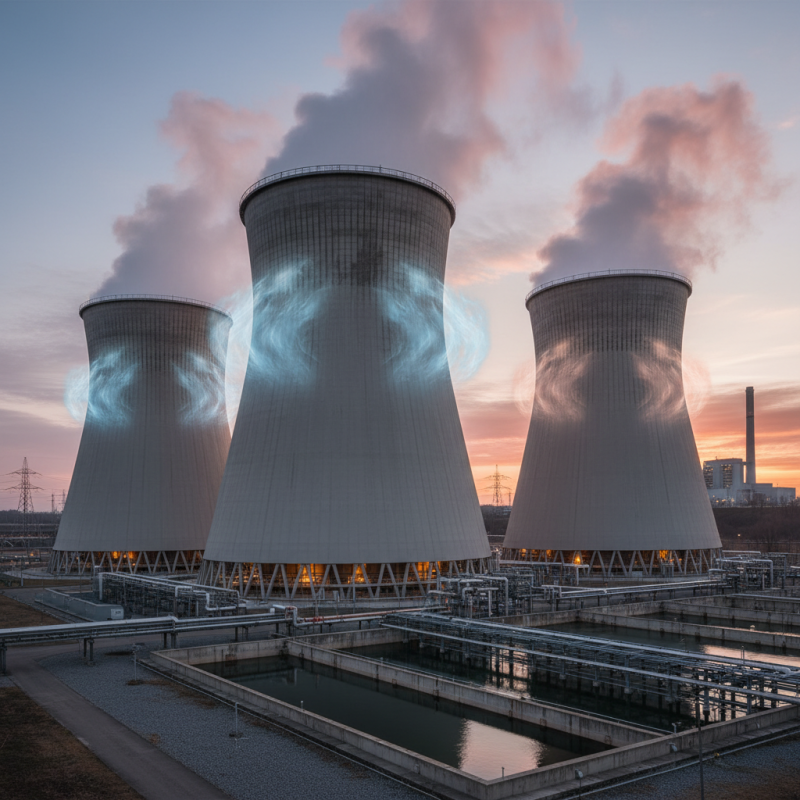
What is a Cooling Tower and How Does It Work?
cooling towers play a crucial role in various industrial processes. These structures help remove heat from water used in cooling systems. By dissipating heat, cooling towers ensure machines operate efficiently and safely.
A cooling tower works by utilizing the principles of evaporation and heat exchange. Warm water circulates through the tower while cool air moves in. This interaction enables heat to escape, cooling the water before it returns to the system. The design of a cooling tower can vary, impacting its efficiency.
Understanding how a cooling tower functions can help optimize energy usage. However, it is essential to recognize potential inefficiencies in this system. Regular maintenance is necessary to prevent issues that may arise from neglecting components. Reflection on the design and operation of cooling towers can reveal opportunities for improvement.
What is a Cooling Tower: Definition and Purpose
A cooling tower is a vital component in many industrial processes. Its primary purpose is to remove excess heat from water. This helps maintain optimal operating temperatures in systems such as power plants and HVAC systems. According to the U.S. Department of Energy, cooling towers can improve the efficiency of cooling systems by up to 20%.
The process involves circulating warm water through the tower. As the water descends, it meets a flow of air. This causes some of the water to evaporate, leading to cooling. This interaction can be inefficient if not properly managed. The makeup water can be treated, but mineral buildup remains a concern. Over time, this can affect the cooling efficiency.
Data from the American Society of Heating, Refrigerating and Air-Conditioning Engineers indicates that improper maintenance can reduce a cooling tower's effectiveness by 25%. Regular cleanings and inspections are crucial. Neglecting these can lead to higher energy costs and potential system failures. Balancing performance and upkeep requires careful planning and effort.
Types of Cooling Towers: Open-Circuit vs. Closed-Circuit
Cooling towers are vital systems for temperature regulation in various industries. The main types are open-circuit and closed-circuit cooling towers. Each has distinct features that suit different needs.
Open-circuit cooling towers use ambient air to cool water. Warm water enters the tower and is spread over a fill material. Air then flows through, evaporating some water, which cools the remaining. They are generally more efficient but can suffer from water quality issues. Dust, debris, and other contaminants may enter the system, requiring regular maintenance. The exposed design leaves the system vulnerable.
Closed-circuit cooling towers operate differently. They use a closed loop system, where water stays isolated from the air. Warm water circulates inside coils while air cools it from the outside. This design helps keep contaminants out. However, they may be less efficient in hot climates since evaporative cooling is limited. Assessing which type to use requires careful consideration of specific needs. Both systems have pros and cons that need reflection before making decisions.
What is a Cooling Tower and How Does It Work? - Types of Cooling Towers: Open-Circuit vs. Closed-Circuit
| Cooling Tower Type | Description | Applications | Advantages | Disadvantages |
| Open-Circuit Cooling Tower | Uses ambient air to cool water by evaporation. | Power plants, HVAC systems, and industrial processes. | Cost-effective, easy to maintain, and efficient in hot climates. | Requires large make-up water supply, prone to water loss due to evaporation. |
| Closed-Circuit Cooling Tower | Circulates water through a heat exchanger and uses ambient air to remove heat. | Industrial refrigeration, petrochemical processing, and HVAC systems. | Reduced water loss, minimizes contamination, and operates efficiently in various conditions. | Higher initial cost, requires more maintenance, and less efficient in very hot climates. |
Key Components of a Cooling Tower and Their Functions
Cooling towers play a crucial role in industrial cooling systems. They help regulate temperature by dissipating heat from water used in various processes. The main components of a cooling tower include the fill, cooling fans, and water distribution system. Each plays a vital role in the overall efficiency of the cooling process.
The fill material increases the surface area for heat exchange. This maximizes the cooling effect as water flows over it. A study by the International Journal of Thermal Sciences noted that optimizing fill design can enhance thermal performance by up to 30%. Cooling fans pull air through the tower, facilitating evaporation. Efficient fan operation is critical. Aligning fan speed with cooling demand can save significant energy, as reported by the U.S. Department of Energy.
Another essential component is the water distribution system, which evenly spreads water over the fill. If the distribution is uneven, some areas may overheat, leading to inefficiencies. Even minor blockages can cause significant issues. Regular maintenance is essential but often overlooked. Reports indicate that poorly maintained cooling towers can lose up to 20% of their cooling efficiency. Understanding these components and their functions is key to optimizing cooling tower operations.
The Cooling Process: How Heat Exchange Occurs
Cooling towers play a crucial role in industrial and commercial processes. They operate primarily through the mechanism of heat exchange. In essence, they remove waste heat from a system. The hot water circulates through the tower's fill media, where it spreads out and cools down.
As the hot water descends, it comes into contact with ambient air. This interaction causes a portion of the water to evaporate, which pulls heat away from the remaining water. Reports indicate that effective cooling towers can reduce water temperatures by 10-30 degrees Fahrenheit. In fact, some systems achieve cooling efficiencies exceeding 85 percent, showcasing their vital role.
However, challenges remain. Not all towers reach optimal efficiency. Factors like poor design or maintenance issues can lead to scaling and fouling. Addressing these problems requires periodic evaluations. Regular monitoring ensures that the cooling systems operate effectively and reduce energy consumption. The cooling process, while effective, is not infallible; attention to detail is essential for maximizing performance.
Applications of Cooling Towers in Industry and HVAC Systems
Cooling towers play a significant role in various industries and HVAC systems. These systems are crucial for dissipating excess heat. They ensure optimal operating conditions for machines, equipment, and processes. In large facilities, cooling towers can be a lifeline for maintaining efficiency. They help prevent overheating, which can cause serious damage.
In industrial settings, cooling towers support manufacturing processes. They help regulate temperatures in chemical plants and power generation systems. The effectiveness of a cooling tower can directly impact productivity. However, not all cooling towers operate at peak efficiency. Some suffer from scaling or fouling, which can reduce their cooling capacity. Regular maintenance is necessary to address these issues.
In HVAC applications, cooling towers assist in air conditioning systems. They help to remove heat from the building, improving indoor comfort. Buildings that rely on efficient cooling systems can reduce energy costs significantly. But if the cooling tower fails, the entire system can be affected. Addressing this requires attention to design and maintenance. Effective monitoring and adjustments are essential for optimal performance.