Why Use a CO2 Sensor for Indoor Air Quality Monitoring?
Indoor air quality significantly impacts health and well-being. A Co2 Sensor is essential for effective monitoring. Studies reveal that high levels of CO2 can lead to cognitive decline and fatigue. According to the World Health Organization, indoor air pollution is a major risk factor, contributing to respiratory diseases.
CO2 sensors can provide real-time data on air quality. They help identify areas with poor ventilation. In fact, research indicates that CO2 levels above 1000 ppm can greatly impair decision-making abilities. Effective monitoring is invaluable for schools, offices, and homes.
While many acknowledge the importance of indoor air quality, implementation can falter. Some may underestimate the need for regular monitoring. However, relying solely on traditional methods is inadequate. A proactive approach with CO2 sensors offers clear benefits. Investing in these devices can enhance overall health and productivity, making it a worthwhile consideration.
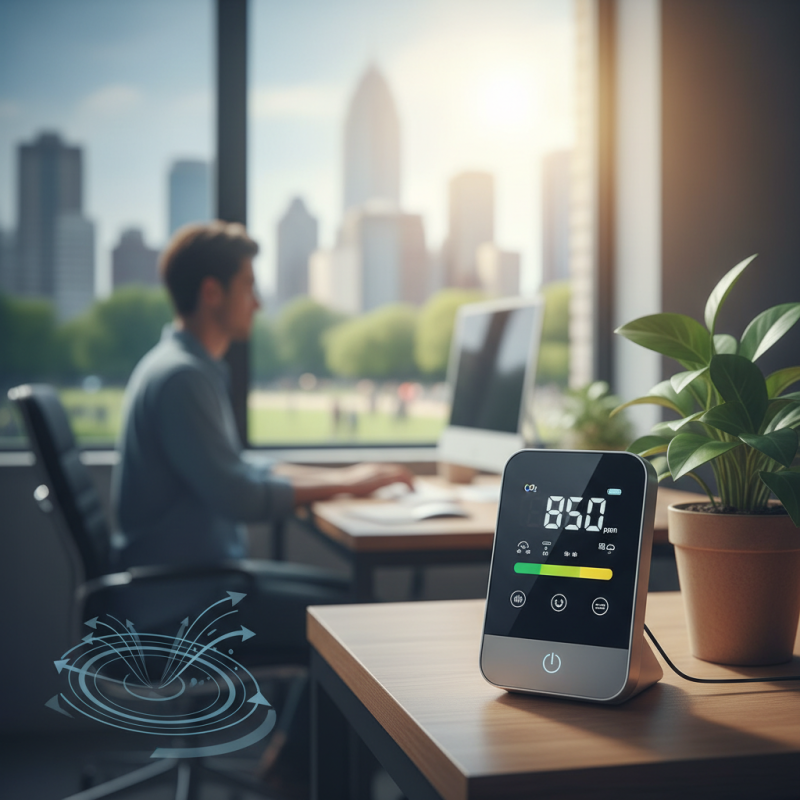
Benefits of Monitoring Indoor Air Quality with CO2 Sensors
Monitoring indoor air quality is essential for health. High levels of CO2 can lead to fatigue and decreased cognitive function. CO2 sensors offer a simple solution for detecting air quality changes. They provide real-time data about carbon dioxide levels. This information is vital for making informed decisions regarding ventilation.
Using CO2 sensors helps maintain a healthy environment. They can alert you when air quality worsens. You might notice that rooms feel stuffy or the air feels stale. This is often a sign of elevated CO2 levels. The sensors prompt timely actions such as opening windows or using air purifiers. Observing CO2 trends can also help identify times when air quality deteriorates.
Investing in CO2 monitoring encourages good habits. Regular checks can influence behaviors around ventilation. However, awareness alone isn't enough. People often neglect air quality in busy schedules. It’s vital to integrate air quality checks into daily routines. Balancing comfort and health requires continuous effort. CO2 monitoring is a practical tool in this ongoing challenge.
Understanding the Mechanism of CO2 Sensors in Indoor Environments
CO2 sensors play a crucial role in monitoring indoor air quality. They help create healthier environments by measuring carbon dioxide levels. High CO2 concentrations can lead to discomfort and health issues. Understanding how these sensors work is essential for effective usage.
These sensors often use non-dispersive infrared (NDIR) technology. NDIR operates by detecting specific wavelengths of light absorbed by CO2 molecules. As CO2 levels increase, less light reaches the sensor. This change in light intensity allows for accurate CO2 concentration readings. Despite their accuracy, factors like humidity and temperature can affect performance. It's important to consider these variables.
Installing a CO2 sensor is a step towards better air quality. Placement in common areas is vital for accurate monitoring. Regular maintenance is necessary to ensure reliability. Reflecting on the sensor's data can lead to improved indoor environments. A downward trend in CO2 levels may indicate better ventilation practices, while spikes require attention. Understanding these dynamics can enhance air quality and overall health.
Impact of Elevated CO2 Levels on Human Health and Comfort
Elevated levels of CO2 in indoor environments pose significant risks to human health. Research indicates that concentrations above 1,000 ppm can cause discomfort, headaches, and impaired cognitive function. Studies have shown that productivity can drop by up to 30% as CO2 levels rise. This is particularly concerning in workplaces and schools, where concentration and decision-making are critical.
In residential settings, high CO2 levels can lead to poor sleep quality. A study published by the National Institutes of Health found that sleeping in environments with CO2 levels exceeding 1,000 ppm can disrupt sleep architecture. This affects how rested a person feels and can lead to long-term health issues such as cardiovascular problems. Proper ventilation is essential to maintain indoor air quality.
Monitoring indoor CO2 levels should be a priority. Many people may not realize just how quickly CO2 can accumulate, especially in sealed environments. Passive monitoring without a CO2 sensor can lead to unintended consequences. Increased awareness of indoor air quality is necessary for everyone, as related health effects often go unnoticed. Regular checks can foster a healthier living and working space, ultimately enhancing overall well-being.
Applications of CO2 Sensors in Different Indoor Settings
CO2 sensors play a crucial role in monitoring indoor air quality across various settings. In schools, for instance, research indicates that elevated CO2 levels can impair students' cognitive function. A study by the Harvard T.H. Chan School of Public Health found that high CO2 concentrations can reduce decision-making performance by up to 50%. Ensuring proper ventilation using CO2 sensors can enhance learning environments.
In commercial offices, maintaining air quality is essential for employee productivity. The American Society of Heating, Refrigerating and Air-Conditioning Engineers (ASHRAE) recommends optimal CO2 levels to be below 1,000 ppm. Monitoring CO2 helps in regulating ventilation systems, thus improving overall air quality. Unmanaged CO2 levels can lead to fatigue and decreased concentration among employees.
However, integrating CO2 sensors into older building infrastructures can be challenging. Many facilities struggle with outdated ventilation systems that are not designed for real-time monitoring. This presents an opportunity for improvement. Strategies for upgrading these systems could lead to better air quality and healthier indoor environments, yet they require careful planning and investment.
CO2 Levels in Various Indoor Settings
Best Practices for Using CO2 Sensors for Effective Air Quality Management
CO2 sensors play a vital role in indoor air quality management. They help monitor carbon dioxide levels, which can indicate ventilation issues. According to the World Health Organization, poor air quality can lead to various health problems, including fatigue and decreased cognitive function. Effective management of CO2 levels is essential in workplaces and homes alike.
To maximize the benefits of CO2 sensors, consider these best practices. Regularly calibrate your sensors to ensure accurate readings. This step enhances reliability and helps maintain proper ventilation in indoor spaces. Additionally, place sensors strategically in areas with high occupancy. This positioning captures changes in air quality effectively.
Another tip is to analyze the data collected from your sensors. Many guides suggest reviewing trends over time to identify patterns in air quality. Adjustments based on this data can lead to improved ventilation strategies. Always remember, indoor air quality is not just about monitoring. It involves understanding and responding actively to the data collected.