






Choosing top China dismantling joint manufacturers requires more than comparing catalog prices. It demands evidence, technical judgment, and supplier experience. The WHO/UNICEF Joint Monitoring Programme reported that 2.2 billion people lacked safely managed drinking water in 2022. That gap keeps water infrastructure investment highly relevant. It also increases the importance of dependable pipe connection components.
A dismantling joint must tolerate pressure, alignment changes, corrosion risks, and repeated maintenance. Look for manufacturers that provide ductile iron or carbon steel specifications, elastomer details, coating systems, and pressure-test records. Their products should match recognized requirements, such as ISO 2531, EN 545, EN 1514, or project-specific standards. Certifications alone are not enough. Verify the issuing body and test scope.
Factory capability matters. Request production photographs, machining records, dimensional inspection reports, and batch traceability documents. A serious manufacturer should explain bolt grades, flange drilling, gasket materials, and allowable adjustment ranges clearly. The Global Infrastructure Hub’s Global Infrastructure Outlook identified a major worldwide infrastructure investment gap through 2040. This pressure may encourage faster sourcing, but rushed procurement creates avoidable risks.
No supplier is perfect. A polished website proves little. Ask how the factory handles nonconforming parts, replacement claims, and urgent delivery issues. Review independent inspection options before shipment. Speak with previous project customers where possible. The best choice combines verified engineering data, stable manufacturing controls, transparent communication, and realistic after-sales support. Price still matters, but a cheap dismantling joint can become expensive during pipeline shutdowns.
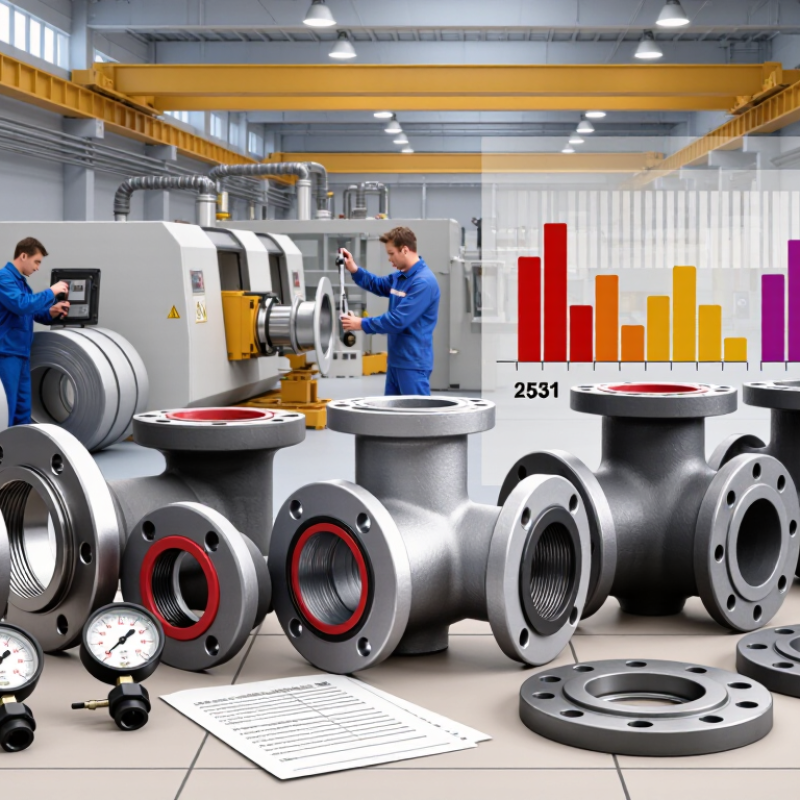
Dismantling joints are pipe connection components designed to simplify installation, removal, and maintenance. They usually include flanged sections, a central body, sealing elements, and adjustable tie rods. This structure helps workers align pipes near valves, pumps, and water meters without forcing the surrounding pipeline. In practice, a few millimeters of adjustment can prevent hours of difficult work.
Their industrial applications are broad. Water treatment plants use them around pumps and control valves. Building services rely on them for chilled-water and fire-protection pipelines. Mining, irrigation, and chemical-processing facilities may also need reinforced designs for vibration, pressure, or corrosive media. Material selection matters. Ductile iron, carbon steel, stainless steel, and protective coatings perform differently in wet or aggressive environments. Pressure ratings, temperature limits, flange standards, and gasket compatibility should match the complete system, not only the joint.
Tips: When comparing China dismantling joint manufacturers, request dimensional drawings, pressure-test records, coating details, and traceable material certificates. Ask how factory inspections are managed. A supplier with practical engineering support is often more valuable than the lowest quotation. Check tolerance control around bolt holes and flange faces. I have seen small alignment errors create serious installation delays. Also, do not assume every “universal” joint fits every standard. Confirm measurements with the project engineer before ordering. Mistakes happen, even with experienced teams.
| Evaluation Dimension | Typical Industry Reference | Why It Matters | Recommended Verification Questions |
|---|---|---|---|
| Product Function | A dismantling joint is a flanged pipe fitting designed to provide controlled axial adjustment and facilitate the installation or removal of valves, pumps, meters, and other flanged equipment. | It reduces installation effort and allows equipment to be removed without cutting the pipeline. | Does the design provide axial adjustment, restrained movement, and sufficient clearance for equipment removal? |
| Common Size Range | Common project ranges are approximately DN50 to DN2000, subject to the manufacturer’s tooling and design capability. | Correct nominal diameter and dimensional compatibility are essential for leak-free connection and equipment alignment. | Can the supplier provide certified dimensional drawings for the required DN size and face-to-face length? |
| Pressure Rating | Common water-industry ratings include EN PN10, PN16, and PN25. ASME Class 150 designs are also used where the project follows ASME flange requirements. | The pressure class must match the pipeline design pressure, flange drilling, temperature, and applicable standard. | Which pressure standard is used, and are hydrostatic and body-pressure test records available? |
| Main Body Material | Ductile iron is widely used for municipal water applications; carbon steel and stainless steel are selected for higher mechanical, temperature, or corrosion requirements. | Material selection affects pressure resistance, corrosion performance, weldability, service life, and total cost. | What material grade is supplied, and can the supplier provide heat numbers, material certificates, and chemical composition records? |
| Bolts, Tie Rods, and Fasteners | Fasteners are commonly manufactured from carbon steel, galvanized steel, or stainless steel, depending on pressure, environment, and corrosion requirements. | Tie rods restrain axial forces and fasteners maintain flange compression during operation. | What are the fastener grades, coating thickness, tightening requirements, and corrosion-protection measures? |
| Gasket Material | EPDM is commonly used for potable-water and general water service; NBR is often selected where oil resistance is required. Temperature and chemical compatibility must be confirmed. | The gasket is a primary sealing component and may determine the suitability of the joint for a specific medium. | Is the gasket suitable for the conveyed fluid, operating temperature, pressure, and drinking-water regulations? |
| Flange Compatibility | Flange drilling may follow EN 1092-2, ASME B16.5, ASME B16.47, or another project-specified standard. | Matching bolt-hole pattern, flange outside diameter, bore, and pressure class prevents installation failures. | Which flange standard and facing type are used, and are dimensional tolerances documented? |
| Axial Adjustment | Many dismantling joint designs provide limited longitudinal adjustment, commonly specified in millimetres according to size and design. | Adjustment compensates for installation tolerances and creates space for equipment dismantling. | What is the permitted adjustment range, and is it measured before or after the joint is fully restrained? |
| Coating and Corrosion Protection | Fusion-bonded epoxy, liquid epoxy, galvanizing, or other project-approved systems may be used. Coating thickness and surface preparation should be specified. | Proper coating protects the joint during buried, wet, chemically exposed, or marine service. | What surface-preparation standard, coating system, dry-film thickness, and inspection method are applied? |
| Applicable Standards | Relevant requirements may include EN 14525, EN 545, EN 598, EN 1092-2, ISO 9001, and project-specific water or pressure-equipment specifications. The applicable standard depends on product type and service. | Standards define dimensions, materials, performance, testing, and documentation requirements. | Which standard governs the complete assembly, and can conformity documents be supplied for the exact model? |
| Testing and Inspection | Typical quality controls include dimensional inspection, material verification, coating inspection, gasket checks, and hydrostatic pressure testing. | Documented testing reduces the risk of leakage, dimensional mismatch, and premature failure. | Are inspection plans, pressure-test records, calibration certificates, and final inspection reports available? |
| Industrial Applications | Municipal water transmission, wastewater treatment, water intake systems, pumping stations, irrigation, HVAC water loops, fire-water systems, and selected industrial-process pipelines. | Each application may impose different requirements for fluid compatibility, pressure, temperature, corrosion protection, and approvals. | Has the supplier delivered joints for the same medium, pressure class, installation environment, and operating temperature? |
| Quality Management | A documented quality-management system, commonly aligned with ISO 9001, should control purchasing, production, inspection, nonconformities, and traceability. | A quality system improves consistency across batches and supports reliable project documentation. | Can the manufacturer provide a valid quality certificate and explain its batch-traceability process? |
| Technical Documentation | A complete technical file normally includes drawings, material information, pressure ratings, installation instructions, gasket data, test reports, and coating records. | Clear documentation supports engineering approval, installation, maintenance, and future replacement. | Are the drawings and certificates prepared for the exact size, pressure class, material, and coating specified in the purchase order? |
| Supplier Selection Priority | Prioritize verified technical conformity, manufacturing capability, inspection control, traceability, application experience, delivery reliability, and after-sales support rather than price alone. | The lowest initial price may create higher costs through leakage, installation delays, replacement, or non-compliance. | Can the supplier pass a drawing review, sample inspection, document review, and factory or third-party inspection before shipment? |
