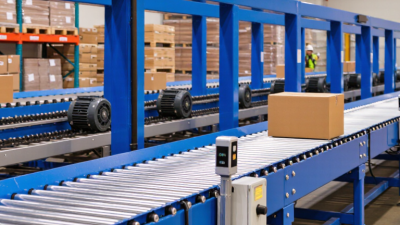



Choosing a roller conveyor system starts with the load, not the product catalogue. A light carton with a flat base behaves differently from a heavy tote with uneven seams. Measure each item’s length, width, weight, and underside. Then consider how quickly goods must move, where they need to stop, and whether operators will load or remove them by hand. Small details matter. A roller pitch that works for one box may leave another poorly supported.
A useful paraphrase—not a verbatim quotation—of Dr. Russell D. Meller’s facility-planning perspective is: “Design the conveyor around the flow of materials, not the other way around.” That principle helps frame the choices ahead: gravity or powered rollers, suitable roller spacing, conveyor width, frame strength, controls, and accumulation needs. The route matters too. A tight turn, a sloped section, or a dusty work area can change which components make sense. Check the actual operating conditions with a qualified supplier, and confirm capacity against the heaviest expected load. Specifications alone can miss awkward packaging or changing product mixes. I would not treat a standard configuration as automatically right. This guide explains what to compare, what questions to ask, and where a careful site assessment can prevent costly mismatches.
How to Choose a Roller Conveyor System?
Identify the Materials, Loads, and Throughput Requirements
Start with the items the conveyor will actually carry, not just their labels. A sealed carton, an open tote, and a metal tray behave differently on rollers. Measure each item’s length, width, and base condition. Note soft edges, loose straps, or uneven bottoms. Small details matter.
Next, record the lightest and heaviest loads, including any stacked items. Check whether weight is spread evenly or concentrated at one corner. Roller spacing should support the item’s base at all times; otherwise, a carton may sag or catch between rollers. Allow for occasional heavier loads, but avoid sizing the entire system around an unrealistic worst case. That assumption can waste space and money.
For throughput, count items per minute during normal operation and at busy periods. Then consider gaps between items, stops, and handoffs to workers or other equipment. A line rated for high speed may still create a bottleneck if items arrive irregularly. Test a sample load on a short section when possible. Watch for skewing, slipping, and noisy impacts. Real samples can expose problems that a spreadsheet misses. Requirements may change, too, so leave room to review the layout as product sizes or daily volume shift.

How to Choose a Roller Conveyor System?
Choose Between Gravity, Powered, and Specialized Roller Conveyors
Gravity rollers suit light, stable cartons moving along a slight slope or pushed by workers. They need no drive motor, but slope and roller spacing matter. A dented carton can catch between rollers; an incline that is too steep can send loads rushing. Test with the actual package, not an ideal sample. Keep it simple.
Powered rollers fit routes with steady throughput, controlled accumulation, or changes in elevation. They can move cartons across level sections without relying on gravity. Check load weight, carton dimensions, start-stop frequency, and available controls before sizing the drive. MHI’s 2024 Annual Industry Report found that 55% of surveyed companies planned to increase supply-chain technology investment. That signals growing interest in automation, not proof that every line needs a powered conveyor.
Specialized rollers solve specific layout or handling problems. Tapered rollers guide cartons around curves; accumulation designs hold products without constant contact. Choose them when ordinary straight rollers create jams, product damage, or awkward transfers. Measure the smallest and largest items, then observe how they behave at bends and merges. A neat spreadsheet can miss a wobbly box. Recheck the choice during a loaded trial.
| Selection Factor | Gravity Roller Conveyor | Powered Roller Conveyor | Specialized Roller Conveyor |
|---|---|---|---|
| How it moves products | Products move by gravity on a decline or are pushed manually across a level section. | Motors drive rollers or drive belts beneath the rollers to move products. | Uses a design tailored to a specific task, such as accumulation, turning, braking, or conveying around a curve. |
| Best suited for | Simple transfers, packing areas, shipping lanes, and locations where operators can push products. | Longer routes, steady movement, automated workflows, and applications requiring controlled product flow. | Layouts or handling requirements that standard straight gravity or powered conveyors cannot meet effectively. |
| Typical products | Rigid, flat-bottomed cartons, totes, trays, and other loads that can roll smoothly. | Cartons, totes, trays, and compatible containers within the system’s load and dimensional limits. | Products suited to the selected subtype; confirm package shape, base, weight, and stability with the conveyor designer. |
| Flow and speed control | Flow depends on slope, load, roller condition, and operator input; speed control is limited. | Can provide driven movement and, with appropriate controls, adjustable speed and coordinated flow. | Depends on the design. Accumulation sections can control spacing or hold products; brakes can help manage downhill speed. |
| Accumulation | Products may contact one another, so uncontrolled buildup can cause pressure or damage. | Zero-pressure accumulation is available in suitable systems; it requires compatible zones, sensors, and controls. | Accumulation rollers or zones are designed to hold and release products in a controlled manner when properly specified. |
| Layout flexibility | Often simple to install and rearrange; flexible or expandable sections are available for some applications. | Can support fixed routes and automated connections, but needs power, wiring, and suitable controls. | Includes options such as curved, tapered, narrow-width, expandable, or transfer sections to address specific layout needs. |
| Slope and product control | A decline may be needed for gravity flow. The slope must be tested so loads move reliably without gaining unsafe speed. | Usually moves products without relying on a gravity slope. Stopping, merging, and speed control depend on system design. | Braked or controlled sections can help manage descents; curves and turns must suit the load dimensions and stability. |
| Power and operating costs | Requires no drive power, though manual pushing or a suitable incline may be needed. | Requires electrical power and drive components; energy use depends on the motor, controls, duty cycle, and load. | Varies by subtype. A powered specialized section uses power; a gravity curve or flexible section may not. |
| Maintenance considerations | Inspect rollers, bearings, frame connections, supports, and alignment; keep the roller path clear. | Also inspect motors, drive components, sensors, wiring, and controls according to the system’s maintenance plan. | Check subtype-specific parts, such as curve alignment, brake condition, accumulation sensors, or expandable-frame components. |
| Main limitations | Less suitable for fragile loads, poor-bottomed packages, precise spacing, or routes without appropriate manual input or slope. | Higher equipment and installation complexity; powered movement needs guarding and suitable operating procedures. | More application-specific; incorrect selection can create poor tracking, unstable loads, or unreliable transfers. |
| Key details to confirm | Load weight and base, minimum and maximum package dimensions, roller spacing, slope, and required throughput. | Load range, throughput, speed, accumulation needs, power supply, controls, and interface points with other equipment. | Exact task, package orientation, curve or transfer geometry, load range, control requirements, and available floor space. |
| A practical selection rule | Choose when loads roll well and a simple, low-complexity route meets the flow requirement. | Choose when powered, repeatable movement or integration with an automated process is needed. | Choose when a defined requirement—such as accumulation, a turn, a controlled descent, or an expandable route—calls for a dedicated section. |
Note: Conveyor capacity and suitability depend on the specific design. Verify load weight, package dimensions and base condition, roller spacing, speed, slope, throughput, and safety requirements before specifying a system.
Start with the products, not the available floor space. Measure the longest and widest item, then check its weight and base shape. Roller spacing should support the smallest item at multiple points; otherwise, cartons may sag or catch between rollers. Include the item’s center of gravity when loads are uneven. A drawing can look tidy and still miss a tight transfer gap.
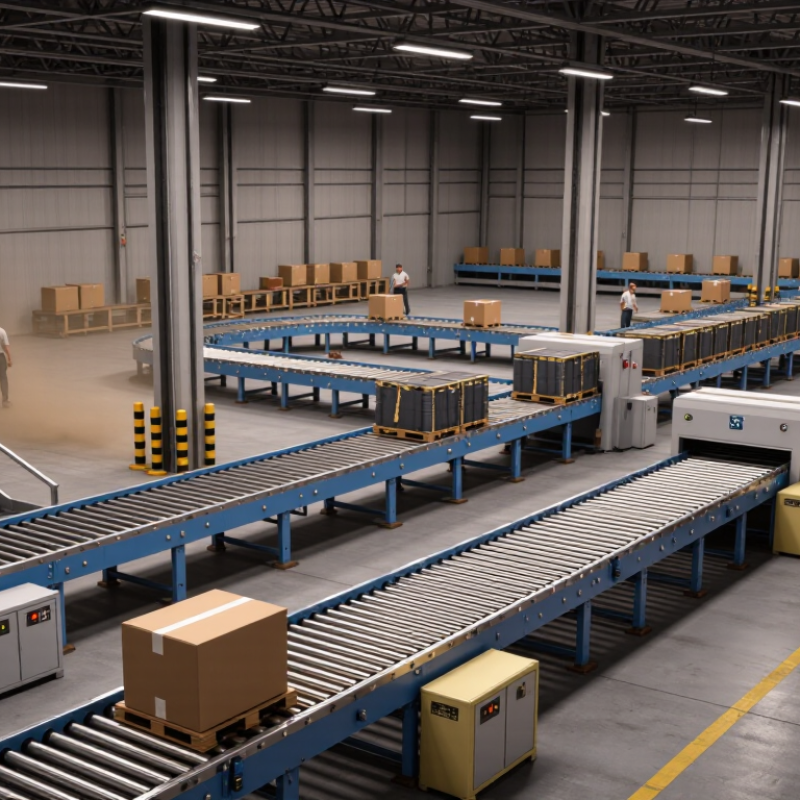
Map the route around real work areas: packing benches, doors, operator access, and maintenance clearance. Note every turn, merge, and height change, since these affect product flow. Then define operating conditions. Dust, moisture, temperature, load frequency, and desired speed all influence roller and frame selection. For example, a damp area may need corrosion-resistant components, while frequent heavy loads call for checking shaft and frame capacity. Don’t rely on average load alone. Peak loads matter.
Tips: Test the layout with the smallest and heaviest products. Confirm that they transfer smoothly at every junction. Recheck measurements on site; floor plans are not always current. Small details matter. Allow room for cleaning and repairs, even if the first layout feels a little less compact.
A roller conveyor should be sized for real operating conditions, not an idealized average. Record the heaviest package, its footprint, and the busiest peak-hour flow. Calculate load per roller using the package’s contact points, then add a margin for uneven loading and start-stop cycles. A carton spanning only two rollers behaves differently from one supported across four. I would not trust a tidy spreadsheet alone.
Safety details matter at handoff points. Check for pinch zones at drives and transfers, accessible emergency stops, and guards where hands could reach moving parts. The Liberty Mutual 2024 Workplace Safety Index estimated that overexertion involving outside sources cost U.S. employers $12.7 billion in direct costs. That figure covers many industries, not conveyors specifically, but it underlines why manual pushing and awkward lifting deserve attention.
Integration is more than matching conveyor width. Confirm line height, transfer gaps, controls, sensors, and communication with warehouse software. The MHI 2024 Annual Industry Report found that 55% of surveyed supply-chain professionals planned to increase investment in technology and innovation. That trend makes upgrade paths worth checking: can the system accept future scanners or automated routing? Leave space for maintenance access, too. It is easy to overlook until a technician needs to reach a motor.
Assess Capacity, Safety Features, and Integration Needs
Example screening scores on a 1–5 scale, where 5 indicates a strong fit. Confirm capacity against peak throughput and load requirements; check guarding and emergency-stop needs; and verify compatibility with your controls and adjacent equipment. Scores are illustrative, not product ratings.
Compare roller conveyor suppliers on more than purchase price. Ask for load ratings, roller spacing, frame material, drive specifications, and documented test conditions. A quote should state what is excluded, such as controls, guarding, site wiring, or commissioning. Request references from facilities with similar loads and operating hours. Small details matter.
Installation needs can change the real project cost. Measure aisle widths, floor levels, column spacing, and access for unloading before approving a layout. Confirm who handles electrical connections, anchoring, safety checks, and operator training. MHI’s 2024 Annual Industry Report found that 55% of surveyed supply-chain leaders planned to increase technology investment. That reflects broad interest, not proof that any conveyor will pay back. Ask suppliers to show assumptions behind capacity and savings estimates.
Maintenance plans deserve the same scrutiny as equipment specifications. Compare inspection intervals, spare-parts availability, response times, and training for replacing rollers or clearing jams. Request a parts list with lead times, not just a service promise. A basic log of noise, belt tracking, and roller wear can reveal problems early. Yet maintenance schedules are not universal; dust, moisture, load variation, and shift patterns matter. Leave room to revise the plan after operators have used the system for several weeks. That first schedule may be wrong.