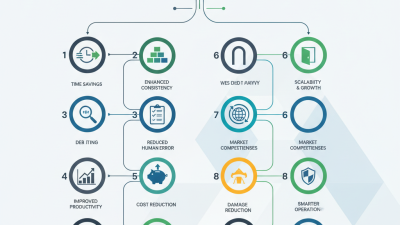
How to Choose the Right Packaging Automation Solutions?
A faster line is not automatically a better line. The right packaging automation solutions should address a specific production need, such as repeated label misalignment, slow case packing, or changeovers that leave operators waiting. Before comparing machines, document current output, downtime, product variation, and staffing constraints. A few hours of observation beside the conveyor can reveal more than a polished sales presentation.
Jim Pittas, president and CEO of PMMI, speaks to the importance of people in manufacturing. A concise paraphrase of that perspective is: “Automation should support the process and the people who run it.” Treat that as a guiding principle, not a verbatim quotation. Consider the full workflow: how containers arrive, where inspection happens, how rejects are handled, and whether operators can safely reach routine controls. Check integration needs, available floor space, maintenance skills, spare-parts access, and the supplier’s commissioning and training plan. Ask for performance evidence using products and speeds like yours, rather than relying on headline capacity. Small details matter. A sensor bracket can be awkward to clean; a changeover screen can confuse a new operator.
This guide will help you compare technologies, calculate practical costs, and assess vendors against measurable requirements. It will also examine a less comfortable question: does the bottleneck actually need automation, or would a simpler process change solve it? The answer may be less impressive on paper—and more useful on the floor.

Assess Current Packaging Processes and Automation Goals
Before comparing machines, map how packages move through the line today. Record units per minute across several shifts, not just during a smooth morning run. Note changeover time, damaged cartons, label reprints, and every point where an operator waits. A simple clipboard log can reveal pauses that a dashboard misses. Watch a product changeover in person. Not on paper.
Then define what automation should improve. Is the goal higher throughput, fewer repetitive lifts, more consistent seals, or better traceability? Set a measurable target, such as reducing average changeover time from 18 minutes to 12. Specify which products the target covers. Check package sizes, material variation, floor space, staffing patterns, and upstream supply. Automation cannot fix irregular carton arrivals by itself. That part is easy to overlook.
Use baseline figures to distinguish a true bottleneck from a visible annoyance. If sealing stops because filled cartons arrive unevenly, a faster sealer may simply create a queue. Ask operators where jams occur and what adjustments they make; their workarounds often expose missing requirements. Their estimates may be imperfect, so compare observations with production records. Decide how much downtime, training, and maintenance the site can absorb. It matters.
Define Product, Throughput, and Packaging Requirements
Choosing packaging automation starts with the product, not a machine speed claim. Record each item’s dimensions, weight, shape, surface, and fragility. Measure the real load. Include the smallest and largest units, plus awkward items that tip, roll, or snag. Note whether products arrive warm, dusty, damp, or in mixed batches; these conditions can change feeding and sealing performance. A glass jar, soft pouch, and irregular carton may need very different handling, even at the same line rate. Small details matter.
Calculate throughput from actual production records. Separate peak demand from a rate the line must sustain across a full shift. Include changeovers, replenishment, inspection, and brief stoppages; otherwise, a quoted cycle rate can look better than daily output. Define the package format, material, closure, label position, and acceptable presentation. Specify whether packs need tamper evidence, cushioning, or moisture protection. Check floor space, utilities, and connections to upstream and downstream processes. Those limits are easy to overlook.
Leave room for uncertainty. Forecasts are often optimistic, and a product mix may change sooner than expected. Trial representative products and packaging materials under realistic conditions, then record jams, rejects, and operator adjustments. A pilot cannot predict every shift, but it can expose assumptions before equipment is selected. Avoid designing only for the easiest product.
Compare Automation Types and System Compatibility
Packaging automation can mean a case erector, a carton sealer, a label applicator, or a robotic palletizer. These systems solve different bottlenecks. A sealer may reduce handwork, while a palletizer can ease repetitive lifting at the end of a line. Match the equipment to the task, not just the advertised speed. A fast machine is not useful if products queue up before it.
Compatibility matters just as much. Check carton sizes, product shapes, line height, conveyor direction, and available floor space. Then confirm how the new unit will exchange start, stop, and fault signals with existing controls. Utilities count too: air pressure, electrical capacity, and network connections can affect installation. Small details matter. A conveyor that sits a few centimeters too high may create awkward transfers or jams.
Ask suppliers to assess real samples and observe the current line during a normal production run. Compare changeover time, operator access, guarding, and how faults are cleared—not only units per minute. A neat spreadsheet can still miss a cramped service aisle or a carton that buckles after sealing. Compatibility is rarely perfect on paper; leave room for testing, adjustment, and a little uncertainty before committing.
How to Choose the Right Packaging Automation Solutions?
Compare typical package-format compatibility across common automation types.
Ratings use a qualitative 1–5 planning scale, not measured performance data. Actual compatibility depends on package dimensions, materials, product handling needs, and machine configuration; confirm requirements with an integrator.
Evaluate Costs, Safety, Integration, and Scalability
How to Choose the Right Packaging Automation Solutions?
Evaluate Costs, Safety, Integration, and Scalability
Choose equipment around a specific production problem, such as cartons backing up before sealing. Compare purchase price with installation, maintenance, training, spare parts, and expected downtime. A low-cost machine can become expensive if format changes take an hour. Check guarding, emergency stops, and operator access during routine clearing. Safety needs to work on a busy shift, not only during a demonstration. One detail is easy to overlook: awkward loading can create daily strain even when the machine runs well.
Integration matters as much as machine speed. Confirm that the equipment can communicate with existing controls and fit the line’s actual pace. Test real packaging materials, including the carton sizes and labels operators use. Ask how faults are displayed and whether staff can diagnose common stoppages. For growth, consider modular equipment that can accept another station or handle more formats. Still, “scalable” can mean costly upgrades later; request clear limits and upgrade requirements before buying.
Tips: Run a small production trial, track changeover time, and ask operators to test routine tasks. Leave room for maintenance access. A spreadsheet helps, but it may miss the frustration of a difficult jam.
Select a Supplier and Plan Implementation and Performance Reviews
Choose a packaging automation supplier by testing its fit with your actual line, not a polished demonstration. Start with the line. Share product dimensions, pack formats, speeds, changeover frequency, and available floor space. Ask for references from operations with similar constraints, plus clear service-response times, spare-parts plans, operator training, and integration responsibilities. Deloitte and MAPI’s 2024 Smart Manufacturing survey of 600 manufacturing executives found that 86% expect smart manufacturing to be a primary competitiveness driver within five years. That makes data access and system compatibility practical supplier questions, not extras.
Tips: Visit a working installation if possible. Watch a format change, a jam recovery, and a routine cleaning. Ask operators what still slows them down. Small details matter.
Before installation, record baseline throughput, downtime, reject rates, and changeover time. Agree on acceptance criteria with the supplier, then test them using representative products and trained operators. Plan floor preparation, utilities, controls integration, and production downtime together; a missed cable route can delay a promising project. Review results weekly during ramp-up, then monthly once the line stabilizes. Compare actual performance with the baseline, document recurring faults, and assign owners and due dates. I would also revisit targets after three months: early assumptions can be wrong, and a fast line is not useful if quality or changeovers suffer.