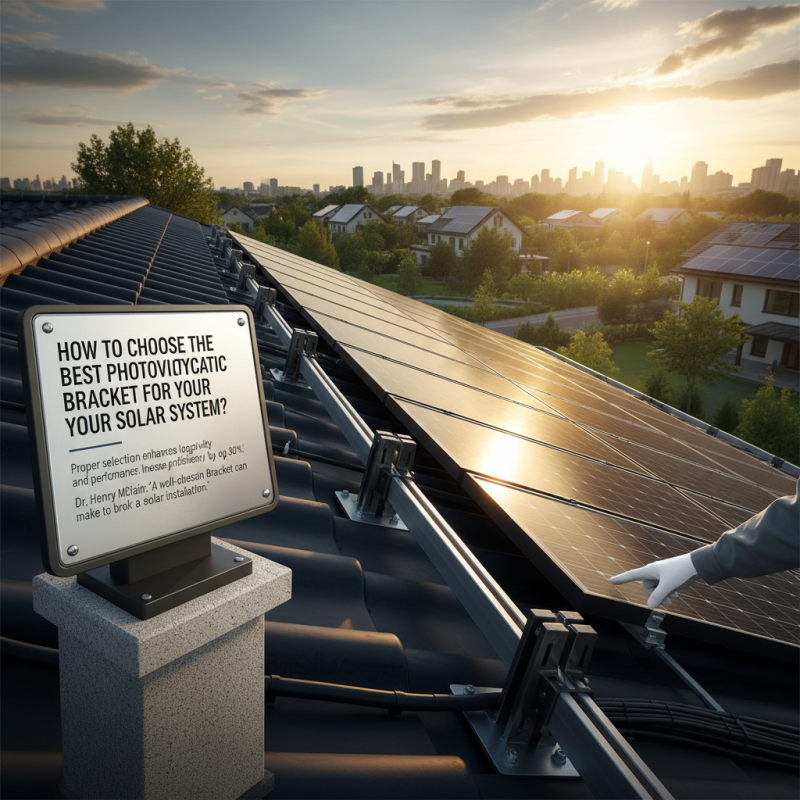
How to Choose the Best Photovoltaic Bracket for Your Solar System?
Choosing the right Photovoltaic Bracket for your solar system is crucial. Recent industry reports suggest that an appropriate bracket can increase panel efficiency by up to 30%. Proper selection enhances longevity and performance. An expert in the field, Dr. Henry McLain, states, “A well-chosen Photovoltaic Bracket can make or break a solar installation.”
The market offers various options, each with unique features. Systems require stable mounting to endure harsh weather. It's essential to consider materials and designs carefully. A flawed selection may lead to structural failures. This could compromise the entire solar system.
Data indicate that improper mounting is linked to a 15% increase in maintenance costs. Investing in quality brackets pays off in the long run. The right choice ensures your solar panels operate effectively, ultimately supporting a greener future.
Understanding the Importance of Photovoltaic Brackets in Solar Installations
Photovoltaic brackets are crucial for solar installations. They provide the necessary support and stability for solar panels. Without them, panels may shift or even be damaged in strong winds. Choosing the right bracket can help ensure the longevity of the entire solar system.
Different types of brackets exist, each suited for specific conditions. For example, roof-mounted brackets are common for homes, while ground-mounted options work well for larger installations. It’s important to consider your location's weather patterns. Areas with heavy snowfall or high winds require stronger brackets. Ignoring these factors may lead to costly repairs.
Installation can also be a challenge. Misalignment during mounting can affect energy production. It’s vital to pay attention to details, even if it seems tedious. A small mistake here can lead to significant issues later. Regular checks and maintenance are essential for lasting performance. Investing time to ensure the right choice can have long-term benefits.
How to Choose the Best Photovoltaic Bracket for Your Solar System?
| Bracket Type | Material | Weight Capacity (kg) | Angle Adjustment | Installation Complexity |
| Fixed Mount | Aluminum | 200 | None | Easy |
| Tilt Mount | Steel | 250 | 0-45 degrees | Moderate |
| Tracking Mount | Aluminum/Steel | 300 | 1 or 2 axis | Complex |
| Ground Mount | Steel | 400 | N/A | Moderate |
Types of Photovoltaic Brackets and Their Applications in Solar Systems
Photovoltaic brackets play a crucial role in solar systems. They support solar panels, ensuring stability and optimal sunlight exposure. There are various types of brackets, each suited for specific installations. Ground-mounted and roof-mounted brackets are the most common. Ground-mounted options are ideal for large open areas. They often require more space but provide flexibility.
Roof-mounted brackets need careful installation. They must align with roof slopes and materials. Not all roofs can support these structures. Factors like wind loads and snow accumulation are essential to consider. Some brackets are adjustable. They adapt to different angles, maximizing energy capture. However, they may increase installation complexity.
Choosing the right bracket requires careful evaluation. Consider both durability and design. Some brackets may corrode over time. It’s vital to assess material quality. Regular maintenance is essential. Check for loose fittings and rust. Reflecting on these aspects will help in making better choices.
Photovoltaic Bracket Types and Their Applications in Solar Systems
This chart illustrates the different types of photovoltaic brackets and their respective applications in solar systems. The data showcases how various bracket types are utilized in residential, commercial, and utility-scale solar setups.
Factors to Consider When Selecting Photovoltaic Brackets for Your Project
When selecting photovoltaic brackets for your solar project, several key factors come into play. The material of the bracket is critical. Aluminum and galvanized steel are popular. Aluminum is lightweight, making installation easier. However, it may not be as durable as steel. Reports indicate that steel brackets can withstand severe weather conditions better, extending the lifespan of the installation.
The bracket's design also matters. Fixed, adjustable, and tracking brackets serve different needs. Fixed brackets are simple but may not maximize energy capture. Adjustable brackets enable some optimization for sunlight angles. Tracking systems are advanced but increase complexity. Data shows that tracking systems can boost energy output by 25% to 40%, but they need more maintenance.
Finally, ensure proper compatibility with your solar panels. Mismatched components can lead to inefficiencies. Many designs are universal, but it's not guaranteed. Improper installation can lead to increased risks. A recent study highlighted that 30% of solar failures resulted from poor bracket choices. Take time to review your options. Choosing the right photovoltaic bracket can significantly impact performance and efficiency.
Installation Techniques for Various Types of Photovoltaic Brackets
When installing photovoltaic brackets for solar systems, different installation techniques can affect efficiency. For fixed mounts, ensure the angle matches local latitude for optimal sunlight exposure. This can enhance energy capture by up to 30%, according to a study by the National Renewable Energy Laboratory.
Moving to adjustable brackets, these can be tilted throughout the year. Regular adjustments allow the panels to track the sun’s path, improving energy production. However, they generally require more maintenance and may not suit all locations.
Tips: Always check local regulations. Different areas may have specific installation codes that must be followed. Additionally, consider conducting a shadow analysis. This can reveal potential obstructions that might decrease efficiency. Be mindful of designs that seem overly complex. Sometimes, simpler systems yield better results.
Maintenance and Durability: Ensuring Longevity of Your Solar Brackets
When setting up a solar system, the choice of photovoltaic brackets is crucial. Maintenance and durability play significant roles in ensuring the longevity of your solar brackets. Regular inspections can help detect any signs of wear or corrosion. Using quality materials is important, but so is proper installation.
A reliable bracket should withstand various weather conditions. Storms, heavy winds, and sunlight can degrade materials over time. Sometimes, people overlook the importance of mounting hardware. Corroded bolts or nuts can lead to failure. Be sure to check them periodically.
Think about the environment where your brackets are installed. Dust, debris, and moisture can accumulate and impact performance. Cleaning the area around your solar panels is essential. If dirt builds up, it can affect the overall efficiency of the system. Regular maintenance might seem tedious, but it is worth the effort. Being proactive can save you from costly repairs in the future.