






How to Choose a Tokimec Equivalent Pump in 2026

Choosing a Tokimec Equivalent Pump in 2026 is not simply a matter of matching a model number. The replacement must suit the machine’s pressure, flow, displacement, shaft, mounting, rotation, and control requirements. A mismatch can mean noisy operation, excess heat, slower cycles, or premature wear. The nameplate is a useful starting point. It is not the whole story.

Energy use makes careful selection more important. The International Energy Agency’s 2011 report, Energy-Efficiency Policy Opportunities for Electric Motor-Driven Systems, estimated that motor-driven systems accounted for about 46% of global electricity consumption. This figure covers motor-driven equipment broadly; it is not a pump-only estimate, and it is not a current 2026 measurement. Still, it shows why operating efficiency deserves attention alongside purchase price. A practical comparison should check the original pump’s specifications, the equipment maker’s documentation, and the proposed unit’s performance data. Ask suppliers to confirm compatibility in writing when key details are uncertain. Small details matter.

This guide explains how to assess a Tokimec Equivalent Pump without treating “equivalent” as “identical.” It covers specification checks, application fit, supplier questions, and common selection mistakes. A catalog match may look convincing. Real operating conditions can tell a different story. I have seen how one unverified mounting dimension can turn a straightforward replacement into avoidable downtime. That is why the safest choice is based on verified specifications, not assumptions.
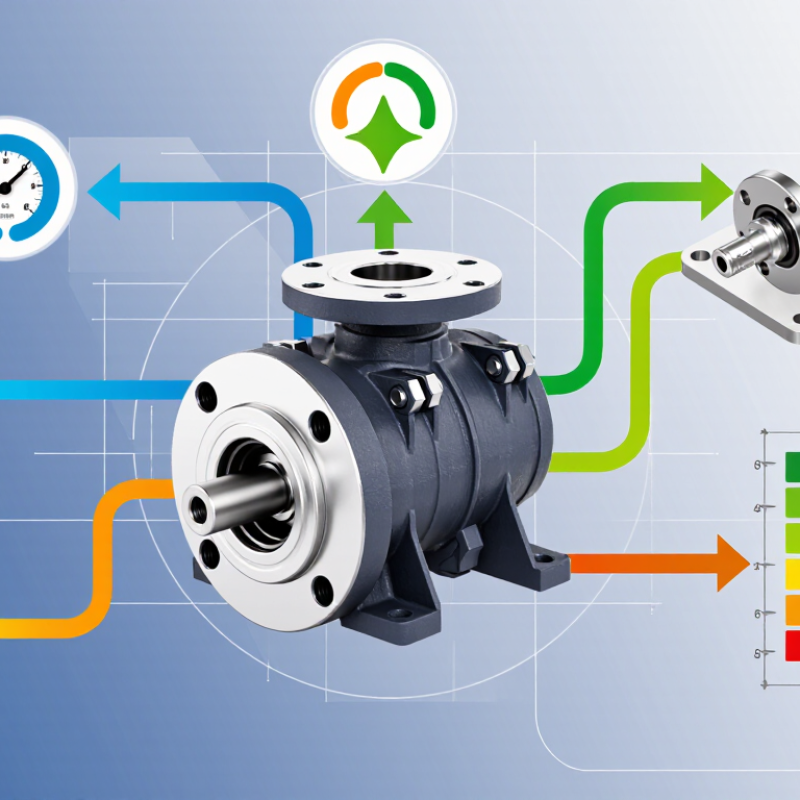
How to Choose a Tokimec Equivalent Pump in 2026

Define the System Requirements for a Tokimec Pump Replacement

A pump replacement should begin with the system, not the old pump’s label. Record required flow, pressure, operating speed, and duty cycle under real working conditions. Note pressure spikes during startup or when valves shift. Small details matter.

Measure fluid temperature and viscosity, then identify whether the fluid contains additives or contaminants. Check inlet conditions, port sizes, shaft rotation, mounting dimensions, and available space. Confirm how the pump is controlled and what filtration is installed. The U.S. Department of Energy’s Improving Pumping System Performance: A Sourcebook for Industry reports that pumping systems use nearly 20% of global electricity demand. That figure makes efficiency relevant, but a high-efficiency selection still has to meet the process load. Measure it hot. Cold-fluid readings can mislead.

I would not treat the old nameplate as a complete specification; it rarely tells the whole story. Compare the measured operating point with the replacement pump’s flow and pressure range, and check compatibility with the existing motor and drive. Ask for performance data across the expected speed range, not just one rated point. Record any compromises, such as tighter space or a different port arrangement, before ordering. They may seem minor. They can complicate installation.

Identify the Pump Type and Match Its Core Specifications

How to Choose a Tokimec Equivalent Pump in 2026

Identify the Pump Type and Match Its Core Specifications

Start by identifying the pump’s operating principle: vane, gear, or piston. These designs behave differently under pressure, varying flow demand, and changing oil viscosity. Read the nameplate and service records, then confirm displacement, rated pressure, speed range, rotation direction, and control method. A similar-looking housing is not enough. Check the shaft, mounting dimensions, and port locations against the equipment drawing. A mismatch of a few millimeters can turn a quick replacement into a machine-shop problem.

Match the pump to the actual duty cycle, not just the highest number on its label. Record typical pressure and flow while the machine runs, including cold starts. Fluid grade and temperature matter, too. The U.S. Department of Energy’s Improving Pumping System Performance guide notes that pumping systems use nearly 20% of the world’s electrical energy. That figure covers pumping systems broadly, not hydraulic pumps alone, but it shows why poor sizing deserves attention. An oversized unit may waste energy or create excess heat. I would also verify test conditions; catalog ratings can hide differences.

Tips: Photograph the nameplate and measure the ports before ordering. Ask for a dimensional drawing and performance curve. Compare continuous pressure, peak pressure, and allowable speed separately. Leave room for uncertainty: an old pump may have been modified, and its original specifications may no longer describe the machine.

Check Hydraulic, Mechanical, and Control-System Compatibility

Check Hydraulic, Mechanical, and Control-System Compatibility

A replacement pump must match the machine’s operating conditions, not just its nameplate. Compare displacement, rated pressure, required flow, rotation direction, fluid viscosity, and port positions. Then check performance at the actual operating point. A pump that reaches the required pressure may still deliver too little flow when the oil is cold. Small details matter.

Mechanical fit deserves a direct inspection. Measure shaft diameter and length, keyway dimensions, mounting face, and overall clearance. Confirm coupling capacity and rotation before installation; a near-match can create vibration or damage seals. For cleanliness, record the fluid’s ISO 4406 code and compare it with the system requirement. ISO 4406:2021 defines a method for coding particle contamination in hydraulic fluids. Field samples are not always perfect, so note sampling conditions.

Control compatibility is easy to overlook. Check whether the pump uses fixed or variable displacement, what signal it expects, and how its pressure or flow controller responds. Verify sensor ranges, wiring, control logic, and response time against the machine’s settings. The U.S. Department of Energy’s Improving Pumping System Performance sourcebook reports that pumping systems use nearly 20% of global electricity. That makes efficiency relevant, but only when measured across the real duty cycle. A neat specification sheet is not a substitute for operating data.

Evaluate Replacement Options for Quality and Serviceability

Choosing an equivalent hydraulic pump requires more than matching its nominal flow. Record the original unit’s displacement, operating speed, pressure range, rotation, shaft dimensions, mounting pattern, and port locations. A mismatch of a few millimeters can turn installation into costly rework. Check the fluid type, viscosity, temperature, and contamination level against the replacement’s specifications. These details shape wear and performance.

Compare published performance curves at your actual operating conditions, not just peak ratings. Confirm continuous pressure and intermittent pressure separately, and allow margin for pressure spikes. Ask for test data, material specifications, and traceable quality records. A tidy datasheet can still leave gaps. I would verify unclear dimensions with a drawing before ordering; it is easy to assume two similar housings will fit.

Serviceability matters after installation. Check whether seals, bearings, and other wear parts can be sourced, and whether repair instructions and trained support are available. Ask about lead times and warranty terms in writing. Consider access around the pump, too: a serviceable design is less useful if hoses or guards block routine inspection. Keep the original measurements and commissioning readings on file. Even careful comparisons can miss a site-specific issue, so confirm the final selection with a qualified hydraulic technician.

Verify Availability, Documentation, and Total Operating Cost

A reliable equivalent starts with the duty point, not the old pump’s label. Record required flow, pressure, fluid temperature, viscosity, and operating hours. Check displacement, rotation, shaft dimensions, port layout, and mounting footprint against the replacement’s drawings. Ask for a performance curve at your actual speed and pressure. A near match is not always a safe match. Even a small pressure shortfall can disrupt a machine cycle.

Tips: Request a current datasheet, dimensional drawing, and written confirmation of stock or lead time. Check that seals and wetted materials suit your fluid. Keep the documents with the equipment record.

Compare total operating cost, not purchase price alone. Estimate energy use across normal shifts, then include filters, seals, planned service, installation changes, and the cost of downtime. Confirm spare-part availability and service support before ordering; a low-cost pump with a long wait can become expensive quickly. I would still question any quote that omits test conditions or gives only a maximum rating. That gap may be ordinary paperwork, but it deserves clarification. Recheck the figures with your maintenance team before approving the substitution.

How to Choose a Tokimec Equivalent Pump in 2026 - Verify Availability, Documentation, and Total Operating Cost

Illustrative comparison, not a live quotation or availability listing. Use the same duty point and evaluation assumptions for every candidate, then confirm current stock, technical data, pricing, and lead time with the seller.

Evaluation item New fixed-displacement vane pump New variable-displacement piston pump Remanufactured fixed-displacement vane pump
Typical selection profile Potential fit for steady-flow duties where system unloading or flow control is provided separately. Potential fit where demand varies and the hydraulic circuit can use variable displacement effectively. Potential lower initial-cost option when condition, test results, and warranty are adequately documented.
Reference duty for this comparison 40 L/min at 140 bar; 1,450 rpm reference speed. 40 L/min at 140 bar; 1,450 rpm reference speed. 40 L/min at 140 bar; 1,450 rpm reference speed.
Hydraulic output at reference duty Approximately 9.3 kW, calculated as flow × pressure ÷ 600. Approximately 9.3 kW, calculated as flow × pressure ÷ 600. Approximately 9.3 kW, calculated as flow × pressure ÷ 600.
Availability check for 2026 Ask for a dated stock confirmation, exact configuration, dispatch location, and written lead time. A planning estimate for a stocked unit might be 1–5 business days; confirm before ordering. Ask whether the exact displacement-control configuration is stocked or built to order. A planning estimate may range from several days for verified stock to several weeks for a configured unit. Confirm that the unit is already rebuilt, not merely awaiting inspection. Request serial or traceability details, completion date, and a firm dispatch commitment.
Critical fit checks Displacement, rotation direction, shaft type and dimensions, mounting flange, port type and location, pressure rating, and allowable speed. All fixed-pump fit checks, plus control type, compensator setting, control response, minimum displacement, and any required drain connection. All applicable fit checks, plus confirmation that replacement parts and test settings match the proposed duty and configuration.
Documentation to request Current datasheet, performance curves, dimensional drawing, installation instructions, pressure and speed limits, warranty terms, and test or inspection record. Current datasheet and performance curves across the operating range, control schematic, dimensional drawing, setup instructions, warranty terms, and test record. Rebuild scope, replaced-parts list, inspection and pressure-test results, dimensional confirmation, warranty terms, and operating limits.
Illustrative input power 11.7 kW at the stated duty, used only as a budgeting assumption. 10.8 kW average input in the modeled duty cycle, assuming variable flow is used effectively; verify with application-specific data. 12.3 kW at the stated duty, used only as a budgeting assumption.
Modeled annual energy cost $3,510 per year. $3,240 per year. $3,690 per year.
Initial pump and installation allowance $3,200 total: $2,600 pump allowance plus $600 installation allowance. $5,600 total: $4,800 pump allowance plus $800 installation allowance. $2,100 total: $1,500 pump allowance plus $600 installation allowance.
Modeled annual maintenance allowance $900 per year. $600 per year. $1,300 per year.
Illustrative five-year operating cost $25,250, including initial allowance, five years of modeled energy, and five years of modeled maintenance. $24,800, including initial allowance, five years of modeled energy, and five years of modeled maintenance. $27,050, including initial allowance, five years of modeled energy, and five years of modeled maintenance.
Best next step before approval Match the drawing and shaft details to the installed unit; obtain written confirmation of stock and the complete documentation set. Validate the actual load profile and control compatibility; compare measured or warranted performance at the expected operating points. Review the rebuild and test records; confirm warranty coverage, return conditions, and the availability of service parts.

Cost assumptions: The modeled energy figures use 2,000 operating hours per year and electricity at $0.15/kWh. Five-year operating cost equals the initial pump and installation allowance, plus five years of energy and maintenance allowances; it excludes downtime, taxes, financing, and disposal. All prices, efficiency figures, maintenance allowances, and lead-time examples are illustrative planning inputs—not current market quotes or claims about specific products. Verify the actual duty cycle, motor input, local energy rate, fit, documentation, warranty, and delivery commitment before purchase.