Why Choose Automation Products for Your Business Efficiency and Growth?
In today's fast-paced business environment, efficiency and growth are paramount for success. Companies are increasingly turning to products for automation as a solution to streamline operations and enhance productivity. By leveraging automated systems, businesses can reduce manual workloads, minimize errors, and optimize resource allocation. This shift not only leads to cost savings but also empowers organizations to focus on strategic initiatives that drive innovation and competitive advantage.
Moreover, the integration of automation products can significantly improve customer experiences. With automation handling routine tasks, employees can devote more time to engaging with clients and addressing their needs, fostering a more responsive and agile business model. As a result, businesses that adopt automation are not just improving internal processes; they are also increasing their capacity to adapt and thrive in an ever-evolving marketplace. Embracing products for automation thus becomes a crucial step in building a resilient organization poised for sustainable growth.

Advantages of Automation Products for Business Operations
Automation products have become essential tools for enhancing business operations, driving efficiency, and supporting growth. By streamlining repetitive tasks and minimizing human error, these products enable teams to focus on more strategic initiatives. The integration of automation in various business functions—such as accounting, customer service, and inventory management—can lead to significant time and cost savings, creating a more agile organization.
Tips for implementing automation: Start with assessing areas where time is wasted or processes are bottlenecked. Prioritize tasks that can be easily automated to get quick wins and boost team adoption. Additionally, invest in employee training to ensure that your team is comfortable with the new systems and understands how automation can enhance their work rather than replace it.
Another advantage of automation is its ability to provide data insights through analytics, enabling better decision-making. Automation tools can compile and analyze data much faster than manual methods, allowing businesses to stay ahead of market trends and consumer preferences. This not only enhances operational efficiency but also supports long-term strategic planning.
Tips for leveraging data insights: Regularly review automated reports to catch emerging trends early. Encourage cross-departmental collaboration to utilize data comprehensively, ensuring that all areas of the business are informed and aligned in their strategic goals.
Impact of Automation on Productivity and Efficiency
Automation plays a crucial role in enhancing productivity and efficiency within businesses. By streamlining repetitive tasks and minimizing human error, automation allows teams to focus on higher-value activities that drive growth. For instance, automated systems can handle data entry, customer service inquiries, and inventory management, significantly reducing the time and resources needed for these tasks. This shift not only leads to faster turnaround times but also enables teams to achieve a greater output without the necessity for a proportional increase in staffing.
Tips: To effectively integrate automation into your business, start by identifying the most time-consuming tasks that can be automated. Evaluate the available tools and software that align with your company’s needs, and implement them gradually. This will allow your team to adapt to new processes without overwhelming them and ensure a smoother transition.
Moreover, measuring the impact of automation on productivity is vital. Use key performance indicators (KPIs) to track improvements in efficiency and areas that still require attention. Continuously gather feedback from your employees to refine the automated processes. This will not only enhance productivity but also foster a culture of innovation where team members feel involved in driving efficiency improvements.
Impact of Automation on Productivity and Efficiency
The chart above illustrates the impact of automation on productivity within a business context. It compares the number of units produced before and after the implementation of automation, demonstrating a significant increase in output due to enhanced efficiency and streamlined processes.
Cost Savings Associated with Implementing Automation
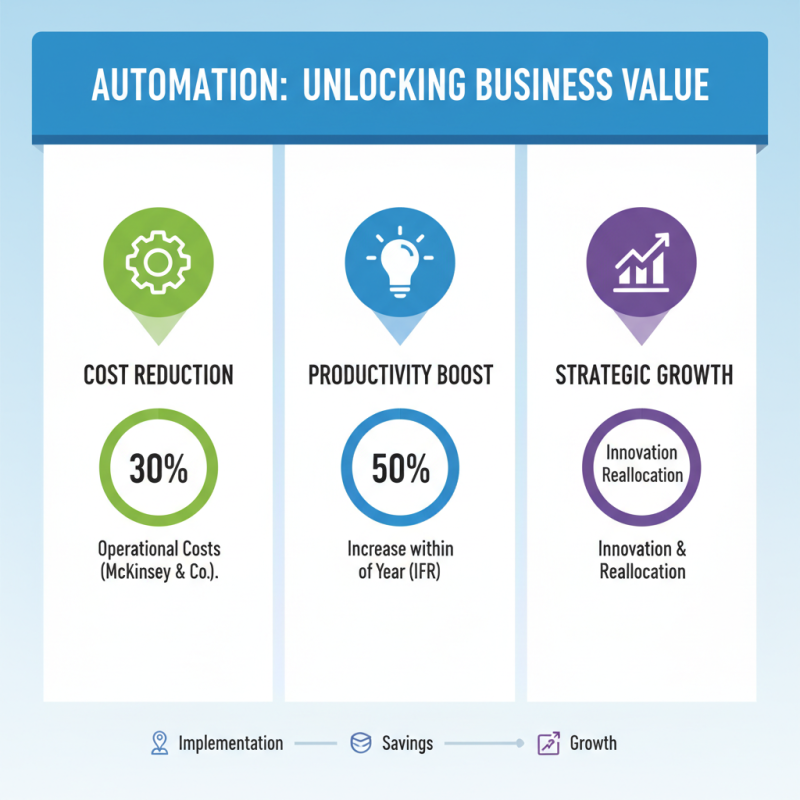
Implementing automation products can lead to substantial cost savings for businesses. According to a report by McKinsey & Company, companies that adopt automation can reduce operational costs by up to 30%. This significant reduction allows resources to be reallocated towards strategic initiatives, driving growth and innovation. Furthermore, a study from the International Federation of Robotics (IFR) indicates that automation technologies have the potential to increase productivity by 50% within a year of implementation, further enhancing the economic viability of automation solutions.
Tip: When evaluating automation tools, focus on identifying repetitive and time-consuming tasks that can be streamlined. This targeted approach ensures that you maximize the benefits of automation, translating to quicker returns on investment.
Moreover, automation mitigates human error, which can be costly for businesses. The American Society for Quality reports that organizations lose an average of $2.5 million annually due to poor quality, often rooted in human mistakes. By integrating automated systems, businesses can enhance accuracy and consistency in their processes, leading to improved operational efficiencies and reduced costs in the long run.
Tip: Consider conducting a cost-benefit analysis to assess the financial impact of automation on your specific processes. This analytical perspective can provide clarity on where automation can deliver the most significant savings.
Case Studies: Successful Automation in Various Industries
Automation products are transforming businesses across various industries, leading to enhanced efficiency and growth. Case studies highlight how sectors such as manufacturing, healthcare, and retail have successfully integrated automation to streamline operations. For instance, a manufacturing plant that implemented robotic automation reduced production time by 30%, enabling faster turnaround and increased output. In healthcare, automation of patient scheduling procedures not only minimized errors but also improved patient satisfaction, as staff could focus more on care rather than administrative tasks.
When considering adopting automation, it's essential to evaluate your specific needs and processes. **Tip 1:** Start small by automating repetitive tasks that consume a significant amount of time. This will allow your workforce to adjust gradually while demonstrating immediate benefits. **Tip 2:** Engage staff in the process; their insights can help in tailoring automation solutions that fit your workflow and ultimately increase acceptance.
In the retail sector, automation tools like inventory management systems have revolutionized stock control. These systems can predict inventory needs based on sales trends, thus reducing wastage and ensuring that popular items are always available. **Tip 3:** Regularly review and update your automation strategy to keep pace with technological advancements and changes in your business environment, ensuring long-term benefits.
Why Choose Automation Products for Your Business Efficiency and Growth? - Case Studies: Successful Automation in Various Industries
| Industry |
Automation Type |
Efficiency Gains (%) |
Annual Cost Savings ($) |
Growth Rate (%) |
| Manufacturing |
Robotic Process Automation |
25 |
150,000 |
10 |
| Retail |
Inventory Management |
30 |
80,000 |
15 |
| Healthcare |
Patient Scheduling |
40 |
100,000 |
12 |
| Finance |
Data Entry Automation |
35 |
120,000 |
20 |
| Logistics |
Shipping Automation |
28 |
55,000 |
8 |
Future Trends in Business Automation Technologies
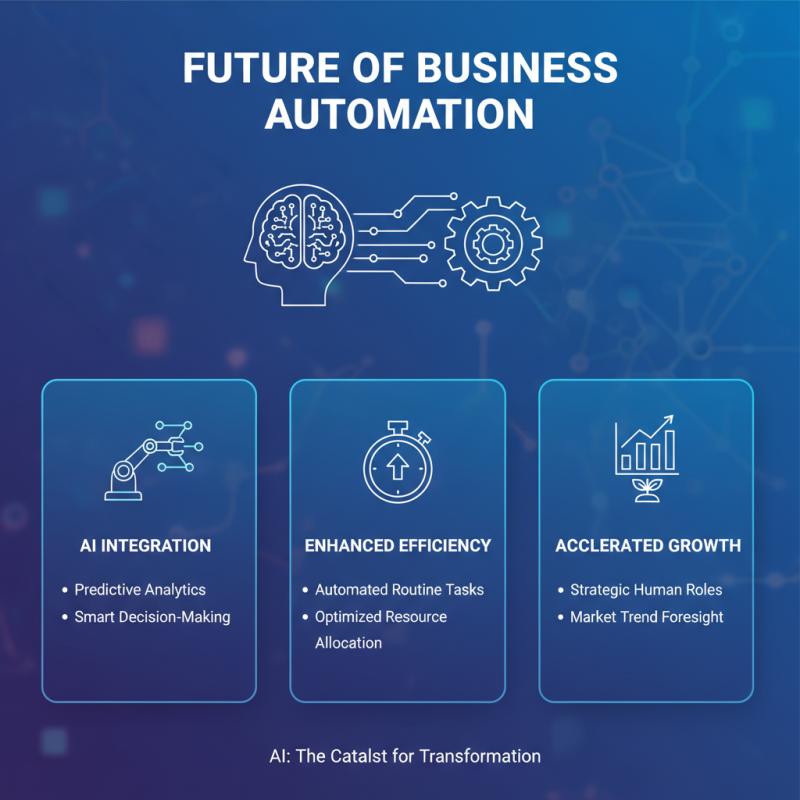
The future of business automation technologies is poised for transformative changes that will significantly enhance efficiency and spur growth across various industries. One of the most notable trends is the integration of artificial intelligence (AI) into automation processes. AI enables predictive analytics, allowing businesses to foresee market trends and consumer behavior, thereby optimizing decision-making and resource allocation. As AI becomes more sophisticated, its applications in automating routine tasks will increase, freeing up valuable human resources for more strategic roles.
Another emerging trend is the rise of cloud-based automation solutions. These platforms offer scalability, flexibility, and accessibility, empowering teams to collaborate seamlessly from anywhere in the world. Cloud technology not only reduces the overhead costs associated with traditional software installations but also facilitates data sharing and real-time updates. Coupled with the growing emphasis on data security, businesses are increasingly turning to cloud-based automation as a means of enhancing operational resilience and agility.
Moreover, the adoption of robotic process automation (RPA) is expanding as companies seek to streamline their workflows. RPA can handle repetitive tasks with precision, such as data entry and inventory management, thereby minimizing human error and accelerating processing times. As organizations recognize the potential of RPA to drive productivity and operational efficiency, its implementation is expected to grow, paving the way for a more automated future in business operations.