






Choosing among China’s top 10 Weather Station Humidity Sensor suppliers takes more than comparing prices. A sensor may look excellent on a specification sheet, yet drift after weeks of damp nights or respond slowly when a greenhouse door opens. Buyers should examine measurement range, stated accuracy, response time, operating temperature, calibration options, and documented quality controls. Ask how performance is tested, and request traceable calibration records where available.
George E. P. Box, a statistician known for his work on measurement and modeling, wrote, “All models are wrong, but some are useful.” That principle offers a useful reminder when comparing sensor specifications: figures matter, but they do not tell the whole story. Look for clear test conditions, realistic maintenance guidance, and evidence that the sensor suits the intended station, whether it faces coastal salt air, dusty farmland, or a shaded rooftop. Small details matter.
This guide introduces ten suppliers and considers their product focus, support, customization, and suitability for different deployments. It is not a substitute for independent testing. Supplier claims can be incomplete, and comparison data is not always presented consistently. That deserves a closer look. A careful shortlist should connect published specifications with practical questions about installation, calibration intervals, data interfaces, and replacement availability. The best choice is not automatically the cheapest or the most feature-rich; it is the one whose evidence and support fit the station’s real conditions.
Understanding Humidity Sensors in Weather Stations
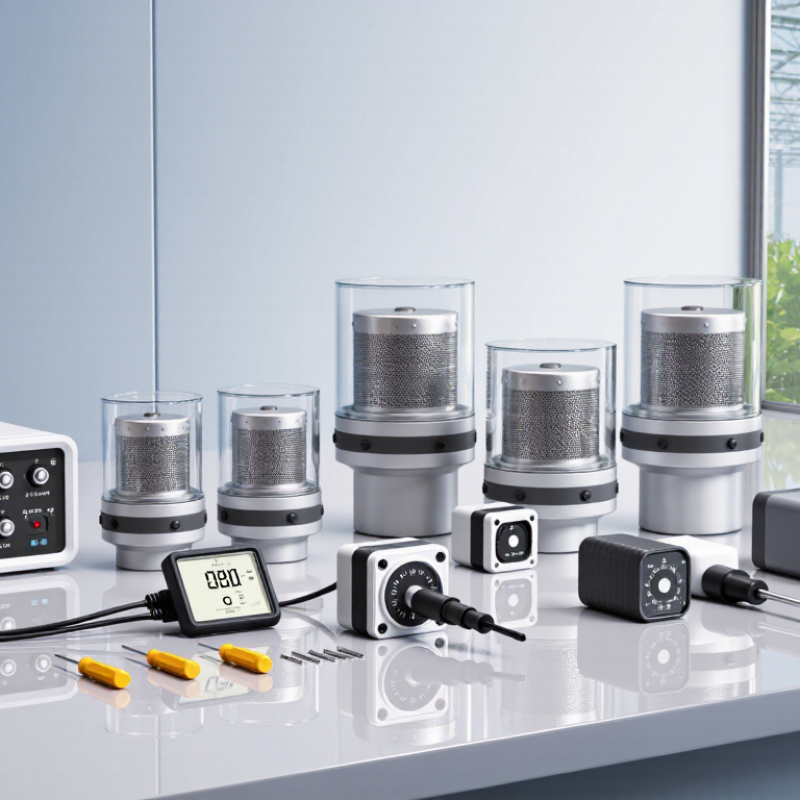
A humidity sensor estimates how much water vapor the air holds, usually as relative humidity (RH). RH changes with temperature, so a reading without a nearby temperature measurement can mislead. Many weather stations use a capacitive sensor: moisture changes the electrical properties of a sensing film. The electronics convert that change into an RH value. Small details matter. A sun-warmed shield or damp grass nearby can skew readings. The World Meteorological Organization’s Guide to Instruments and Methods of Observation (WMO-No. 8) gives routine surface measurements an uncertainty target of about 3 percentage points RH. That is a practical benchmark, not a guarantee for every installation.
Tips: Mount the sensor in a ventilated radiation shield, away from walls, exhausts, and sprinklers. Compare it periodically with a trusted reference. Look for slow drift, not only sudden failures. Dust and condensation can affect readings. A little awkward, but true: maintenance is part of measurement quality.
For supplier selection, check the stated operating range, response time, calibration method, and accuracy across temperature—not just at room conditions. Ask how the sensor performs near saturation, where condensation risk rises. Also confirm whether the station reports raw RH, temperature-compensated RH, or calculated dew point. These values serve different purposes. Record the sensor model and calibration dates in the station log; without that record, a suspicious reading is harder to diagnose.
| No. | Evaluation Dimension | Typical Specification or Practice | Why It Matters in a Weather Station | What to Verify with a Supplier |
|---|---|---|---|---|
| 1 | Relative humidity measurement range | Many outdoor humidity sensors are designed to measure from 0% to 100% RH, although usable limits can depend on the model and environmental conditions. | A wide range supports measurements during both dry conditions and near-saturation events. | Confirm the specified measurement range and whether operation near condensation is permitted. |
| 2 | Measurement accuracy | Accuracy is model-dependent; product specifications commonly state an error in % RH, often with different limits across temperature ranges. | Accuracy affects humidity records, dew-point calculations, and comparisons between stations. | Request the accuracy specification, its temperature conditions, and calibration information rather than relying on a single headline value. |
| 3 | Sensor technology | Capacitive polymer sensing is widely used for electronic ambient humidity measurement. Other technologies are available for specialized measurement needs. | Technology influences long-term stability, response, environmental tolerance, and maintenance requirements. | Ask for the sensing principle and evidence that it is suitable for continuous outdoor exposure. |
| 4 | Response time | Response time varies with the sensing element, airflow, protective filter, and test method; manufacturers may specify a time to reach a stated percentage of a humidity change. | Faster response can better capture changing weather, while protective covers may slow air exchange. | Check the test conditions and response-time definition, including airflow and any fitted filter. |
| 5 | Operating temperature | Operating temperature limits are product-specific. The stated range should cover the station’s expected local climate. | Temperature affects sensor behavior and can influence humidity accuracy and reliability. | Verify the operating range and accuracy over that range, not just the sensor’s storage limits. |
| 6 | Condensation and high-humidity tolerance | Exposure to condensation can affect some sensing elements or cause temporary measurement errors; recovery behavior depends on the design. | Fog, rain splash, and rapid temperature changes can create demanding conditions at outdoor sites. | Ask about condensation resistance, recovery time, and any restrictions after exposure to liquid water. |
| 7 | Output and integration | Common interface options include analog voltage or current signals and digital interfaces; available outputs vary by product. | Compatible electrical outputs simplify connection to a data logger or weather-station controller. | Confirm signal type, supply voltage, connector, wiring, communication protocol, and documented data format. |
| 8 | Weather protection and radiation shielding | Outdoor installations commonly use a ventilated radiation shield to reduce direct solar heating while allowing ambient air to reach the sensor. | Direct sunlight and poor ventilation can produce readings that do not represent surrounding air conditions. | Check whether a shield is included or required, and follow the recommended mounting and airflow clearances. |
| 9 | Calibration and traceability | Calibration intervals depend on sensor stability, required data quality, exposure, and the station’s quality-control plan. | Periodic checks help identify drift and maintain consistent records over time. | Request calibration documentation, recommended recalibration intervals, and available field-check procedures. |
| 10 | Maintenance and service life | Filters, protective covers, and sensing elements may require inspection or replacement according to site conditions and manufacturer guidance. | Dust, salt, pollutants, and biological contamination can affect airflow and measurement performance. | Ask for cleaning instructions, replacement-part availability, warranty terms, and expected maintenance requirements. |
Specifications are general selection guidance, not claims about any particular supplier or product. Confirm exact performance and test conditions in the relevant product documentation.
