China Top 10 Custom Reflective Vest Manufacturers
A Custom Reflective Vest is more than a bright garment. Its fabric, reflective tape, fit, and stitching affect comfort and visibility during long shifts. For buyers comparing China’s leading manufacturers, these details matter as much as price. So does consistent production.
The U.S. Bureau of Labor Statistics reported 5,283 fatal work injuries in 2023, in its Census of Fatal Occupational Injuries. This figure covers many types of workplace incidents; it does not measure vest effectiveness. It does, however, underline why employers carefully assess safety equipment. ANSI/ISEA 107-2020 also provides performance criteria for high-visibility apparel, including garment design and material requirements. Buyers should confirm which standard and garment class match their intended use.
This guide compares ten Chinese manufacturers through practical purchasing factors: customization options, fabric choices, reflective materials, quality controls, and production capacity. A sample vest can reveal details a catalog cannot: whether tape stays flat across a shoulder seam, or whether the fabric feels too heavy in warm weather. Ask suppliers for current test documentation and clear production specifications. Still, no vest solves every risk. Supplier claims deserve verification, and a low quote may leave important questions unanswered.
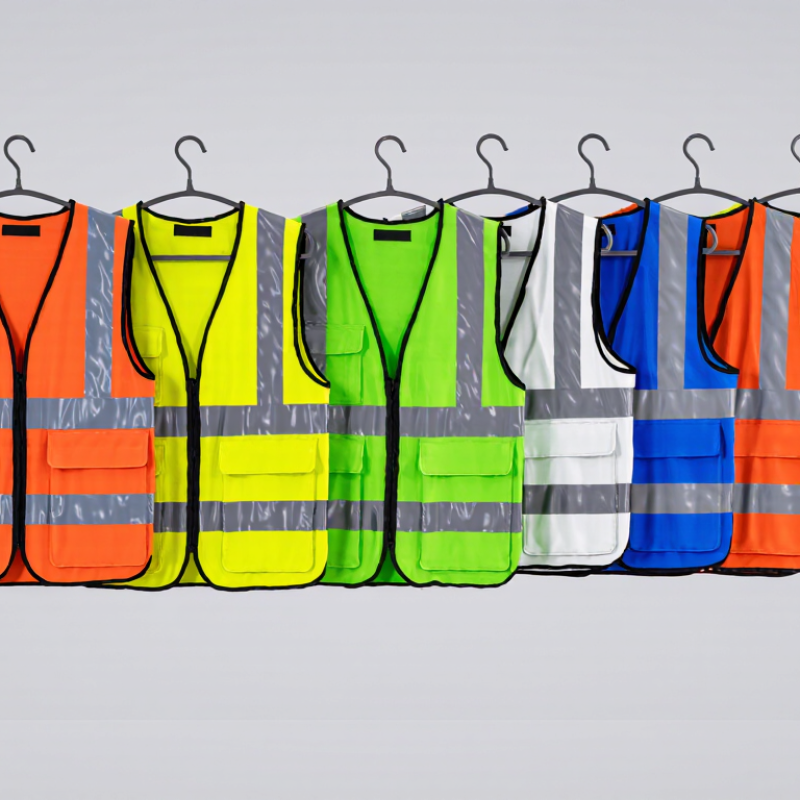
Reflective Vest Types and Applications in China’s Custom Manufacturing Sector
China’s custom reflective vest sector serves construction, road maintenance, warehousing, logistics, and event operations. Buyers can specify lightweight mesh vests for hot, active worksites, or sturdier woven styles with pockets for radios, tools, and identification cards. Some projects need water-resistant outer layers; others prioritize airflow and easy washing. The right choice depends on the task. Fit matters.
Reflective layouts also vary. High-visibility bands may run around the torso and shoulders, while cross-back designs help make a wearer’s outline clearer from different angles. Custom orders can adjust vest length, closure type, pocket position, fabric color, and printed role labels. For example, a warehouse team may need breathable vests with large front pockets, while a road crew may prefer secure fasteners that stay closed during movement.
Reliable manufacturers usually confirm measurements, material details, and sample appearance before bulk production. Buyers should check stitching, reflective tape attachment, and visibility after ordinary wear and washing. A sample can look excellent under bright showroom lights yet feel restrictive over a winter jacket. That is easy to overlook. No vest suits every setting, so practical wearer feedback should guide revisions before an order is finalized.
China Custom Reflective Vest Manufacturing: EN ISO 20471 Minimum Material Areas
EN ISO 20471 specifies minimum areas of fluorescent background material and retroreflective material for each visibility class. These standard requirements provide a useful reference for custom vest design; they are not manufacturer or sales figures.
ANSI/ISEA 107-2020 Class 2: 775 in² Background and 201 in² Retroreflective Material
For custom reflective vests, Class 2 compliance starts with measurable coverage, not a vivid color alone. ANSI/ISEA 107-2020 specifies at least 775 square inches of fluorescent background material and 201 square inches of retroreflective material. Those areas must remain usable after panels are cut, seams are sewn, and pockets are added. Ask manufacturers how they verify finished-garment dimensions, rather than relying only on fabric specifications. Small design choices matter.
Fit matters too. A vest worn open, folded under a tool belt, or hidden beneath a jacket may lose visible area in practice. The U.S. Bureau of Labor Statistics reported 2,066 fatal work injuries involving transportation incidents in 2022, roughly 38% of all fatal work injuries that year (Census of Fatal Occupational Injuries, 2022). High-visibility apparel cannot prevent every incident, but a well-fitted, correctly maintained vest can support visibility around moving vehicles. A specification can look tidy on paper; real wear is messier. Check closure strength, reflective-strip placement, and legibility after laundering, and document those checks for each production batch.
EN ISO 20471 Class 3: 0.80 m² Background and 0.20 m² Retroreflective Material
When comparing custom reflective vest manufacturers, check how each verifies the finished garment against EN ISO 20471 Class 3. The required minimums are 0.80 m² of fluorescent background material and 0.20 m² of retroreflective material. These figures describe visible areas on the garment, not simply the amount of fabric purchased. Fluorescent material helps workers stand out in daylight, while reflective bands return light in darkness. Small details matter. Seams, pockets, closures, and panel shapes can reduce usable visible area.
That sounds simple. It isn’t always. Ask for size-specific measurements and test documentation, especially for the smallest sizes or customized layouts. A vest that meets the area targets in one size may not preserve the same proportions across a full size range. Check that reflective bands remain visible when the wearer moves, bends, or carries tools. Fabric comfort also affects whether workers keep the vest on during long shifts. A careful supplier should explain material choices, construction limits, and verification methods clearly. No single measurement tells the whole story, but it is a practical starting point for comparing manufacturers.
China’s Top 10 Custom Reflective Vest Manufacturers and Their Capabilities
China’s top custom reflective vest manufacturers differ in more than sewing capacity. Their capabilities may include fabric selection, pattern development, logo application, size grading, and bulk production. For buyers, the useful question is how consistently a supplier can turn a specification into a wearable sample. Ask about reflective tape placement, seam reinforcement, pocket layout, and adjustable closures. Small details matter.
A capable manufacturer should explain fabric weight, color options, lead times, and sample revisions in clear terms. Request a sample with the intended fabric and trim, then check fit, stitching, and visibility under varied lighting. Ask how production teams inspect materials and finished garments. Clear answers are a positive sign, though they do not replace independent checks.
The top ten candidates are best compared by matching their strengths to the project: some may handle complex customization, while others may suit simpler, larger orders. Confirm minimum quantities, packaging, and whether design changes affect price or delivery. Even an experienced factory can miss a detail when instructions are vague. That happens. Share measurements, artwork, and use conditions in writing, and review a pre-production sample before approving the full run.
How to Compare Manufacturers by Compliance, Customization, MOQ, and Lead Time
Comparing China’s reflective vest manufacturers starts with evidence, not a polished product photo. Ask which safety standards apply to your destination market, then request current test reports and material specifications. Check whether reports cover the exact fabric, reflective tape, and vest configuration you plan to order. Details matter. An old certificate may not match a changed tape supplier.
Next, test how well the factory handles your actual design. Send a marked-up drawing showing pocket positions, zipper color, logo size, and tape layout. Request a pre-production sample and inspect stitching, visibility, sizing, and wash durability. Some suppliers say yes to every change. That is not always a good sign; ask which changes affect cost or delivery. Small logo edits can trigger new screens or sample rounds, and timelines can slip.
Compare MOQ by style, color, and size mix, not as one headline number. Ask whether mixed sizes count toward one order, and confirm packaging requirements in writing. Lead times should separate sample approval, material sourcing, sewing, and final inspection. Request a dated production plan, plus a realistic buffer for fabric delays or rework. One awkward question helps: what usually causes a shipment to run late? Factories may estimate differently. Keep the replies side by side, then weigh proof and communication alongside price.