






Choosing the best Date Bar Extrusion Line in 2026 is less about chasing the highest advertised speed and more about matching equipment to a real recipe. A sticky date paste behaves differently from a firm mixture with nuts or cereal. That difference affects feeding, shaping, cutting, and cleaning. Small details matter: an uneven feed can produce bars with ragged edges, while a cutter that needs frequent adjustment can slow a busy shift.
A reliable comparison should look at product consistency, usable output, changeover time, and access to service and spare parts. Ask suppliers to run your own mixture, not just a standard sample. Watch the bars leave the cutter, check their weight and dimensions, and note how much material remains on rollers and belts. A specification sheet is useful, but it cannot show every awkward moment on a production floor. That matters.
One caution: catalog speeds can flatter a machine. Confirm how output is measured and whether the figure includes routine stops or product changes. Also consider the space available, operator training, and the cleaning routine your team can realistically maintain. The best choice may not be the most automated or the most expensive. It should make consistent bars with your ingredients, fit your production goals, and have dependable support behind it. There is no universal winner. A careful trial is worth the extra time, even when the first results look promising.
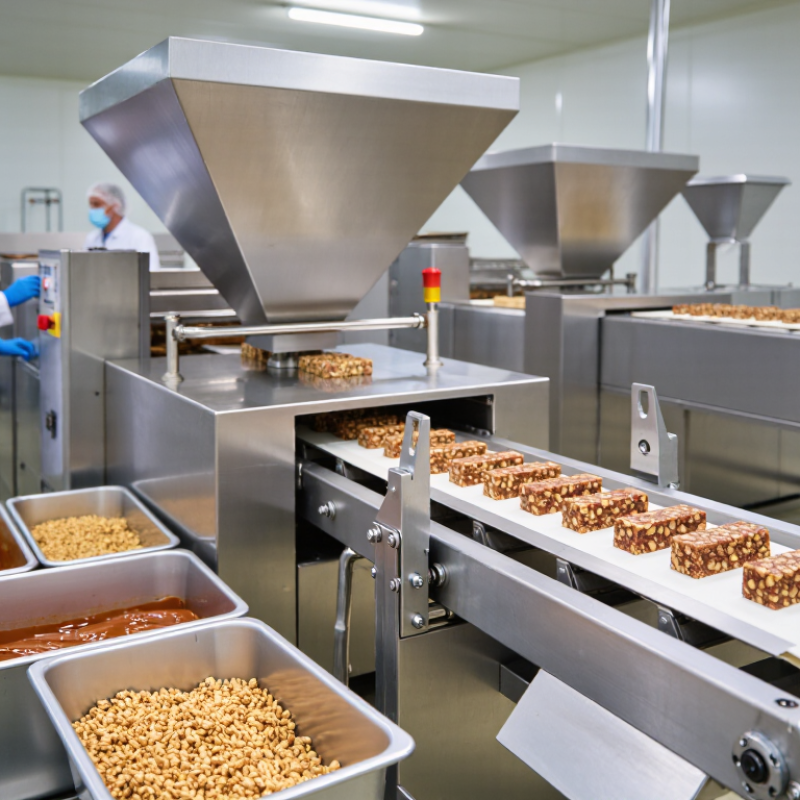
A date-bar extrusion line should be chosen around the paste, not just its advertised output. USDA FoodData Central profiles report 63.35–66.47 g of sugars per 100 g of date paste. That is a meaningful spread.
FAO/INFOODS food-composition resources also distinguish foods by type and preparation, reinforcing the need to specify the actual paste used. Sugar concentration alone does not predict flow: moisture, fiber, and particle size also affect stickiness and dough strength.
On a production floor, paste can cling to a hopper wall or smear around the die when feed and temperature drift. Look for a line with steady metering, adjustable screw speed, accessible clean-down areas, and a die that can be changed without lengthy stoppages. A small bench trial with the intended recipe can reveal whether the rope holds its shape after cutting. It should also expose uneven feeding before a full run.
Frankly, a single sugar figure is not enough to set the machine. Record paste moisture and temperature by batch, then tune pressure and cooling against real trials; otherwise, a line that runs smoothly one morning may produce sticky, misshapen bars later.
Date paste may contain 63.35–66.47 grams of sugars per 100 grams. That range can affect handling, but sugar alone cannot predict flow.
Moisture, fiber, and particle size also influence stickiness and dough strength. Paste can cling to hopper walls or smear around the die. Small differences matter.
Choose steady metering, adjustable screw speed, accessible cleaning areas, and an easily changed die. Test the intended recipe on a small bench setup. Watch whether the cut rope keeps its shape.
Record moisture and temperature by batch. Tune pressure and cooling through real trials. I would not rely on one sugar measurement.
Keep water activity below 0.60 to limit growth of many bacteria, yeasts, and molds. It does not sterilize the bar. Not a guarantee.
Use a calibrated meter on representative bars after cooling and equilibration. Sample different points in the run, not only the neatest bars. Do not guess.
Date variety, syrup additions, mixing, uneven feeding, and warm, humid cooling can affect results. Record ingredient lots, dough temperature, and cooling conditions.
Pause and investigate rather than trusting one favorable sample. Review the recipe and line settings, and document adjustments. Packaging, sanitation, and product-specific validation still matter. I may need more trials.
