Top 5 Benefits of Conveyor Belt Automation for Businesses?
In the fast-paced world of manufacturing, conveyor belt automation has emerged as a game changer. Dr. Robert Anderson, a leading expert in industrial automation, states, "Embracing conveyor belt automation revolutionizes production efficiency." His insight underscores the significant shift many businesses are experiencing.
One pivotal advantage of conveyor belt automation is increased productivity. Machines tirelessly transport materials, reducing manual labor. This efficiency allows companies to focus on quality and innovation. Another benefit is improved safety. Automated systems minimize human errors and potential accidents. Yet, some might worry about job displacement. Balancing automation and employment remains a critical conversation.
Cost reduction is also notable. Automated systems can lower operational costs over time. However, the upfront investment can be daunting for some businesses. It’s essential to weigh the long-term gains against initial expenditures. Ultimately, conveyor belt automation offers substantial benefits, but businesses must navigate its challenges wisely.
Understanding Conveyor Belt Automation in Modern Industries
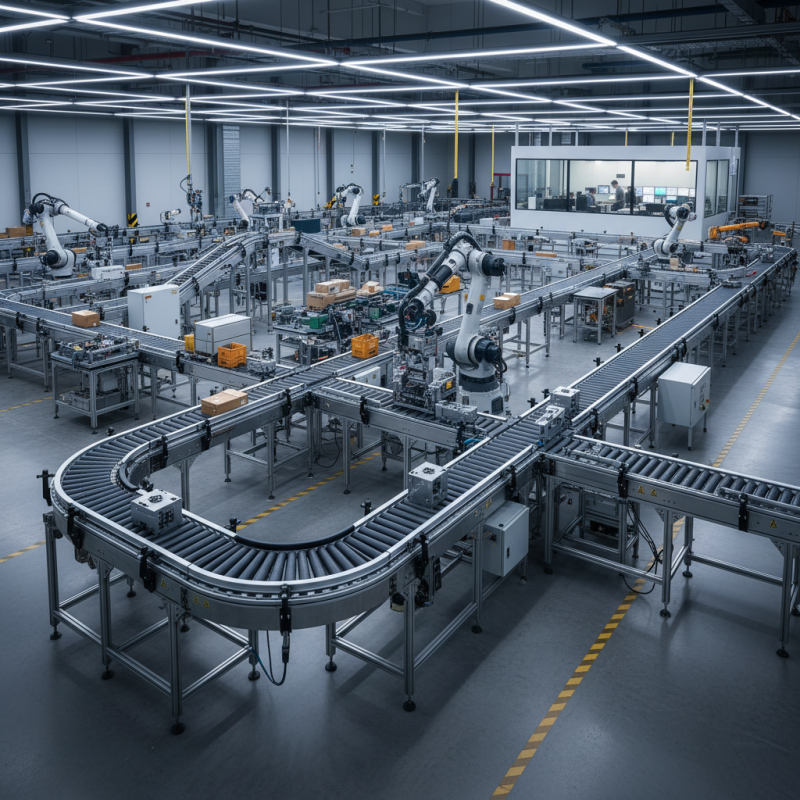
Conveyor belt automation is revolutionizing modern industries. It streamlines processes, increasing productivity. According to a 2022 report by the Association for Manufacturing Technology, automation can boost productivity by 30%. This is a significant advantage for businesses facing labor shortages.
In addition, conveyor systems minimize human error. MIT researchers found that automation reduces mistakes by 40% in manufacturing settings. This is crucial for maintaining quality standards. However, not all sectors can easily adapt to this technology. Some workers might resist change. Training is essential but can be costly and time-consuming.
Moreover, integrating conveyor belt systems can be complex. Companies must evaluate their specific needs carefully. Automation solutions require an upfront investment. Yet, the long-term savings are clear. A 2023 study highlighted that businesses typically recoup their investment in less than two years. The potential for efficiency gains makes this an appealing option for many.
Top 5 Benefits of Conveyor Belt Automation for Businesses
| Benefit |
Description |
Impact on Business |
| Increased Efficiency |
Automated conveyor belts optimize the transport of goods, reducing downtime and accelerating production. |
Higher output leads to increased revenue and competitive advantage. |
| Cost Savings |
Reduced labor costs and minimized waste through efficient material handling. |
Lower operational costs improve profitability. |
| Improved Safety |
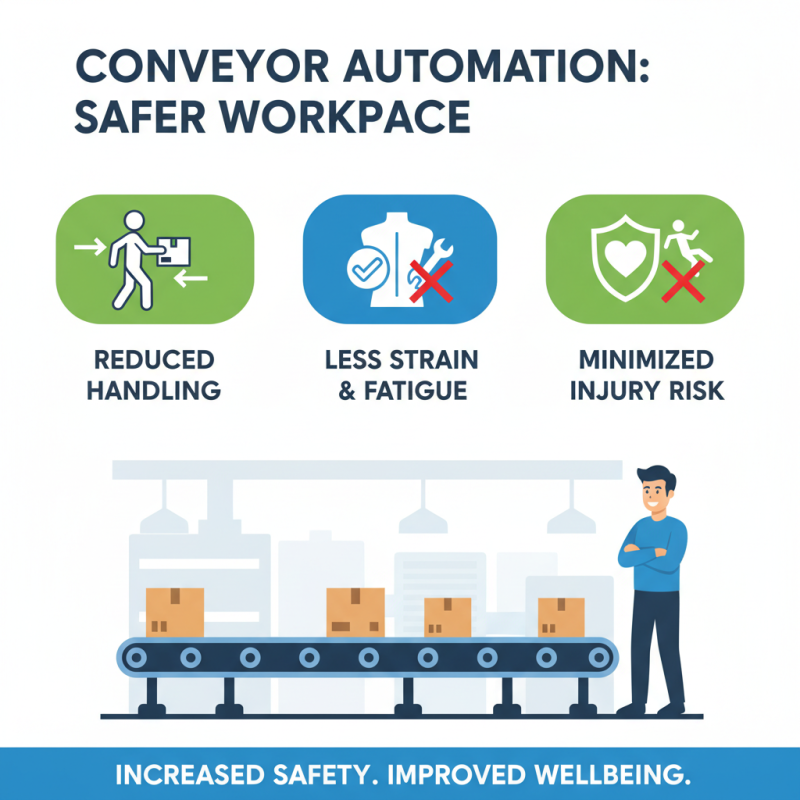
Automation reduces the need for manual handling, thus lowering the risk of workplace accidents. |
A safer work environment enhances employee satisfaction and retention. |
| Enhanced Product Quality |
Consistent movement reduces the likelihood of damage and improves product handling. |
Higher quality products lead to customer satisfaction and loyalty. |
| Flexibility and Scalability |
Automated conveyor systems can be customized and expanded as business needs change. |
Businesses can easily adapt to market demands without significant investments. |
Increased Efficiency: How Automation Streamlines Operations
In today's competitive landscape, businesses seek ways to
enhance efficiency. Conveyor belt automation emerges as a key
solution. By integrating automated systems, operations can become faster and more reliable. For instance,
a manufacturing plant can move products seamlessly from one point to another. This reduces manual handling,
which is often slow and error-prone.
The streamlined process allows workers to focus on more critical tasks. Automation takes care of
repetitive jobs. Employees can spend time on quality control or improvement instead.
However, companies must also reflect on potential challenges. Initial costs can be high,
and training staff takes time. There may be resistance to change as well.
Despite these hurdles, the potential for improved efficiency cannot be ignored. Automated conveyor belts
can optimize space and reduce waste. The layout of a facility can be rearranged to align with the automated flow.
As operations become more efficient, businesses can adapt to market demands quickly. Balancing these
advantages with careful planning is essential for long-term success.
Cost Savings: Reducing Labor and Operational Expenses with Automation
Conveyor belt automation significantly reduces labor costs. Companies can deploy fewer workers. This shift allows existing staff to focus on more complex tasks. With fewer hands needed, businesses also save on training expenses. Over time, these savings add up significantly.
Operational expenses also see a reduction. Automated systems increase efficiency, resulting in faster processing times. This speed leads to higher output with the same resources. Companies often find that maintenance is cheaper than managing a large workforce. However, initial investments in automation technology can be large. Businesses must evaluate their budget carefully.
Despite the benefits, some challenges arise. Not all employees can easily adapt to new systems. Resistance to change is common in any organization. Companies must provide proper training and support. This investment in human resources is crucial for maximizing the new technology's potential. Balancing automation with human skills requires ongoing reflection.
Enhanced Safety: Minimizing Workplace Hazards with Conveyor Systems
Conveyor belt automation significantly improves workplace safety. It reduces manual handling, which minimizes the risk of injuries. Workers no longer need to lift heavy items repeatedly. This reduces strain and fatigue, creating a safer environment.
In a busy factory, hazards can lurk everywhere. Conveyor systems help streamline processes. They transport materials smoothly and steadily. This avoids sudden movements that can lead to accidents. Minimal operator intervention is required, which reduces human error.
Despite their benefits, conveyor systems need regular maintenance. Neglecting this can lead to unforeseen issues. Regular inspections are essential to ensure proper functioning. Employers must schedule downtime for repairs. A proactive approach to maintenance keeps workplaces safe and efficient.
Scalability: Adapting Conveyor Belt Systems for Growing Businesses
As businesses grow, so do their needs for effective logistics.
Conveyor belt automation can be a game changer in this regard.
It adapts seamlessly to varying production levels. When demand spikes, the system can handle increased throughput with ease.
This flexibility is essential for companies aiming to scale operations without major disruptions.
A well-designed conveyor system expands or contracts based on business needs.
It’s not just about speed; it’s about smart investment. Over time, companies can face unexpected changes in market demand.
Investing in scalable conveyor systems mitigates risks associated with these fluctuations.
However, not planning for future growth can lead to inefficiencies.
Failing to reassess and adjust the system frequently can hinder performance.
Moreover, training staff to use automated systems poses its own challenges.
Employees may initially resist change or require extensive training. Some might even find the technology daunting.
Yet, embracing these systems holds the key to smoother operations.
Businesses that do not invest in automation may struggle to keep up in competitive markets.